+86 13816508465
Pump Troubleshooting
Jun. 25, 2026
Quick answer: A garden pump that won't pump water is usually caused by a clogged intake screen, a trapped air lock, dry running and overheating, a kinked discharge hose, or a jammed impeller. Most of these problems can be fixed at home in minutes—no plumber required.
You walk outside on a warm afternoon, switch on your garden pump to water the lawn or clear a flooded pit, and... nothing. Maybe the motor hums, but only a sad trickle dribbles out. It's a frustrating moment, especially when you have plants to soak or water to move.
Here's the good news: garden pumps are tough, hardworking machines, but they're not invincible. Debris, trapped air, and dry running are the usual culprits behind a pump that loses pressure or stops working entirely. The even better news? You can fix most of these issues yourself without calling an expensive plumber.
This troubleshooting guide from Stream Pumps walks you through the five most common reasons your garden pump is failing to pump, with clear DIY fixes for each. Along the way, we'll show you how smart engineering—like easy-to-clean suction bases, thermal overload protection, and automatic float switches—prevents these headaches before they start. Let's get the water flowing again.
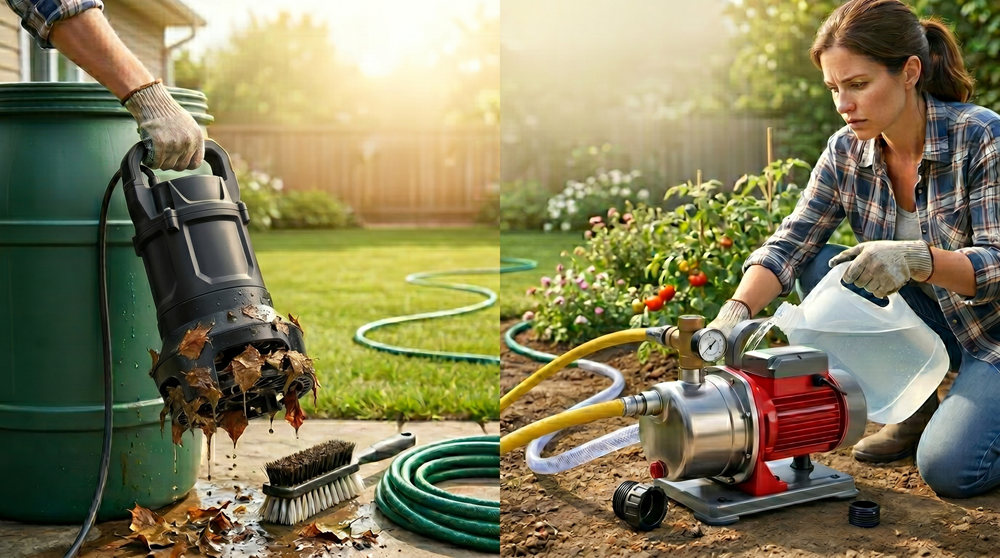
If you own a submersible pump, the most common reason it stops pumping is a clogged intake screen. Submersible pumps sit at the bottom of ponds, rain barrels, and flooded pits, exactly where leaves, mud, silt, and twigs love to gather. When the suction screen gets blocked, water simply can't get into the pump, no matter how hard the motor works.
The DIY fix: Unplug the pump first—always cut the power before touching it. Lift the pump out of the water and inspect the bottom intake grate. Use a stiff brush to scrub away mud, algae, and debris. Rinse it thoroughly with a garden hose until the screen is clear, then lower it back in and test.
The Stream Pumps advantage: Stream Pumps' domestic submersibles are built with optimized, easy-to-clean suction bases. The design protects the internal impeller from grit while making external wipe-downs quick and simple. Less time scrubbing, more time pumping.
Surface jet pumps work differently from submersibles. They sit above the water and rely on suction—a vacuum—to pull water up through a hose. When air gets trapped in that suction line, you get an [air lock.] The pump spins away happily, but no water moves because the vacuum is broken.
This is also why a pump often fails after winter storage: the casing dries out and loses its prime.
The DIY fix—how to prime a surface pump:
1. Turn off and unplug the pump.
2. Locate the priming plug on top of the pump casing and unscrew it.
3. Fill the pump casing all the way to the brim with clean water.
4. Replace the priming plug securely.
5. Inspect the suction hose for cracks, loose fittings, or leaks—even a small gap lets air sneak in.
6. Restart the pump. It may take a minute to draw water up and build pressure.
The Stream Pumps advantage: Stream Pumps' jet series are engineered for superior self-priming performance. That means less struggle getting your pump going at the start of the season, and fewer air-lock headaches overall.
This one causes serious damage, so it's worth understanding. [Dry running] happens when the water source—say, a rain barrel or tank—empties out, but the pump keeps running. With no water to move, internal friction skyrockets. The motor overheats fast, and in cheaper pumps, the plastic internals can actually warp or melt. A dry-run incident can destroy a pump in minutes.
The DIY fix: If you suspect your pump has run dry, turn off the power immediately. Don't keep testing it. Let the motor cool down completely—this can take 30 minutes or more. Once it's cool, test it in a bucket of clean water to see if it still pumps. If it does, you got lucky. If it doesn't, the motor or impeller may be damaged.
The Stream Pumps advantage: This is where Stream Pumps really protects your investment. Many of our garden pumps feature automatic float switches that cut the power before the water level drops too low, so the pump never runs dry in the first place. On top of that, our built-in thermal overload protection automatically shuts down the motor if it gets too hot, saving the pump from total destruction. Two layers of defense against the most expensive failure of all.
Sometimes the pump itself is working perfectly—the problem is what's attached to it. A submersible pump losing pressure, or a jet pump with weak flow, is often the victim of a kinked or blocked discharge hose.
A sharp bend in the hose chokes the flow. A blockage of grit or debris restricts it. And a hose that's too long or too narrow for the job drops your flow rate dramatically over distance.
The DIY fix: Walk the full length of your garden hose and check for sharp bends, crushed sections, or kinks—straighten any you find. Disconnect the hose and flush it with clean water to clear internal blockages. If you're pumping over a long distance or up a slope, upgrade to a larger-diameter hose. A wider hose carries more water with less resistance, restoring your flow rate.
That humming or buzzing sound, with no water and no visible movement, points to a mechanical or electrical issue. The two most common causes are a jammed impeller—often a small stone or piece of debris wedged in the works—or a failed start capacitor, the component that gives the motor its initial kick.
The DIY fix: Unplug the pump completely. Remove the intake cover to expose the impeller, then use a screwdriver to gently nudge it and check whether it spins freely. If a stone or debris is jamming it, clear it out and try again. If the impeller turns freely but the pump still only hums when powered on, the start capacitor has likely failed. A capacitor replacement is a job best left to a qualified technician unless you're experienced with electrical repairs.
A few minutes of regular care prevents most of the failures above. Here are the essentials of good garden pump maintenance:
· Winterize before the freeze. Drain all water from surface pumps and store submersible pumps indoors before temperatures drop below freezing. Water expands as it turns to ice, and that expansion can crack pump casings beyond repair.
· Test standby pumps regularly. If you keep an emergency pump for floods, run it in a bucket of water every few months. This keeps the seals lubricated and confirms it's ready when you actually need it.
· Clean the intake screen often. Don't wait for a blockage. A quick rinse of the suction base every few weeks during heavy use keeps debris from building up.
· Inspect hoses and fittings. Check for cracks, kinks, and loose connections before each season. Catching a small leak early prevents an air lock later.
A little troubleshooting goes a long way. By keeping the intake screen clean, priming your surface pump properly, and never letting it run dry, you'll keep your garden pump working reliably for years. Most of the problems that stop a pump are simple to diagnose and even simpler to fix once you know what to look for.
That said, prevention beats repair every time. Pumps engineered with easy-to-clean suction bases, self-priming jet systems, automatic float switches, and thermal overload protection do the hard work of staying healthy for you.
Is your old pump beyond saving? It might be time for an upgrade. Visit streampumps.com/garden-pump to explore our range of hassle-free, self-protecting garden pumps built to keep the water flowing.
Gradual pressure loss is usually caused by a slowly clogging intake screen, a worn impeller, or a small air leak in the suction hose. Start by cleaning the intake screen and checking all hose fittings for tightness. If pressure stays low after that, the impeller may be worn and need replacing.
Turn off and unplug the pump, unscrew the priming plug on the casing, and fill it to the brim with clean water. Replace the plug, check the suction hose for leaks, then restart the pump. It may take a minute to draw water up and rebuild pressure. Self-priming models, like Stream Pumps' jet series, make this process easier.
Yes. Running a pump dry creates intense friction with no water to cool or lubricate the internals. This can overheat the motor and warp or melt plastic components within minutes, sometimes destroying the pump entirely. Pumps with automatic float switches and thermal overload protection prevent this by shutting down before damage occurs.
A humming pump that won't move water usually has a jammed impeller blocked by a stone or debris, or a failed start capacitor. Unplug the pump and check whether the impeller spins freely. If it's jammed, clear the blockage. If it spins freely but still only hums, a technician should check the capacitor.
During periods of heavy use, rinse the intake screen every few weeks to stop debris from building up. Inspect hoses and fittings before each season, and winterize the pump before freezing weather arrives. Regular cleaning is the single easiest way to extend your pump's lifespan.
Choose repair if the issue is a clogged screen, an air lock, a kinked hose, or a jammed impeller—these are quick, cheap fixes. Choose replacement if the motor has burned out from dry running, the casing has cracked from frost, or repair costs approach the price of a new unit. A modern pump with built-in protection features often pays for itself by preventing future failures.
Address
No.17 XeDa Jimei Ind. Park, Xiqing Economic Development Area, Tianjin, China
Telephone
+86 13816508465
QUICK LINKS