+86 13816508465
Pump Troubleshooting
May. 27, 2026
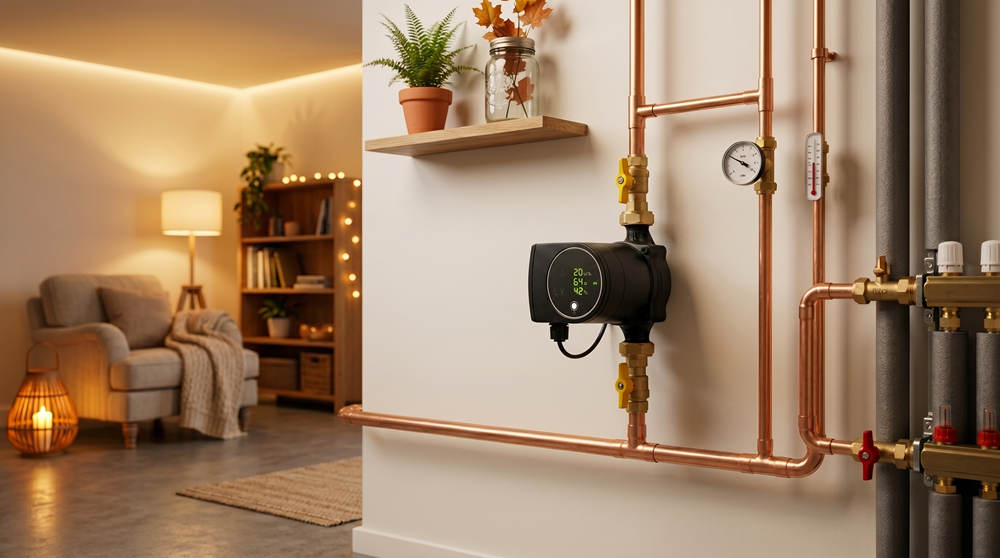
Quick answer: Heating pumps fail during autumn startups primarily due to three reversible conditions: seized rotors from summer inactivity, air locks in the pump volute, and abrasive magnetite sludge attracted by permanent magnet motors. You can resolve these issues through manual de-blocking, proper system bleeding, and installing magnetic dirt separators.
The first crisp evening of autumn usually prompts the same ritual for homeowners and facility managers alike: walking to the thermostat and switching the heating system on for the first time in six months. You expect the comforting warmth of hot water rushing through the radiators. Instead, you get cold baseboards, shivering occupants, and an eerie silence from the boiler room. When you investigate the basement, you find the circulation pump making a dull humming noise or perhaps a loud, aggressive gurgling sound.
To the untrained ear, these sounds signal a catastrophic mechanical failure. Inexperienced HVAC technicians and panicked homeowners often declare the circulation pump completely dead. They immediately start calculating the cost of a full pump replacement, assuming the motor has burned out or the internal components have shattered. However, as a master technician will tell you, a humming or gurgling pump is actually trying its best to work. In roughly 90% of these autumn startup scenarios, the pump's motor is perfectly fine.
The real issue stems from the condition of the hydronic system itself. Heating pumps are the heart of your home's thermal distribution, but they cannot function correctly if their environment is compromised. Six months of complete inactivity during the summer allows microscopic debris to settle, air pockets to form, and chemical reactions to take place inside the stagnant water. When the thermostat finally calls for heat, the pump is suddenly tasked with overcoming half a year of neglect in a matter of seconds.
Understanding the root causes of these startup failures is the difference between a simple ten-minute maintenance task and a costly, unnecessary equipment replacement. By identifying the specific symptoms—whether it is a seized shaft, trapped air, or magnetic sludge—you can diagnose the system accurately. We will walk through the exact mechanisms behind these common autumn pump failures, providing clear, actionable solutions to bring your heating system back to life and keep it running smoothly for the rest of the winter season.
When a circulation pump receives electrical power but fails to spin, it typically emits a low, steady humming vibration. The pump motor is receiving the correct voltage, and the magnetic field is attempting to turn the rotor, but the shaft remains completely locked in place. This is known as a seized pump.
During the long summer downtime, the water inside the heating system sits entirely stagnant. This hydronic fluid is rarely pure; it contains dissolved minerals, limescale, and microscopic rust particles. Over the course of several months, these particulates slowly settle out of suspension. They migrate into the incredibly tight clearances between the pump's rotor and its ceramic bearings. As the water evaporates slightly or chemical scaling occurs, this mixture hardens, acting like a powerful industrial glue. When autumn arrives and the boiler sends the start signal, the motor's initial starting torque is simply not strong enough to overcome the massive friction created by this calcified debris.
Fortunately, unlocking a seized pump is usually a straightforward manual procedure, especially on older, standard-efficiency units. First, you must completely disconnect the electrical power to the boiler and the pump to ensure safety. On the front faceplate of most traditional circulation pumps, you will find a large, silver center vent screw. Place a rag beneath the pump, as a small amount of system water will leak out during this process. Use a large flathead screwdriver to slowly unscrew and remove this center plug.
Once the plug is removed, look inside the opening. You will see the end of the motor shaft, which features a distinct slot designed specifically for a screwdriver. Insert your flathead screwdriver into this slot and firmly turn the shaft clockwise and counterclockwise. You will likely feel significant resistance at first. Apply steady, twisting pressure until you hear a small click or feel the shaft break free from the scale buildup. Spin the shaft a few full rotations to ensure it moves smoothly without binding. Replace the center vent plug, restore the electrical power, and the pump should immediately spin up to full speed without humming.
While manual de-blocking is effective, modern technology has engineered this problem out of existence. If you are upgrading your system, choose a modern smart pump equipped with an [Anti-Seize] or [Summer Mode] function. These intelligent microprocessors monitor the pump's inactivity. During the summer, the pump will automatically spin the impeller for a few seconds every few days. This brief circulation prevents scale and rust from settling in the bearings, completely preventing the rotor from seizing when autumn arrives. Choose a smart pump if eliminating seasonal maintenance matters more to you than the initial purchase price.
Sometimes the pump spins freely, but the system still fails to heat the building. In this scenario, the pump sounds like a turbulent washing machine, or it emits a high-pitched, metallic whine. If you check the heat distribution, radiators physically close to the boiler might feel lukewarm, while radiators on the second or third floors remain completely freezing. This symptom points directly to a severe [Air Lock] within the hydronic system.
An air lock occurs when a large pocket of air becomes trapped inside the pump's volute (the housing that contains the impeller). Circulation pumps are designed to move water, which is an incompressible fluid. They are not designed to move air. When the impeller spins inside an air pocket, it simply whips the air into a froth without creating any forward head pressure. The pump loses its mechanical grip on the fluid, causing the flow rate to drop to absolute zero. The gurgling noise you hear is the impeller desperately cavitating against the trapped air and water mixture.
Air enters the system through microscopic leaks over the summer, or it separates from the stagnant water as dissolved oxygen. To resolve an air lock, you must aggressively bleed the system. Start at the lowest point in the building and systematically open the manual bleed valves on every single radiator. Hold a cup and a rag beneath the valve, and open it until a steady, solid stream of water flows out, devoid of any sputtering air bubbles. Close the valve tightly and move to the next radiator, working your way up to the highest point in the house, where air naturally accumulates.
While bleeding the radiators is a critical first step, the air trapped directly inside the pump housing can be stubborn. For older pumps, you can slowly loosen the center vent screw while the pump is running just enough to let the trapped air hiss out, tightening it the moment water appears.
Modern high-efficiency pumps have revolutionized this process by integrating an [Auto-Venting Routine.] When a technician activates this mode, the pump's internal computer takes over. It intelligently alternates the motor speed in a highly specific pattern—ramping up to maximum speed, dropping to a slow crawl, and then surging back to maximum. This aggressive, pulsing action forcefully dislodges trapped air bubbles from the impeller blades and the pump housing. The bubbles are pushed out into the main piping, where they are easily captured and expelled by the system's automatic air vents.
While air locks and seized rotors are frustrating, they are generally reversible conditions. However, the silent killer of hydronic heating systems is a highly abrasive, black substance known as magnetite sludge. This is the most fatal issue a circulation pump will encounter, and it is entirely preventable with proper system hygiene.
Magnetite is a direct byproduct of systemic corrosion. Hydronic heating systems contain miles of steel piping, cast iron boiler heat exchangers, and steel panel radiators. When these ferrous metals react with the oxygen dissolved in the system water, they slowly corrode. Over time, this corrosion breaks down into a fine, black iron oxide powder (Fe3O4). When mixed with the circulating water, it forms a heavy, abrasive sludge that settles in the lowest parts of the system during the summer months.
The presence of magnetite creates a catastrophic paradox in modern HVAC design. To meet strict energy efficiency regulations, all modern high-efficiency circulation pumps use Permanent Magnet (PM) motors. These ECM (Electronically Commutated Motor) pumps consume up to 80% less electricity than their predecessors. However, the core of the motor acts like a massive, highly powerful magnet.
As the pump circulates the dirty system water, the permanent magnet motor actively pulls all the black iron sludge directly out of the water stream and into the rotor can. The magnetite coats the internal magnetic components and wedges itself into the microscopic gaps of the ceramic bearings. Because magnetite is incredibly hard and abrasive, it acts exactly like liquid sandpaper. Every time the pump spins, the sludge grinds away at the precision-engineered bearings until the tolerances are completely destroyed, resulting in total mechanical failure.
Professional installers must adhere to a strict rule: never install a brand-new, high-efficiency pump in a dirty, untreated system. Before installing a new pump, the entire hydronic system must undergo a comprehensive power flush. This process involves connecting a high-velocity flushing machine to the piping, using specialized chemical cleaners to agitate and suspend the baked-on magnetite, and flushing the entire system with clean water until it runs completely clear.
Furthermore, you must mandate the installation of a Magnetic Dirt Separator on the return line, positioned right before the water enters the new pump. A magnetic dirt separator contains a powerful neodymium magnet core housed inside a brass or composite body. As the system water flows through the separator, the magnet captures every microscopic particle of magnetite before it can ever reach the pump. During annual autumn maintenance, the technician simply removes the magnetic core and flushes the trapped sludge down a drain. Choose a magnetic dirt separator if protecting your expensive circulation pump from premature failure matters more than saving a small amount of money on installation materials.
A circulation pump serves as the beating heart of your home's heating system, but it cannot survive on contaminated [blood.] The water flowing through the pipes dictates the longevity and efficiency of every component it touches. A pump forced to push abrasive sludge, fight against trapped air, and overcome calcified bearings will fail years before its engineered lifespan.
By understanding the mechanics behind autumn startup failures, you gain complete control over your system's health. You now know how to bleed air to restore system pressure, how to manually unlock a seized rotor to save an unnecessary service call, and how to filter out destructive magnetite to protect permanent magnet motors. Proactive water quality management and proper filtration can easily extend a circulation pump's life by over a decade.
For the ultimate peace of mind, recommend upgrading to modern smart pumps equipped with automated anti-seize microprocessors and auto-venting routines. When combined with a freshly power-flushed system and a high-quality magnetic dirt separator, you eliminate seasonal startup headaches entirely, ensuring reliable, efficient warmth the moment the autumn air turns cold.
Unlocking a seized heating pump manually usually costs nothing if you perform the task yourself using a flathead screwdriver. If you hire a licensed HVAC technician to diagnose and unlock the pump, expect to pay a standard service call fee ranging from $100 to $250. If the pump cannot be unlocked and requires total replacement, the cost of parts and professional labor typically ranges from $400 to $800, depending on the pump model and system complexity.
Clearing an air lock manually by bleeding the radiators usually takes between 30 and 60 minutes for an average-sized residential home. If your system features a modern circulation pump with an automated auto-venting routine, the pump's programmed cycle typically completes the primary venting process in exactly 10 minutes.
The best alternative to a standard, single-speed heating pump is an ECM (Electronically Commutated Motor) smart pump. ECM pumps automatically adjust their speed based on the system's actual thermal demand, consuming up to 80% less electricity. They also feature built-in summer modes to prevent seizing and automated venting programs to clear air locks effortlessly.
A licensed plumber or certified HVAC technician should install a magnetic dirt separator. The installation requires draining the heating system, cutting into the main hydronic return piping, and correctly soldering or pressing new fittings. Improper installation can lead to severe water leaks, pressure loss, and irreversible damage to the boiler's heat exchanger.
Address
No.17 XeDa Jimei Ind. Park, Xiqing Economic Development Area, Tianjin, China
Telephone
+86 13816508465
QUICK LINKS