+86 13816508465
Pump Solutions
Dec. 22, 2025

What keeps a 100-hectare golf course green, playable, and flood-free all year round?
It isn't just luck or good weather. It's engineering. A modern golf course is essentially a small, complex water management ecosystem. From the pristine greens to the clubhouse showers, water must be moved, pressurized, drained, and treated with absolute precision.
If the irrigation fails, the grass dies within days. If the drainage pumps fail during a storm, the fairways turn into swamps.
This article serves as a comprehensive guide to designing a reliable, efficient golf course water pump system. We will cover everything you need to know about engineering the hydraulic heart of a course—from irrigation and aesthetic lakes to essential drainage and sewage handling.
Before selecting a single pump, you must understand the diverse water demands of the facility. A golf course isn't just a big lawn; it's a multi-faceted facility with distinct zones.
Large-Scale Irrigation Requirements
Different turf types require different watering schedules. Greens need frequent, light misting. Fairways require deep, volume-heavy soaking. Tees and rough areas have their own specific moisture needs. Your system must deliver varying volumes to these distinct zones without pressure fluctuations.
Decorative and Functional Water Bodies
Lakes, ponds, and streams are dual-purpose. They enhance the course's beauty and difficulty, but they often double as reservoirs for the irrigation system. They require circulation to prevent stagnation.
Facilities and Clubhouses
Beyond the grass, you have a commercial building to support. Locker rooms, commercial kitchens, restrooms, and accommodation suites all require steady potable water pressure and reliable waste removal.
Stormwater and Drainage
Managing heavy rain is critical for playability. When a storm hits, water must be evacuated quickly from bunkers and low-lying areas to prevent waterlogging.
Sewage and Wastewater
Finally, you must handle the effluent from the clubhouse, on-course restrooms, and maintenance sheds safely and efficiently.
Every drop of water on the course starts here. The first step in your design is reliably extracting water from its source.
Primary Water Sources
Most courses rely on a mix of sources: deep wells (boreholes), natural lakes, municipal connections, or increasingly, treated recycled water.
Pump Selection for Extraction
Deep-Well Submersible Pumps: For groundwater extraction, you need robust submersible pumps (like the SP or SE series) capable of lifting water from significant depths.
End-Suction or Multistage Pumps: If drawing from a surface lake, horizontal centrifugal pumps or vertical multistage pumps are often preferred for their ease of maintenance and high flow rates.
Filtration and Sand Separation
Never pump raw water directly into your sprinklers. Sand and sediment will destroy expensive sprinkler heads in weeks. Always integrate filtration systems or sand separators immediately after the extraction pumps.
Getting water out of the ground is step one. Getting it to a sprinkler head 2 kilometers away at the right pressure is step two. This requires a powerful boosting system.
Why Boosting is Essential
Golf courses span vast distances with varied elevations. Friction loss in long pipes and uphill climbs kills water pressure. A booster station restores this pressure to ensure uniform coverage.
Central Booster Pump Station
The heart of the irrigation system is usually a central station featuring VFD-controlled multistage pumps. These pumps work in tandem to deliver massive flow rates while maintaining stable pressure, regardless of how many sprinklers are active.
Zoning Strategy
Smart designs divide the course into irrigation zones:
Greens
Fairways
Tees
Roughs
By using a zonal strategy, you can pressure-balance the distribution, ensuring the high tee box gets the same water pressure as the low-lying fairway.
Recommended Pump Types
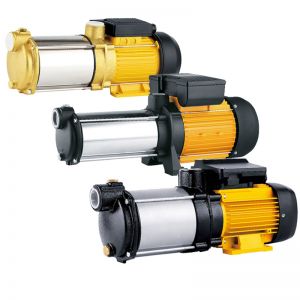
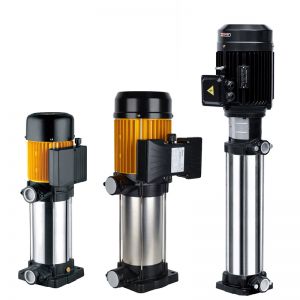
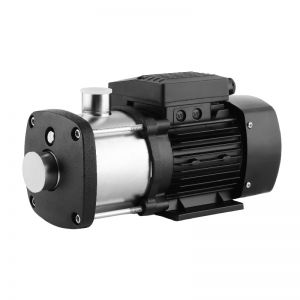
Vertical/Horizontal Multistage Pumps (MV / MH / SCMI): The industry standard for high-pressure irrigation boosting.
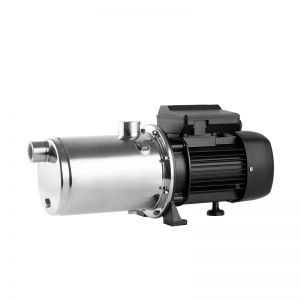
Self-Priming Pumps: Useful for specific isolated zones where the pump sits above the water level.
Power without control is dangerous. To protect your pipes and turf, you need smart management.
Maintaining Uniform Pressure
Varied terrain is a challenge. A sprinkler at the bottom of a hill naturally sprays harder than one at the top. Use Pressure Reducing Valves (PRVs) and VFDs to equalize pressure across the topography.
Automated Irrigation Control
Modern systems use moisture sensors and timers linked to a SCADA or PLC system. These controllers talk to the pumps, telling them exactly how much water is needed, down to the gallon. This prevents over-watering and saves electricity.
Avoiding Water Hammer
When a high-volume pump stops suddenly, the water crashes back down the pipe—this is water hammer, and it breaks pipes. Protect your infrastructure with soft starters (which ramp pumps down slowly) and air-release valves.
A flooded course generates zero revenue. Effective stormwater management keeps the course open after heavy rains.
Topography and Pump Placement
Elevation design dictates where water naturally collects. Your pump stations should be strategically placed at these lowest points—sumps, collection ponds, or drainage basins.
Flood-Prone Areas
Pay special attention to bunkers, low-lying fairways, and maintenance roads. These areas need rapid dewatering capabilities.
Drainage Pump Solutions
High-Flow Dewatering Pumps: Construction-style submersible pumps (like KBZ or SPT series) are built to move massive volumes of dirty water quickly.
Trash Pumps: Essential for areas where leaves, twigs, and sand might enter the pit. These pumps can handle solids without clogging.
Rainwater Recirculation
Smart courses don't just drain water; they harvest it. Design your drainage pumps to send stormwater back into your storage lakes for future irrigation use.
Handling waste is the less glamorous, but equally critical, part of the design.
Clubhouse and Restaurant Sewage
Commercial kitchens produce grease and solids. Use Grinder Pumps or Cutter Pumps in your lift stations. These pumps shred solids into a slurry, preventing clogs in the discharge lines.
Guest Accommodation and Villas
For remote restrooms or villas far from the main sewer line, Packaged Lifting Stations are ideal. These buried units collect waste and pump it to the main treatment plant automatically.
Maintenance Buildings
Maintenance sheds often have oil or chemical runoff. Ensure wastewater from these areas goes through oil separators before reaching the standard sewage pumps.
Water features make a course memorable. Keeping them clean requires circulation.
Recirculating Pumps: For waterfalls and streams, use submersible clean-water pumps or end-suction pumps designed for continuous duty.
Aeration Pumps: Stagnant ponds grow algae and smell bad. Aeration pumps introduce oxygen, keeping the ecosystem healthy and the water clear.
Fountain Pumps: High-head submersible pumps create the dramatic vertical sprays seen in signature lakes.
A golf course pump system is a major energy consumer. Efficiency isn't just eco-friendly; it's a financial necessity.
VFD Control: Variable Frequency Drives should be standard on almost all extraction, boosting, and drainage pumps. They adapt motor speed to real-time demand, often cutting energy use by 30-50%.
Multi-Pump Parallel Configuration: Instead of one giant pump, use three smaller ones. During low demand, only one runs. All three only run during peak irrigation. This saves massive amounts of power.
Recycled Water: Using treated effluent or harvested rainwater reduces the energy cost associated with deep-well extraction or municipal pumping.
To summarize, here is a quick reference for selecting the right hardware (using Streampumps examples):
Extraction: Submersible well pumps (SP/SE/SA/SS series).
Boosting: Multistage pumps (MV / MH / SCMI).
Irrigation Support: Self-priming jet pumps or centrifugal pumps.
Drainage: Muddy water pumps (SPT) or heavy-duty dewatering pumps (KBZ).
Sewage: Grinder pumps, cutter pumps, and trash pumps.
Aesthetics: Clean water submersible pumps.
Designing a water pump system for a modern golf course is a major engineering feat. It requires balancing the delicate needs of turf irrigation with the brute force required for stormwater drainage and sewage handling.
An integrated approach is key. You cannot design the irrigation in isolation from the drainage or the lake management. By selecting the right mix of VFD-controlled boosters, durable submersible pumps, and smart control systems, you ensure the course remains a lush, playable sanctuary year-round.
Are you planning a new course or retrofitting an aging system? Don't leave your hydraulics to chance. Explore professional golf course water pump systems today to secure the long-term health of your greens.
Address
No.17 XeDa Jimei Ind. Park, Xiqing Economic Development Area, Tianjin, China
Telephone
+86 13816508465
QUICK LINKS