+86 13816508465
Pump Knowledge
Jan. 26, 2026
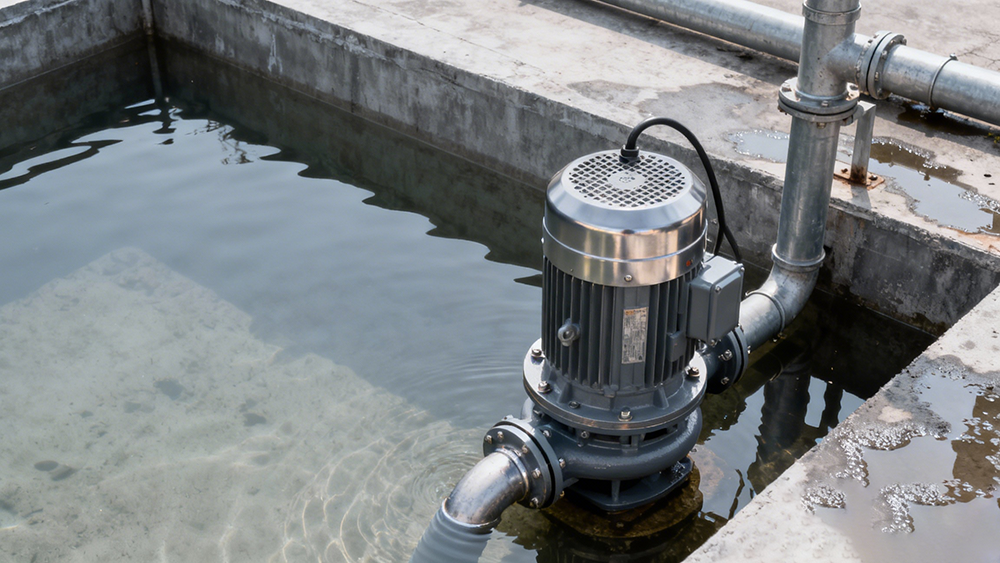
Centrifugal pumps are the backbone of many industrial and domestic systems, but improper selection or operation can lead to costly failures. A common misconception is that using a pump with a higher head than required ensures safer operation. In reality, operating a high-head centrifugal pump at a low head can be more damaging than running it under overload conditions. This article explores a real-world failure scenario, explains the science behind pump curves, and provides practical solutions to prevent such issues.
The Real Case: 15m Head Pump in a 5m System
Imagine this scenario: A centrifugal pump rated for a 15-meter head is installed in a system that only requires 5 meters of head. The pump was chosen with an【extra safety margin】 in mind. Initially, everything seems fine, but after continuous operation, the pump begins to fail.The problem? The pump is operating far from its design point, leading to inefficiencies and eventual damage. This isn't a quality issue—it's a mismatch between the pump's operating point and the system's requirements.Key takeaway: Oversizing a pump doesn't guarantee safety; it can lead to premature failure.
Understanding the Centrifugal Pump Performance Curve
To understand why this happens, let's break down the centrifugal pump performance curve, also known as the H-Q (Head-Flow) curve.
· Head (H): The height the pump can lift the fluid.
· Flow (Q): The volume of fluid the pump moves.When system resistance is low (e.g., a 5m head system), the pump naturally shifts to a higher flow rate. This is because centrifugal pumps always seek a hydraulic balance point where the system curve intersects the pump curve.Important insight: Low head doesn't mean low load. Instead, the pump increases flow, which can lead to overloading.
What happens when the head is too low?
When a pump designed for 15m head operates at only 5m head, it shifts far to the right on the performance curve. This results in:
· Increased flow rate: The pump operates beyond its design range.
· Hydraulic losses: Higher flow creates turbulence and inefficiencies.
· Higher impeller torque demand: The motor works harder to maintain the increased flow.
Key insight: Operating at low head forces the pump to increase flow, which increases power demand rather than reducing it.
Shaft Power Exceeds Rated Power
Another critical factor is the shaft power (P2) curve. Shaft power often increases as flow rate increases, especially in standard centrifugal pumps.In the 15m head pump example:
· The actual shaft power exceeds the motor's rated power.
· This leads to motor overheating, insulation damage, and accelerated wear on bearings and seals.
Result: The pump fails prematurely, even though the system appears to be operating under [light-duty] conditions.
Why Overheating Happens Even Without Blockage
A common misconception is that pump overload only occurs when pipes are blocked. However, excessive flow can also overload the motor. Here's why:
· Heat accumulation: The motor generates more heat than it can dissipate.
· Insufficient cooling: Continuous operation at high flow exacerbates the problem.
Outcome: Overheating, frequent thermal protector trips, and reduced service life.
Typical Symptoms Observed in the Field
When a high-head pump operates at low head, the following symptoms are often observed:
· Abnormally high motor surface temperature.
· Frequent tripping of thermal protectors.
· Unusual vibration or noise.
· Reduced service life, despite the system being perceived as [light-duty.]
Why This Mistake Is So Common
Several factors contribute to this common error:
Oversizing for future expansion: Many users select pumps with extra capacity, assuming it's safer.
Misunderstanding pump curves: Users often focus on maximum head without considering the duty point.
Ignoring system and power curves: Proper matching of the pump curve to the system curve is overlooked.
Result: Pumps are selected based on incorrect assumptions, leading to operational issues.
How to Avoid This Problem (Practical Solutions)
To prevent pump failures caused by low head operation, follow these practical steps:
1. Select Pumps Based on Actual Duty Point
· Match the pump's head (H) and flow (Q) to the system's requirements.
· Ensure the operating point is close to the Best Efficiency Point (BEP).
2. Solutions for Installed Pumps
If the pump is already installed, consider these fixes:
· Install a throttling valve: Temporarily reduce flow to bring the operating point closer to the BEP.
· Reduce impeller diameter: Trim the impeller to lower the pump's capacity.
· Add a Variable Frequency Drive (VFD): Control the pump's speed to limit flow.
· Replace the pump: Install a correctly sized pump for long-term reliability.
Key Design Rule for Centrifugal Pumps
When selecting a centrifugal pump, remember these principles:
· Head margin ≠ power margin: A higher head pump doesn't mean it can safely operate at a lower head.
· Flow control is critical: Ensure the pump's flow matches the system's requirements.
· Match pump and system curves: Proper selection prevents overheating, energy waste, and premature failure.
Conclusion
Using a high-head centrifugal pump at low head can lead to overheating, energy inefficiency, and equipment failure. Oversized pumps often fail faster than correctly sized ones because they operate far from their design point. By understanding pump curves and selecting pumps based on actual duty points, you can avoid these issues and protect both your equipment and operating costs.Take action today: Review your pump selection methods, consult performance curves, and ensure your system is optimized for efficiency and reliability.
Address
No.17 XeDa Jimei Ind. Park, Xiqing Economic Development Area, Tianjin, China
Telephone
+86 13816508465
QUICK LINKS