+86 13816508465
Pump Knowledge
Jan. 28, 2026
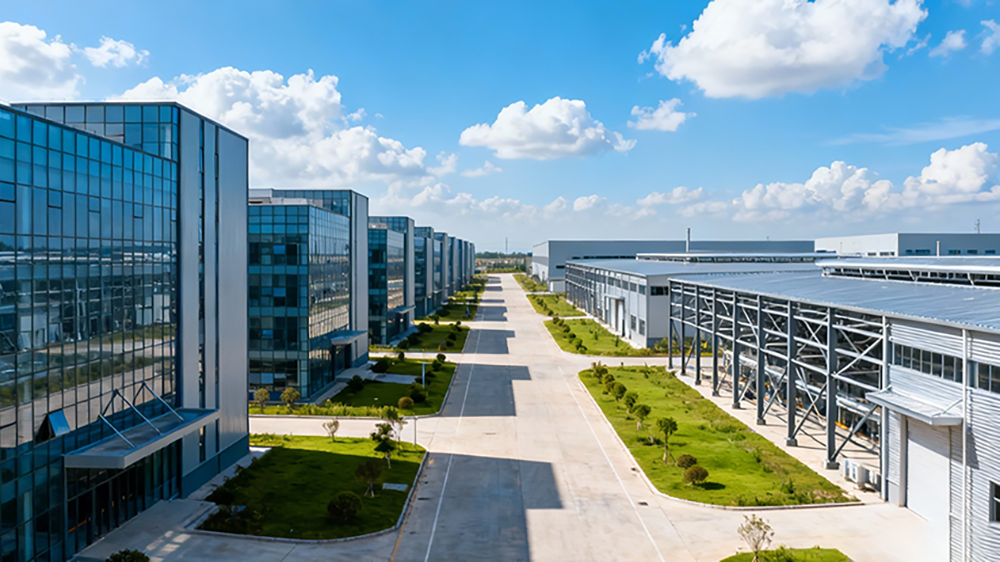
Global sourcing strategies for fluid handling equipment are shifting. For decades, the decision was simple: if you needed volume, consistency, and competitive pricing, you went to China. As the 【world's factory,】 China built a massive infrastructure for producing everything from standard centrifugal pumps to complex, high-pressure industrial systems.However, the manufacturing map is changing. Rising labor costs in traditional hubs and evolving trade policies have forced distributors and procurement officers to look for alternatives. Vietnam has emerged as the primary contender in this 【China Plus One】 strategy. It offers an attractive mix of lower wages, a growing industrial workforce, and favorable trade agreements.But for a water pump distributor, 【cheaper】 does not always mean 【better.】 The water pump industry relies heavily on precision casting, motor efficiency, and rigorous quality control. Moving a supply chain isn't as simple as finding a factory with a lower hourly wage; it requires a deep look at the ecosystem that supports that factory.Why are these two nations the center of the discussion? China represents maturity and scale, while Vietnam represents potential and cost-efficiency. The question facing procurement teams today is whether Vietnam’s manufacturing sector has matured enough to handle the technical demands of modern pump production, or if China’s efficiency advantage still justifies the higher costs.The purpose of this article is to move beyond surface-level price comparisons. We will rigorously compare the productivity, operational efficiency, and actual manufacturing capabilities of both nations. By examining labor skills, supply chain depth, and automation levels, we aim to provide the insights you need to decide where to place your next purchase order.
Labor Cost and Workforce Productivity
While the initial factory quote is a critical number, a deeper analysis of labor provides a more accurate picture of total sourcing costs. The direct hourly wage is only one part of the equation. Skill level, experience, and per-worker productivity are the factors that ultimately determine the final cost per unit and the reliability of your supply chain.
Average Manufacturing Labor Cost
For years, the most compelling reason to source from Asia was the significant labor cost advantage. However, the gap between China and its neighbors is widening. In China, rapid economic development has led to a steady increase in wages. The average manufacturing hourly wage in key industrial zones now often exceeds that of many Eastern European countries. This rise directly translates to higher final costs for pump products, particularly for standard, labor-intensive models.Vietnam, by contrast, offers a much lower labor cost. Typical wages in its manufacturing sector can be less than half of those in China’s coastal provinces. For distributors focused on price-sensitive markets or high-volume standard pumps like those used for irrigation or basic drainage, this difference is substantial. A lower wage base allows Vietnamese factories to offer highly competitive pricing, making them an attractive option for procurement managers prioritizing budget.However, it's crucial to connect labor cost to the final price. A lower hourly wage does not automatically guarantee a cheaper pump. The total labor input per unit must be considered, which is where productivity and skill come into play.
Workforce Skill Level and Experience
China's decades-long tenure as the 【world's factory】 has created a deep and experienced talent pool. Finding skilled labor for specific industrial processes—such as CNC machining for impellers, motor winding, or operating automated casting lines—is relatively straightforward. This established ecosystem means Chinese factories can quickly scale production or tackle complex pump designs with an existing base of qualified technicians and engineers.Vietnam's industrial workforce is younger and still developing. While the labor pool is large and growing, the level of specialized experience in precision manufacturing is not as deep as China's. Many workers are transitioning from agriculture or less technical industries, requiring significant on-the-job training. For pump manufacturing, this learning curve can affect initial production runs. Companies investing in Vietnam often need to factor in the costs and time associated with workforce training and skill development programs to ensure quality standards are met.
Productivity per Worker
Productivity is where the cost-benefit analysis becomes more complex. A Chinese factory worker, supported by mature processes and automation, generally has a higher output per hour than a Vietnamese counterpart. This efficiency can offset China's higher wages, especially in high-volume production of standardized pumps. The stability of the Chinese workforce, combined with well-defined production systems, often results in lower error rates and greater consistency from one batch to the next.In Vietnam, production lines may be more labor-intensive and less automated. While this allows for greater flexibility in handling small-batch orders or customized designs, it can also lead to lower overall output per worker. The consistency and error rate may be less predictable, particularly in factories that have not yet implemented robust quality control systems. For a distributor, this could mean a higher risk of defects or variations in performance, requiring more diligent incoming quality inspection. The true cost of Vietnamese labor must account for this potential dip in productivity and consistency.
Manufacturing Efficiency and Production Capacity
Efficiency isn't just about speed; it's about how well a manufacturing base aligns with your specific procurement strategy. When choosing between China and Vietnam, distributors must weigh the trade-offs between sheer volume capabilities and production agility. The 【best】 choice depends heavily on whether your business model relies on massive, standardized shipments or flexible, just-in-time inventory for specialized applications.
Mass Production Capability
China remains the undisputed heavyweight for high-volume manufacturing. If your procurement strategy involves ordering tens of thousands of standard centrifugal or submersible pumps per quarter, China’s infrastructure is unmatched. Chinese factories have spent decades refining production line maturity. They utilize dedicated, automated lines that run 24/7 with minimal downtime.This scalability allows Chinese manufacturers to absorb massive orders without significant lead time extensions. Their supply chains are tightly integrated, meaning raw materials arrive exactly when needed, and finished goods move out quickly. For a large distributor supplying national retail chains or major infrastructure projects, this predictability is vital. You can trust that a confirmed capacity of 50,000 units per month is a reality, not an optimistic target. The sheer density of industrial clusters in provinces like Zhejiang and Guangdong means that if one factory reaches capacity, subcontracting networks can seamlessly pick up the slack without compromising the final output speed.
Small-Batch and Flexible Production
While China dominates mass production, Vietnam has carved out a competitive edge in flexibility. Vietnamese factories, often smaller and leaner than their massive Chinese counterparts, excel at handling small-batch orders and High-Mix, Low-Volume (HMLV) production.For distributors dealing in specialized pumps—such as custom-voltage industrial pumps or specific agricultural units—Vietnam offers significant advantages. Manufacturers here are generally more willing to accommodate lower Minimum Order Quantities (MOQs). They can perform faster changeovers on production lines because their operations are less rigid.Where a large Chinese factory might reject an order of 500 custom units because it disrupts their automated flow, a Vietnamese supplier often views this as a standard project. This flexibility translates into lead time advantages for customized orders. You don't have to wait for a 【production slot】 to open up on a massive assembly line. Instead, you get a manufacturing partner willing to adapt their schedule to fit urgent, smaller requirements.
Capacity Utilization and Delivery Reliability
The difference in capacity planning between the two nations directly impacts delivery reliability. China operates on high capacity utilization rates. Their systems are optimized for 【throughput.】 This results in excellent on-time delivery performance for standard orders, provided you book your production slots in advance. However, this high utilization can be a double-edged sword; during peak seasons or power rationing events, the lack of buffer capacity can lead to systemic delays across the entire region.Vietnam’s capacity planning is still maturing. While many factories have excess capacity (meaning they can start your order immediately), they may lack the sophisticated ERP (Enterprise Resource Planning) systems found in top-tier Chinese plants. This can occasionally lead to delivery variance if a raw material shipment gets stuck or if a localized labor shortage occurs.However, for mid-sized buyers, Vietnam often feels more responsive. You are likely a more significant customer to a Vietnamese factory than you would be to a Chinese giant. This relationship dynamic often results in better communication regarding production status and a greater willingness from the factory to work overtime to meet a tight shipping deadline. Buyers must balance China’s systemic reliability against Vietnam’s relational flexibility when assessing on-time delivery risks.
Supply Chain Completeness and Local Sourcing
A manufacturing base is only as strong as its weakest link. For water pump distributors, the 【factory】 is often just the final assembly point. The real story of quality, cost, and speed lies in the depth of the local supply chain. In this arena, the differences between China and Vietnam are stark, and understanding them is crucial for mitigating risk in your procurement strategy.
Core Pump Components Availability
Water pumps are complex assemblies requiring a diverse range of materials and precision parts. The availability of these core components locally determines how quickly a manufacturer can respond to orders and how much control they have over quality.In China, the ecosystem for pump components is incredibly dense. Major industrial hubs like Zhejiang often feature 【pump towns】 where every necessary component is manufactured within a 50-mile radius. You can find multiple foundries specializing in cast iron or stainless steel pump casings, alongside dedicated factories for motor windings, stators, and rotors. Specialized components like mechanical seals, high-grade bearings (e.g., C&U or SKF China), and precision-ground shafts are readily available off-the-shelf or with short lead times.Vietnam’s supply chain is rapidly improving but remains fragmented compared to China’s mature clusters. While basic casting capabilities for iron casings exist, high-quality stainless steel casting often requires working with fewer, more specialized suppliers, which can create bottlenecks. Critical precision parts like high-efficiency motors, ceramic mechanical seals, and high-load bearings are frequently not produced domestically at the scale or quality required for export-grade pumps. This often forces Vietnamese assemblers to look beyond their borders to complete a bill of materials.
Local vs Imported Components
The 【Made in Vietnam】 label on a water pump often masks a complex web of cross-border logistics. Currently, China boasts a near 100% localization rate for most standard water pumps. A factory in Wenling can source every single screw, gasket, and wire from domestic suppliers. This vertical integration insulates Chinese manufacturers from international freight delays and currency exchange volatility regarding component costs.Vietnam, conversely, still relies heavily on imported precision components—ironically, often from China. It is common for a Vietnamese pump factory to cast the casing locally but import the motor, mechanical seal, and controller from Chinese suppliers. This 【assembly-plus】 model allows Vietnam to leverage Chinese technical maturity while utilizing lower-cost Vietnamese labor for assembly.However, this reliance introduces a layer of vulnerability. If you are buying a 【Vietnamese】 pump, you need to verify the Country of Origin rules for your specific market, as the percentage of local value-added content can vary. Furthermore, this dependency means that supply chain disruptions in China (such as lockdowns or raw material shortages) can still paralyze production lines in Vietnam, negating some of the diversification benefits of the 【China Plus One】 strategy.
Supply Chain Impact on Productivity
The structure of the supply chain has a direct operational impact on lead times and capital efficiency for distributors.Lead Time Risks: In China, the proximity of suppliers allows for 【Just-in-Time】manufacturing. If a batch of motor shafts is found to be defective during assembly, a Chinese factory can often get a replacement batch within 24 to 48 hours. In Vietnam, if those shafts are being imported, a quality issue could stall production for weeks while replacement parts clear customs and transit. This extends the overall lead time buffer distributors must account for when planning inventory.Cost Fluctuations and Inventory Pressure: The reliance on imported components in Vietnam exposes the final product cost to freight rates and import tariffs on raw materials. When global logistics costs spike, the input costs for Vietnamese manufacturers rise disproportionately compared to their Chinese counterparts, who source locally. Consequently, Vietnamese factories often require longer lead times to consolidate component orders, forcing distributors to hold more safety stock to prevent stockouts. In contrast, the liquidity and speed of the Chinese supply chain allow for tighter inventory turns, reducing the working capital burden on the buyer.
Conclusion: Making the Right Sourcing Decision
The choice between China and Vietnam for pump manufacturing is not a simple matter of cost. It is a strategic decision that hinges on your specific business needs, order profile, and risk tolerance. As we have seen, both countries offer distinct advantages and present unique challenges for water pump distributors and procurement managers. The 【better】 option depends entirely on what you value most: mature productivity and scale, or cost-effective flexibility.
Summary of Key Differences
China's strength lies in its highly developed manufacturing ecosystem. Decades of investment have created a powerhouse of productivity, driven by several key factors:
· High Productivity: A skilled, experienced workforce combined with mature production processes results in high output per worker and greater consistency.
· Deep Supply Chain: Near-total localization of core components—from casings and motors to seals and bearings—insulates production from external logistics shocks and reduces lead times.
· Advanced Automation: Widespread use of CNC machining, automated casting, and robotic assembly lines allows for efficient, high-volume production with minimal error rates.This integrated system makes China the undeniable choice for large-scale orders of standard pumps where reliability, speed, and consistency are paramount.
Vietnam, on the other hand, offers a compelling value proposition centered on cost and agility. Its manufacturing landscape is characterized by:
· Competitive Labor Costs: Significantly lower wages provide a direct cost advantage, especially for price-sensitive products.
· Production Flexibility: Factories are generally more willing to accept smaller order quantities (low MOQs) and accommodate custom designs, making it ideal for specialized or niche pump requirements.· Growing Potential: While currently facing productivity limits and supply chain dependencies, Vietnam is rapidly investing in industrial capacity and skill development.This positions Vietnam as an excellent partner for small to medium-sized importers, buyers needing customized low-volume runs, and those sourcing simpler pump models where labor cost is a primary driver.
How to Choose: Actionable Advice for Buyers
Your final sourcing decision should be guided by a clear assessment of your project and inventory needs.
· For large-volume, standardized orders: If you are a large distributor supplying standard centrifugal, submersible, or irrigation pumps in high quantities, China remains the safer, more efficient choice. Its mature supply chain, high automation, and proven capacity ensure on-time delivery and consistent quality at scale. The higher productivity often offsets the higher labor costs, resulting in a competitive final unit price for massive orders.
· For small-batch, custom, or price-sensitive orders: If your business model involves smaller, more frequent orders, requires customization, or competes heavily on price for basic pump applications, Vietnam offers a clear advantage. The flexibility of its factories and the significant labor cost savings can provide a crucial competitive edge. Be prepared, however, to manage a longer, more complex supply chain and potentially invest more in quality assurance.Ultimately, the global sourcing map is no longer a one-stop shop. A sophisticated procurement strategy may even involve a hybrid approach—sourcing high-volume commodity pumps from China while partnering with a Vietnamese manufacturer for specialized, lower-volume products. By understanding the distinct productivity and supply chain profiles of each nation, you can build a more resilient, cost-effective, and strategic supply chain for your business.
Address
No.17 XeDa Jimei Ind. Park, Xiqing Economic Development Area, Tianjin, China
Telephone
+86 13816508465
QUICK LINKS