+86 13816508465
Pump Knowledge
Mar. 24, 2026
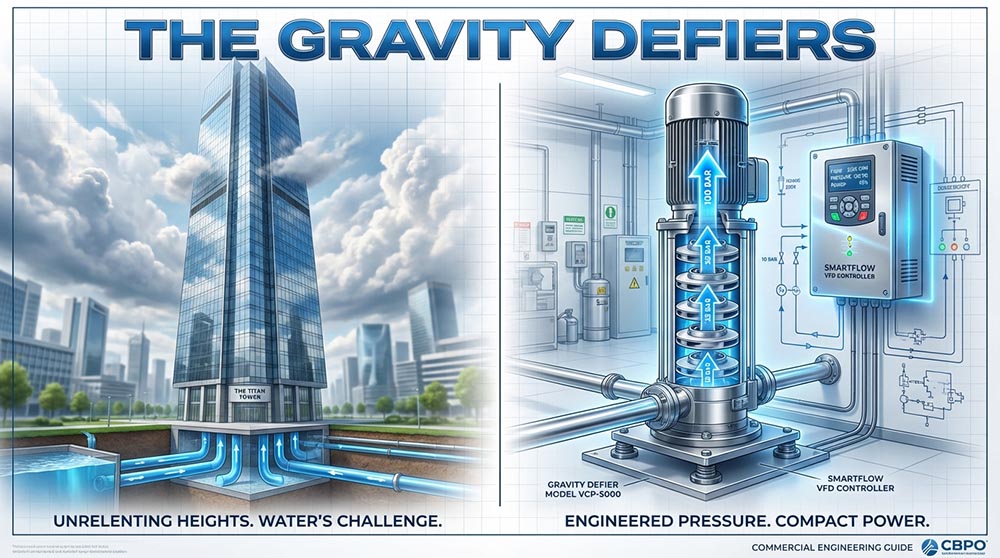
Anyone living or working above the sixth floor of a commercial building knows the frustration of a weak shower or a sputtering faucet. From an architectural and engineering standpoint, pushing water up 30, 50, or 100 stories is a massive battle against gravity. Water is incredibly heavy. Moving thousands of gallons of it straight up into the sky requires serious mechanical power, precision engineering, and highly reliable infrastructure. When tenants sign leases for luxury apartments or premium office spaces, they expect flawless utilities.
Municipal city water pressure is usually only strong enough to reach the first few floors of a building. The city mains provide a baseline flow, but that natural pressure drops off rapidly as elevation increases. Everything above those lower levels requires mechanical intervention to ensure water flows consistently. Without the right equipment, upper floors would experience total pressure failure, rendering high-rise living impossible. This physical limitation presents a unique challenge for urban planners and plumbing contractors.
Discover how Stream Pumps engineers high-efficiency secondary water supply systems using vertical multistage pumps to guarantee stable pressure from the lobby to the penthouse. We provide the mechanical muscle necessary to overcome gravity. Real estate developers and facility managers rely on advanced pumping technology to ensure their commercial water pressure remains strong, safe, and efficient at all times.
A secondary water supply system is a specialized plumbing network designed to boost water pressure for tall structures. The concept begins at the ground level or basement. Water flows from the municipal main supply into a large storage tank, commonly known as a break tank. From this tank, powerful mechanical pumps actively draw the water and push it upward into the building's internal pipe network. This method ensures that the building always has a reserve of water ready to be distributed on demand, independent of the fluctuating pressure from the city streets.
For many decades, the standard approach was to pump water all the way to a massive gravity-fed roof tank. The water would sit at the top of the building and flow downward to supply the floors below. While simple in theory, this old way is rapidly becoming outdated. Roof tanks pose significant contamination risks, as stagnant water exposed to the elements can harbor bacteria or pests. Additionally, storing thousands of gallons of water on the roof adds massive structural weight to the building. Architects had to design heavier, more expensive load-bearing columns just to support the plumbing infrastructure.
The modern way eliminates the need for giant roof tanks by utilizing variable speed booster sets. These advanced systems pump water directly into the building's pipe network exactly when it is needed. When a tenant turns on a tap, the booster pump system for tall buildings senses the pressure drop and instantly delivers the right amount of water. This on-demand approach is cleaner, safer, and far more efficient for commercial real estate developments.
The heart of a modern secondary water supply system is the vertical multistage centrifugal pump. These machines represent the gold standard for high-rise building water supply pumps. But what exactly makes them "multistage"? In a standard single-stage pump, there is only one spinning impeller used to move the water. A multistage pump, however, features multiple impellers stacked on top of each other inside a single vertical chamber. As water moves up through the pump, each impeller adds more velocity and pressure to the fluid. This sequential boosting allows the pump to build extreme pressure, known as "head," without needing a massive, oversized motor.
In commercial real estate, every square foot in the basement costs money. Space dedicated to utility rooms is space that cannot be used for parking, storage, or tenant amenities. The vertical design of these pumps saves massive floor space compared to traditional horizontal pumps. By stacking the impellers vertically and mounting the motor directly on top, the physical footprint of the equipment is drastically reduced. Urban planners and facility managers appreciate this compact design because it allows for high-powered pumping stations to fit into tight, restrictive mechanical rooms.
Water safety is an absolute priority for any property manager. Traditional cast-iron pumps can rust over time, leading to water discoloration and potential health hazards. That is why Stream Pumps uses food-grade stainless steel for our internal components, specifically featured in our Stream Pumps CDLF series. The stainless steel construction prevents rust, resists corrosion, and ensures drinking water remains pure from the basement to the top floor. This premium material choice guarantees a long lifespan for the equipment and peace of mind for the building's occupants.
Designing the plumbing for a skyscraper requires careful mathematical planning. One of the biggest engineering hazards is the overpressure danger. If you use one giant pump in the basement to push water all the way to the 50th floor, the water pressure required at the bottom would be immense. As a result, the pressure on the 10th floor would be so high it would literally burst the pipes, damage water heaters, and destroy standard faucets. You cannot safely supply a 50-story building from a single, continuous pipe without managing the internal forces.
The solution to this physics problem is the creation of pressure zones. Plumbing engineers divide a tall building into manageable vertical sections. For example, Zone 1 might cover Floors 1 through 15, while Zone 2 covers Floors 16 through 30, and so on. Instead of one massive pump doing all the work, the building utilizes a dedicated booster pump set for each specific zone. The pumps serving the lower zones operate at a moderate pressure, while the pumps serving the upper zones are calibrated to push much harder. This strategic zoning ensures that every tenant, regardless of their floor number, experiences comfortable and safe commercial water pressure.
Achieving perfect water pressure is not just about raw power; it is about intelligent control. This brings us to the critical role of Variable Frequency Drives, commonly known as VFDs. (For a deeper look into motor controls, you can refer back to our previous article about VFD technology). A VFD is an electronic controller that constantly adjusts the speed of the pump's electric motor based on the immediate water demand in the building.
Handling peak hours is a major challenge for commercial buildings. Morning showers and evening cooking routines create massive, sudden demands for water. During these peak times, the VFD speeds up the pumps to ensure everyone gets a strong shower. Conversely, at two in the morning when the building is asleep, the VFD slows the pumps down to a crawl. This dynamic adjustment saves massive amounts of electricity compared to older pumps that simply ran at full speed all the time. Furthermore, smooth acceleration and deceleration help with water hammer prevention. Water hammer is a damaging shockwave caused by water stopping or starting too abruptly. By gently ramping the pump speeds up and down, VFDs protect the entire pipe network from physical stress and extend the lifespan of the plumbing infrastructure.
High-rises often act as acoustic echo chambers. The concrete and steel structures can easily transmit sound waves from the basement mechanical room all the way up to residential apartments. For a property manager, noise complaints are a constant headache. Therefore, noise control is a top priority when selecting high-rise building water supply pumps. Engineers utilize vibration-damping mounts, flexible pipe connectors, and extremely quiet motors to ensure the booster systems operate silently. Residents will never hear a mechanical hum keeping them awake at night.
Maintenance is another crucial factor for commercial operations. When a pump requires servicing, the building cannot afford to turn off the water supply for an extended period. The Stream Pumps CDLF series features a highly innovative cartridge mechanical seal design. This engineering choice allows technicians to replace the pump's seal quickly and safely without taking the whole motor off the pipeline. Fast, efficient repairs mean minimal downtime for tenants and lower labor costs for the facility management team.
A reliable water supply is the invisible heartbeat of any premium commercial or residential building. Tenants rarely think about the complex engineering happening in the basement, but they will immediately notice if their water pressure fails. As commercial buildings grow taller and urban spaces become more densely populated, the reliance on vertical multistage centrifugal pumps will only increase. These intelligent, space-saving systems deliver the perfect balance of power, purity, and energy efficiency. You simply cannot compromise on your booster system when the comfort and safety of thousands of occupants are on the line.
Designing the plumbing infrastructure for a new high-rise or upgrading an aging commercial system? Contact the Stream Pumps commercial engineering team for a customized, space-saving booster pump solution. We are the premium, reliable partner you need for your next major real estate development project.
Address
No.17 XeDa Jimei Ind. Park, Xiqing Economic Development Area, Tianjin, China
Telephone
+86 13816508465
QUICK LINKS