+86 13816508465
Pump Knowledge
Mar. 24, 2026
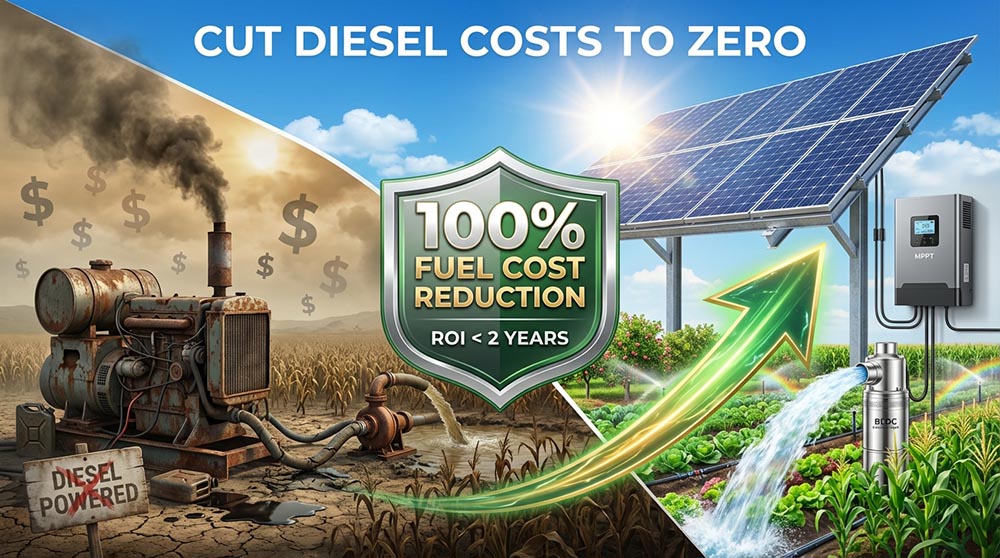
Running your irrigation system for ten hours a day without ever receiving an electricity bill or paying for a single drop of fuel sounds like a distant dream. For decades, farmers in remote areas have relied on noisy, expensive diesel generators to keep their crops hydrated and their livestock healthy. Every time global fuel prices spiked, agricultural profits plummeted.
The reality of sustainable farming 2026 looks vastly different. With diesel prices continuing to fluctuate unpredictably across Africa, the Middle East, and Latin America, relying on fossil fuels is a massive financial liability. Simultaneously, the cost of solar technology has dropped to historic lows. Upgrading to solar water pumping is no longer an experimental or strictly environmental choice. It is the most logical, financially sound decision a modern farming operation can make.
Stream Pumps provides complete, plug-and-play solar pumping systems engineered to thrive in the world's harshest, sunniest environments. By leveraging Stream Pumps renewable energy solutions, agricultural operations can completely eliminate their reliance on grid power and volatile fuel markets.
Transitioning to off-grid irrigation requires understanding the core components of the hardware. A modern solar pumping system is elegantly simple, relying on three main pieces of equipment to move water efficiently.
The process begins with the solar panels. These durable photovoltaic cells harvest direct current (DC) power from the sun. The size of the array depends on the depth of your well and the volume of water you need to move. Because panels have no moving parts, they require almost zero maintenance beyond an occasional cleaning to remove dust or debris.
The Maximum Power Point Tracking (MPPT) controller serves as the intelligent brain of the operation. Sunlight is not a constant force; passing clouds, morning shadows, and evening dusk all change the amount of energy hitting your panels. The MPPT controller acts as a smart inverter, constantly adjusting the voltage and current to ensure the pump receives the exact right amount of power to operate efficiently. This maximizes water output even during low-light conditions.
The actual heavy lifting is done by the pump itself. In modern solar applications, this is typically a high-efficiency brushless DC (BLDC) solar submersible pump or a specialized AC pump paired with a solar inverter. BLDC technology is particularly effective for borewell solar pump applications because the brushless design eliminates friction, reduces wear and tear, and vastly extends the lifespan of the equipment.
When calculating the cost of moving water, the numbers heavily favor renewable energy. The return on investment (ROI) for a solar water pump is incredibly fast because fuel costs are completely eliminated from the equation. Upgrading your infrastructure is a highly strategic business decision that protects your profit margins from global inflation.
Diesel generators traditionally win on upfront cost. A standard industrial generator has a relatively low initial purchase price. However, the true cost of diesel is hidden in the daily operational expenses. You are constantly paying for fuel, transporting that fuel to remote locations, and dealing with regular maintenance. Generators require constant oil changes, filter replacements, and mechanical repairs. Add the constant noise and localized air pollution, and the cheap generator quickly becomes an expensive burden.
Solar Water Pumps for Agriculture demand a higher upfront investment to purchase the panels, controller, and pump. Once the system is installed, your daily running costs drop to absolute zero. There is no fuel to buy, transport, or store. The maintenance is incredibly minimal, and the core components are designed to last anywhere from 10 to 20 years. Because the operational costs are eliminated, most agricultural operations see a complete break-even on their investment in less than two years. From that point on, every drop of water pumped is entirely free.
If you are accustomed to buying grid-tied electric pumps or diesel systems, you must adjust how you calculate your requirements for solar. The sizing process requires a shift in perspective.
Grid-tied pumps are normally sized by Gallons Per Minute (GPM). Because a generator or electrical grid provides a constant stream of power, the pump pushes the exact same amount of water every minute of the day.
Solar pumps behave differently. The flow rate changes naturally as the sun's intensity rises in the morning, peaks at noon, and fades in the evening. Therefore, you must size a solar pump based on the total volume of water needed per day. If your farm needs 10,000 gallons of water daily, the system is designed to gradually harvest and move that exact total volume during the available sunlight hours.
A common misconception about solar energy is that you need massive, expensive lithium battery banks to run the pump at night. For agricultural applications, this is an unnecessary expense. The smartest and most cost-effective strategy is to use water storage as your battery. By pumping water into a large elevated tank during the daylight hours, you store the energy as potential kinetic energy. When the sun goes down, you simply open a valve and use gravity to irrigate your fields at night.
While the pump does the physical work, the longevity and reliability of your system depend entirely on the quality of your controller. A cheap controller will quickly burn out a high-quality pump, but a smart controller will protect your investment for decades.
The engineering behind Stream Pumps solar solutions focuses heavily on intelligent control systems. Our MPPT controllers are built with advanced protective features that keep your farm running smoothly.
One of the most critical features is dry-run protection. If your well's water level drops unexpectedly, the controller instantly senses the change and stops the pump, preventing the motor from burning out. The controllers also feature over-voltage protection to handle sudden power surges from the solar array. For large-scale operations and NGO project managers, many advanced systems now include remote monitoring capabilities. This allows operators to track water output, system health, and power generation from a smartphone, no matter how remote the installation is.
The versatility of solar pumping technology makes it the perfect solution for a wide variety of off-grid challenges.
Keeping herds hydrated across vast, remote pastures is a massive logistical challenge. Sending a truck out daily with a portable generator and fuel is incredibly expensive and time-consuming. A dedicated solar submersible pump allows you to fill remote troughs automatically every day, ensuring your cattle or sheep always have fresh water without any daily labor required.
Drip irrigation is perfectly paired with solar technology. Because drip systems require low, steady water pressure over extended periods, the natural sunlight curve aligns beautifully with the system's needs. The pump slowly pushes water through the drip lines all day, providing plants with consistent, deep hydration that maximizes crop yields while conserving water.
Beyond commercial agriculture, zero fuel cost systems are transforming remote communities. For off-grid villages in developing regions, reliable access to clean drinking water is a matter of survival. Solar pumps provide a sustainable, maintenance-free way to pull fresh water from deep borewells, eliminating the need for villagers to travel long distances or rely on expensive municipal fuel deliveries.
The sun delivers free energy to your farm every single day. It is time to start harvesting it to move your water. By stepping away from the heavy financial anchor of diesel fuel, you secure the future profitability of your land and protect your business from volatile global markets.
Ready to unplug from the grid and eliminate your fuel costs? Send us your daily water requirements and well depth. The Stream Pumps solar engineering team will design a custom, high-efficiency solar pumping system for your farm today.
Address
No.17 XeDa Jimei Ind. Park, Xiqing Economic Development Area, Tianjin, China
Telephone
+86 13816508465
QUICK LINKS