+86 13816508465
Pump Knowledge
May. 19, 2026
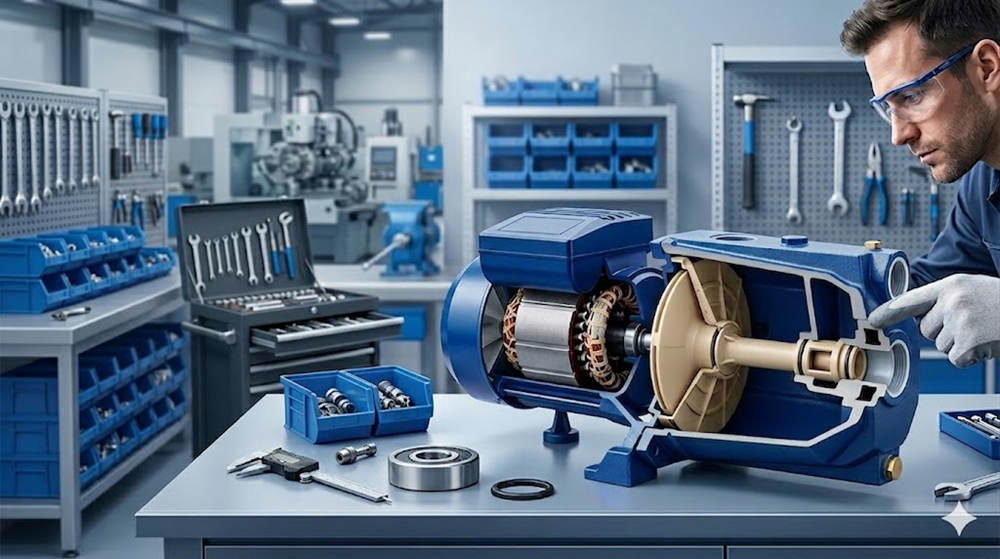
Anyone who has ever used a standard surface water pump knows the immense frustration of [losing prime.] You set everything up, turn on the power, and expect a steady flow of water. Instead, the pump just spins uselessly, emitting a loud whine while producing absolutely nothing. If a single bubble of air gets into the suction pipe, a standard centrifugal pump stops moving water. You are then forced to shut down the system, grab a bucket, and manually refill the casing to get things moving again.
Enter the JET pump. Also known as a self-priming water pump, this ingenious piece of equipment is the ultimate [plug-and-play] surface pump. It is specifically designed to swallow air, expel it, and keep pumping water without requiring constant babysitting. You fill the casing with water just once during the initial installation, and the pump handles the rest for years to come.
Stream Pumps breaks down how the clever engineering inside a JET pump makes it the most reliable choice for a variety of tasks. From shallow well extraction to garden irrigation and domestic water boosting, understanding how these systems operate will help you make the best choice for your property.
Understanding how Venturi pumps work requires looking inside the pump casing. The magic of a self-priming centrifugal pump lies in its dual-action design. It combines basic centrifugal force with a specialized internal nozzle to overcome the limitations of standard pumps.
The process starts much like a normal centrifugal pump. An electric motor turns an impeller, which is a rotating disc with curved vanes. As water enters the center of the impeller, the spinning vanes fling the fluid outward at high speeds. This creates pressure that pushes the water out of the pump's discharge port and into your plumbing system.
The real innovation happens right before the water leaves the pump. A self-priming water pump takes a portion of the water it just pressurized and shoots it back through a tiny internal nozzle called a Venturi tube. As the water forces its way through this narrow restriction, its speed increases dramatically.
This rapid increase in velocity results in a substantial decrease in pressure just past the nozzle, creating a powerful vacuum. This phenomenon is known as the Venturi effect. The resulting vacuum is so strong that it sucks water up from the well. More importantly, it can pull air bubbles through the suction line without causing the pump to stall.
Because of this internal recirculation and vacuum generation, you achieve true self-priming capability. Once the pump casing is filled with water the very first time, it never needs to be manually primed again. Even if the suction pipe fills entirely with air, the pump will continuously recirculate the water held in its casing, generating that Venturi vacuum until it pulls all the air out of the pipe and draws the water back up.
One of the most common uses for a self-priming water pump is drawing water from a private well. For homeowners looking to supply their houses with fresh water, a shallow well jet pump offers a highly accessible and cost-effective solution.
It is important to understand the physics of drawing water from the earth. A surface-mounted vacuum can only lift water so high before the physical weight of the water column overcomes atmospheric pressure. Because of this, standard shallow well JET pumps are perfect for pulling water from depths up to 25 to 30 feet (8 to 9 meters). If your water table sits deeper than 30 feet, you will need to look into a deep-well submersible pump instead.
Many homeowners strongly prefer a surface JET pump over a submersible pump for shallow wells. Having the pump sitting above ground, usually in a basement or a dedicated pump house, makes maintenance incredibly simple. You can easily inspect the motor, check for leaks, or adjust pressure settings without having to pull heavy pipes and wiring up from the bottom of a dark, muddy well. Furthermore, a surface pump is easier to protect from winter freezing with proper insulation.
Watering a large property requires consistent pressure and volume. A garden irrigation pump must be robust enough to handle fluctuating water sources while delivering enough force to run sprinklers.
A JET pump is perfect for drawing water from a backyard pond, a nearby river, or an underground rainwater harvesting tank. You can easily connect the pump's discharge to a manifold, powering multiple garden sprinklers simultaneously. The high-pressure output ensures that rotary sprinklers spin correctly and spray reaches the farthest corners of your lawn.
When a rainwater tank gets low during the dry season, the suction hose might accidentally suck in some air. A normal pump would immediately lose prime and require a manual restart, potentially burning out the motor if left running dry. A JET pump handles these air gulps perfectly. It simply processes the air, maintains its internal water reserve, and resumes pumping as soon as the water level stabilizes.
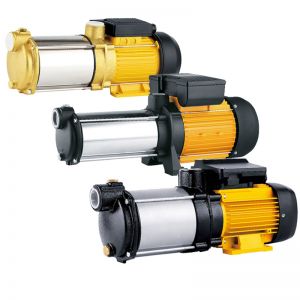
When selecting a unit from the Stream Pumps JET series, you will notice different material options for the pump body. The choice between a cast iron vs stainless jet pump depends entirely on how you plan to use the water.
Cast iron is the rugged, traditional choice for water pumps. The Stream Pumps SJET series features heavy-duty cast iron bodies that dampen motor noise and withstand serious physical abuse. These pumps are highly affordable and great for agricultural irrigation or boosting pressure for outdoor hoses. The only downside is that cast iron can develop surface rust over time, making it less ideal for indoor drinking water.
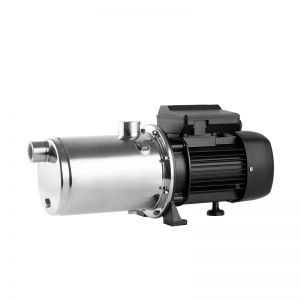
Stainless steel is the premium choice for domestic drinking water systems. The Stream Pumps SJETS series utilizes high-grade stainless steel for the pump casing, ensuring the water stays pure, rust-free, and tastes great. If you are building a domestic water booster system for your kitchen and bathrooms, stainless steel provides the sanitation and longevity required for safe consumption.
Thermoplastic pumps offer a lightweight and highly corrosion-resistant alternative. These models are perfect for portable garden use. You can easily carry a plastic JET pump from the garage to the backyard pond, plug it in for an afternoon of watering, and store it away without worrying about heavy lifting or rust formation.
A self-priming centrifugal pump is fantastic on its own, but it truly shines when integrated into a broader plumbing system. To create a fully functional domestic water booster, you need to add a few smart accessories.
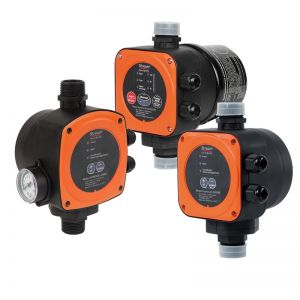
A JET pump is often paired with a small pressure tank and an automatic pressure switch or smart controller. The pressure tank holds a reserve of pressurized water, separated from a cushion of compressed air by a rubber bladder. The automatic controller monitors the pressure inside the plumbing lines.
When you open the kitchen faucet or turn on the garden hose, water flows out of the pressure tank, causing the line pressure to drop. The automatic controller detects this drop and immediately turns the JET pump on to replenish the water and maintain a steady flow. When you close the tap, the pump runs for a few more seconds to refill the tank, rebuilds the pressure, and then shuts off. This setup creates a fully automated, city-like water pressure experience for off-grid cabins or rural homes.
Locate the priming plug on the top of the pump casing. Unscrew the plug and slowly pour clean water into the hole until the pump body is completely full. Replace the plug and tighten it securely to ensure an airtight seal. Turn on the pump, and it will draw the water up the rest of the way.
No. Even though they are designed to handle air, self-priming pumps must have water inside the casing to operate. The internal water provides crucial cooling for the mechanical seals. Running any surface pump completely dry will melt the seals and destroy the motor in a matter of minutes.
A loss of pressure usually points to a suction leak. If there is a tiny crack in the pipe leading down into the well, the pump will continuously pull in air. While a JET pump can handle small amounts of air, a large leak will prevent it from building adequate pressure. Check all fittings and joints on the suction side of the system.
With proper maintenance and a dry, well-ventilated installation environment, a high-quality cast iron or stainless steel JET pump can easily last 10 to 15 years. Pairing the pump with an appropriately sized pressure tank prevents the motor from turning on and off too frequently, which significantly extends its lifespan.
A JET pump combines the lifting power of a vacuum with the steady flow of a centrifugal pump. By harnessing the Venturi effect, it eliminates the headaches of lost prime and airlocks. It is the ultimate hassle-free, self-priming workhorse for daily domestic water needs, agricultural irrigation, and property maintenance.
Tired of constantly priming your old garden pump or dealing with weak water pressure in your rural cabin? Upgrade to self-priming reliability. Explore the Stream Pumps JET series today and find the perfect pump for your home and garden.
Address
No.17 XeDa Jimei Ind. Park, Xiqing Economic Development Area, Tianjin, China
Telephone
+86 13816508465
QUICK LINKS