+86 13816508465
Pump Knowledge
Oct. 16, 2026
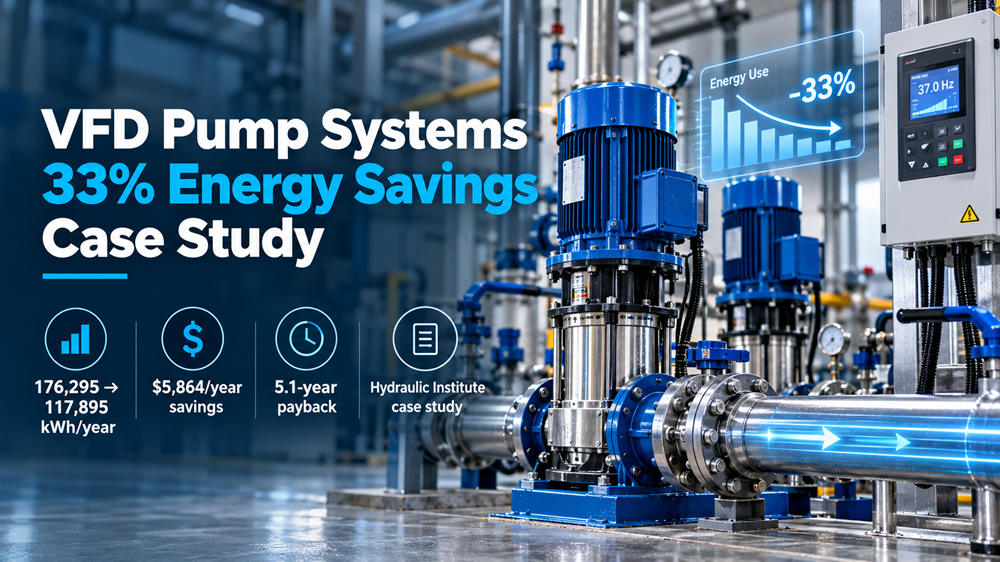
A variable frequency drive (VFD) retrofit reduced annual electricity use by approximately 33.1% in a drinking water booster pump case study published by the Hydraulic Institute. Annual energy consumption fell from 176,295 to 117,895 kWh, saving $5,864 per year at $0.10/kWh. The $30,000 upgrade achieved a 5.1-year simple payback under the case assumptions. These are results from the published case study, not verified performance figures for Stream Pumps products.
| Metric | Constant-speed system | VFD system |
|---|---|---|
| Annual electricity consumption | 176,295 kWh | 117,895 kWh |
| Annual electricity cost | $17,643 | $11,779 |
| Annual maintenance cost | $750 | $750 |
| Annual energy cost savings | — | $5,864 |
Financial assumptions: $30,000 capital expenditure; 15-year project life; 4% discount rate. The published analysis reports approximately $35,200 in net present value savings and a 17.9% internal rate of return.
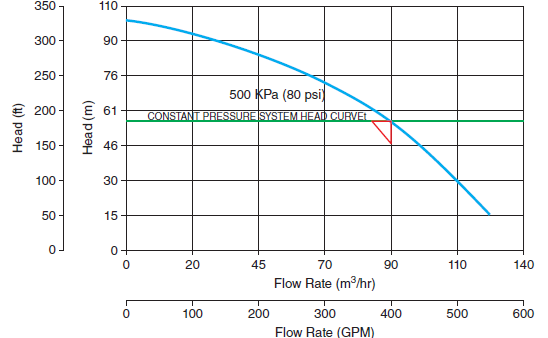
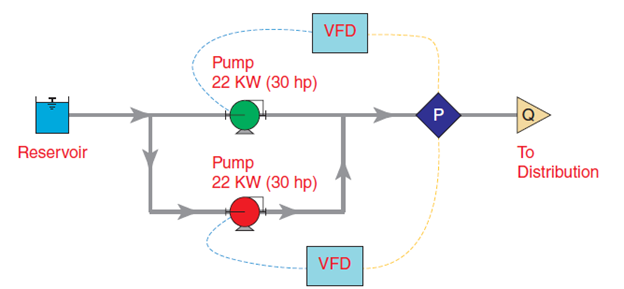
The case involves a drinking water network serving a small residential community. Two booster pumps operated in a duty/standby configuration, each powered by a 22-kW (30-hp) constant-speed motor. Each pump was rated at 90 m³/h and 550 kPa (80 psi), with 75% pump efficiency.
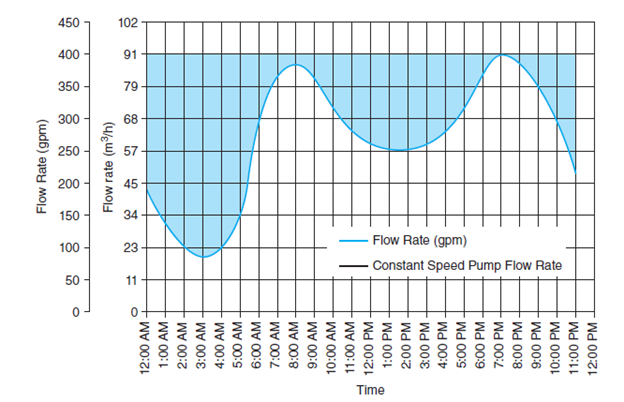
To maintain discharge pressure, a hydraulically controlled bypass valve returned excess pumped water to the reservoir. Water demand varied between 19 and 90 m³/h over a typical day, so the constant-speed pump often moved more water than consumers needed. The unused flow was recirculated rather than supplied to the network.
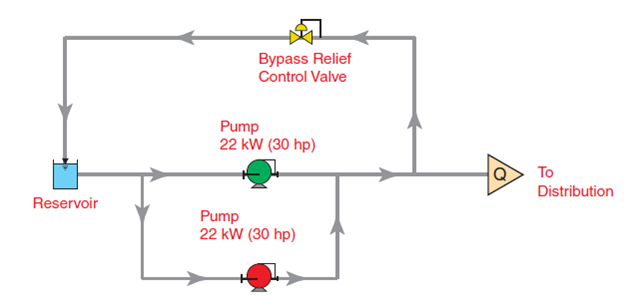
The system was retrofitted with VFD-controlled premium-efficiency motors. The bypass valve and recirculation piping were removed, and a pressure transmitter was installed at the pump discharge manifold. The controller varied pump speed in response to demand while maintaining the target pressure of 550 kPa (80 psi).
The operating change was straightforward: rather than running at constant speed and sending excess flow back to the reservoir, the booster pump adjusted its output to the water actually required.
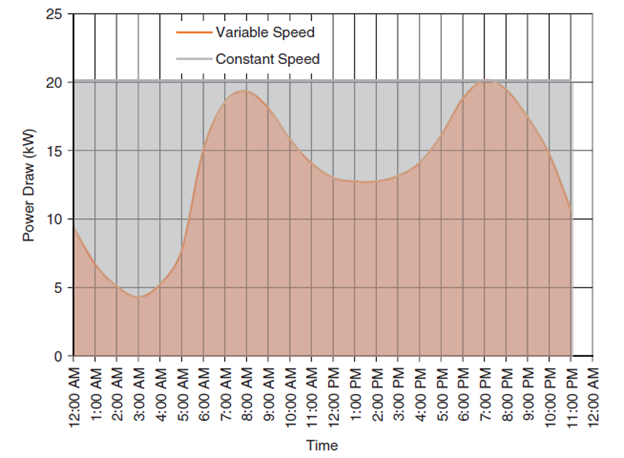
The greatest opportunity appeared during off-peak hours, when the network required much less than the pump's rated flow. With variable-speed control, motor power demand decreased instead of remaining near the constant-speed operating level. The published model reports a daily reduction from approximately 483 to 323 kWh.
Important limitation: The 33.1% saving is specific to this demand profile, original bypass arrangement, pump characteristics, equipment selection and electricity price. A VFD does not guarantee an equivalent saving in every system. Static head, pump efficiency at reduced speed, minimum flow requirements and control settings must be evaluated.
Variable demand: consumption changes markedly through the day.
Bypass or throttling losses: the existing system wastes energy while controlling pressure or flow.
Pressure feedback: sensors and controls can maintain the required distribution pressure.
Suitable pump hydraulics: the selected pumps operate efficiently and safely across the expected speed range.
For new booster system designs, evaluating variable-speed control early can help avoid unnecessary recirculation. For retrofits, compare the actual 24-hour flow and pressure profile against the existing pump curve before estimating savings.
In this Hydraulic Institute case, annual electricity consumption decreased by approximately 33.1%. Actual savings vary with demand patterns, system head, pump selection and the previous control method.
A discharge pressure sensor feeds measurements to the controller, which adjusts motor speed to match changing demand while targeting the required pressure setpoint.
No. Constant-speed systems can be appropriate where flow requirements are stable. VFD benefits should be assessed against system curves, operating hours, controls and installation costs.
The main lesson is not simply to install a VFD; it is to eliminate unnecessary pumping work. In this case, matching pump speed to daily water demand reduced electricity consumption by approximately one-third while maintaining the specified pressure. This provides a useful engineering reference when evaluating future variable-frequency booster pump systems.
Case study attribution: Adapted and independently summarized from the Hydraulic Institute, Cost Savings Through VFD Integration in a Drinking Water Distribution System, published July 7, 2026, based on its Pump Systems Optimization guide (2018). Read the original case study. Figures 1–5 are linked to the publisher's image files and remain the property of their respective rights holder(s); confirm reuse permission before publishing them on a commercial website.
Address
No.17 XeDa Jimei Ind. Park, Xiqing Economic Development Area, Tianjin, China
Telephone
+86 13816508465
QUICK LINKS