+86 13816508465
Pump Knowledge
Oct. 19, 2026
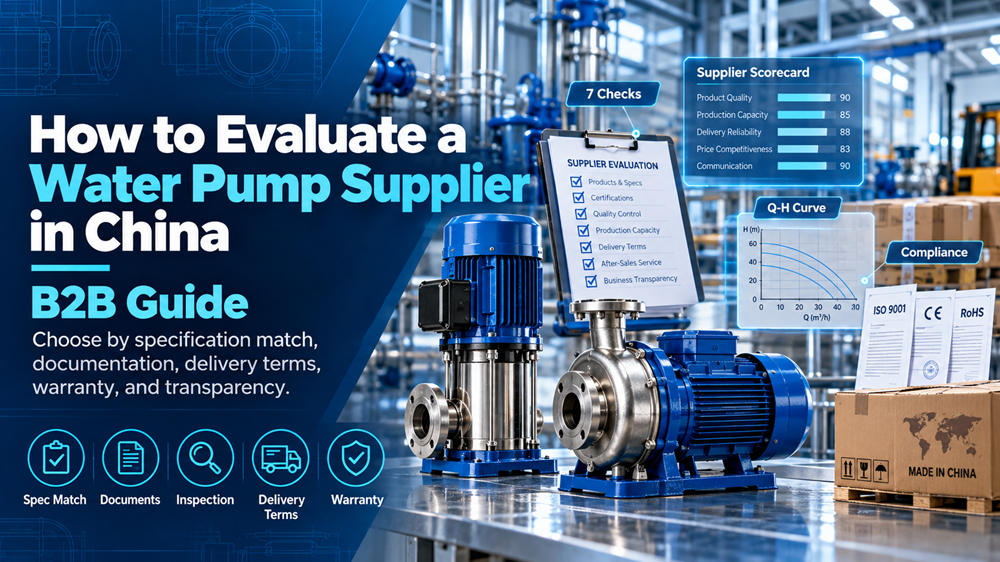
Bottom line: A reliable water pump supplier should be able to demonstrate that its proposed pump matches your duty point, provide traceable product and compliance documents, and agree on clear inspection, delivery, warranty and spare-parts terms. Comparing price alone is not enough: use the same written requirements for every quotation and verify supporting evidence before placing an order.
This practical checklist is designed for importers, distributors and project buyers sourcing water pumps from China. It applies whether the seller is a manufacturer, exporter or trading company.
Ask for the supplier's registered legal name, business registration details, business address and the name of the contracting entity. Confirm who will issue the invoice, receive payment, supply the goods and handle claims. A factory and a trading company can both be legitimate suppliers; what matters is that their roles and responsibilities are transparent.
Request a model-specific datasheet and Q-H performance curve. Specify required flow and total dynamic head at the same operating point, plus pumped liquid, temperature, solids content, installation and power supply. Do not compare two pumps using maximum flow and maximum head as if both occur simultaneously.
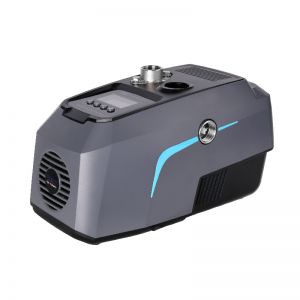
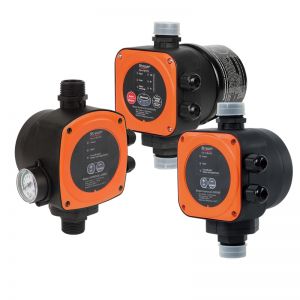
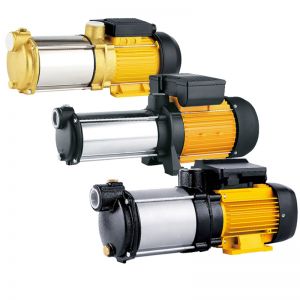
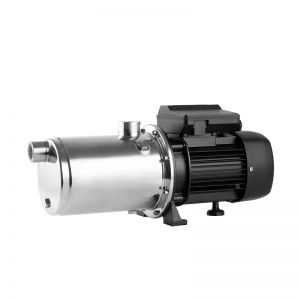
For available pump types and specifications, explore the Stream water pump product range, including submersible sewage pumps and centrifugal pumps.
Ask which inspection records, performance test reports, material specifications and certificates are available for the exact model and destination market. Check document issuer, model coverage, expiry or revision status and whether the claimed standard is relevant. Where hydraulic acceptance testing is required, specify the test method and acceptance grade in the purchase agreement; ISO 9906 addresses hydraulic performance acceptance tests for rotodynamic pumps.
EU buyers: Do not treat a CE logo or a generic certificate as proof of conformity. Determine which EU legislation applies to the product and request the relevant Declaration of Conformity and supporting documentation where required. Requirements depend on the equipment and market.
Define what will be inspected, by whom and at which stage. Depending on the order, checks may cover identification plates, electrical rating, visible condition, accessories, packaging, quantity and any agreed tests. If third-party inspection is important, confirm access and cost before paying the deposit. Do not assume that a supplier performs every test unless it is specified in writing.
A quote needs to state model and configuration, quantity, currency, unit price, Incoterms rule and named place, packing details, lead time, payment milestones and quote validity. A low EXW price is not directly comparable with a higher FOB or CIF quote without accounting for what each includes.
Ask for the written warranty period, exclusions, claim evidence required, response process and availability of common replacement components such as mechanical seals, capacitors, impellers and float switches where relevant. Establish who pays for replacements, shipping or local labor if a claim occurs.
Send a short specification with one unclear point and ask the supplier to identify what is missing. A useful response should clarify the duty point, operating environment or power configuration—not simply recommend a motor power rating. This tests the quality of communication without requiring the buyer to conduct a laboratory test.
Use this original 100-point buyer scorecard to compare suppliers consistently. Weights are a procurement framework suggested for this guide, not an ISO certification or industry rating. Score each category from 0 to 5, then multiply by its weight divided by 5. Do not award points without evidence.
| Evaluation area | Weight | Evidence to request | Score (0–5) |
|---|---|---|---|
| Specification matching | 25 | Model datasheet, Q-H curve, duty-point confirmation | __/5 |
| Documentation and compliance | 20 | Applicable declarations, test records, traceable documents | __/5 |
| Delivery and quotation clarity | 20 | Written Incoterms, lead time, packing, payment terms | __/5 |
| Warranty and spare parts | 20 | Warranty policy, spare-parts list, claims procedure | __/5 |
| Responsiveness and transparency | 15 | Consistent answers, legal identity, clear responsibility | __/5 |
| Maximum total | 100 | Weighted total = sum(weight × score ÷ 5) | __/100 |
Important: A high score does not override a critical failure. If a supplier cannot verify its legal identity, meet mandatory compliance requirements or show that the proposed pump fits the duty point, stop and resolve the issue before ordering.
There is no automatic winner. A manufacturer may provide direct access to production processes, while an experienced trading company may coordinate multiple product categories, documentation and sourcing. Neither business model guarantees product quality. Evaluate the specific model, responsible contracting entity, available evidence and after-sales process.
| Buyer question | What to verify |
|---|---|
| Who supplies the pump? | Legal seller, product brand, model and responsible manufacturer where applicable |
| Who verifies the specifications? | Named contact and technical documentation |
| Who handles a failure? | Warranty obligations, parts and claim process |
| Who ships and invoices? | Payment beneficiary, exporter and shipping documents |
Before comparing prices, normalize the offer. Suppose Supplier A quotes a pump with a similar motor power but no confirmed duty point, while Supplier B provides the exact flow–head performance and spare-parts terms. The quotes are not technically equivalent until the key specifications and scope are aligned.
Use the same RFQ specification and quantities for both suppliers.
Check performance at the required duty point—not only rated power or maximum head.
Confirm voltage, frequency, materials, seal, cable, accessories and packaging.
Normalize currency, Incoterms, freight scope, payment conditions and warranty.
Record all deviations and request a revised offer before final selection.
A company name on the invoice that does not match the agreed contracting entity, with no explanation.
Performance claims without model-specific data or a clear duty point.
Certificates that do not identify the relevant product or are presented without the required conformity documents.
Unclear inspection arrangements, warranty exclusions, or spare-parts responsibilities.
Last-minute changes to beneficiary bank details that cannot be independently verified.
For larger or higher-risk orders, consider independent business verification or inspection. A document checklist reduces risk; it does not replace appropriate due diligence.
No. Compare the complete landed cost, order size, specification match, service terms and coordination requirements. A lower unit price can be offset by freight, rework, delays or missing components.
Not automatically. ISO 9906 describes hydraulic acceptance testing of rotodynamic pumps; whether an agreed test report is required depends on the pump, order and contract. Ask for the applicable test procedure, grade and documentation when needed.
At minimum, send required flow, total dynamic head, liquid properties, operating conditions, power supply, installation details and order quantity. Add market compliance and documentation requirements when relevant.
The strongest supplier decision is based on verifiable specifications, clear commercial terms and defined responsibility after delivery. Use the seven checks and scorecard above to shortlist suppliers, then resolve every mandatory compliance or performance gap before ordering.
Need a pump quotation?
Browse the Stream pump catalogue and contact Stream Pumps with your required flow, head, liquid, electrical specifications and quantity. Ask for model-specific documents and commercial terms applicable to your order.
This buyer-oriented checklist draws on public guidance from the U.S. Commercial Service (business background checks), European Commission (importer and distributor obligations), and ISO 9906 (hydraulic acceptance test scope). The 100-point scorecard is an original editorial procurement framework, not a third-party certification. This article does not claim independent testing or factory audits by Stream.
Address
No.17 XeDa Jimei Ind. Park, Xiqing Economic Development Area, Tianjin, China
Telephone
+86 13816508465
QUICK LINKS