+86 13816508465
Pump Knowledge
Mar. 24, 2026
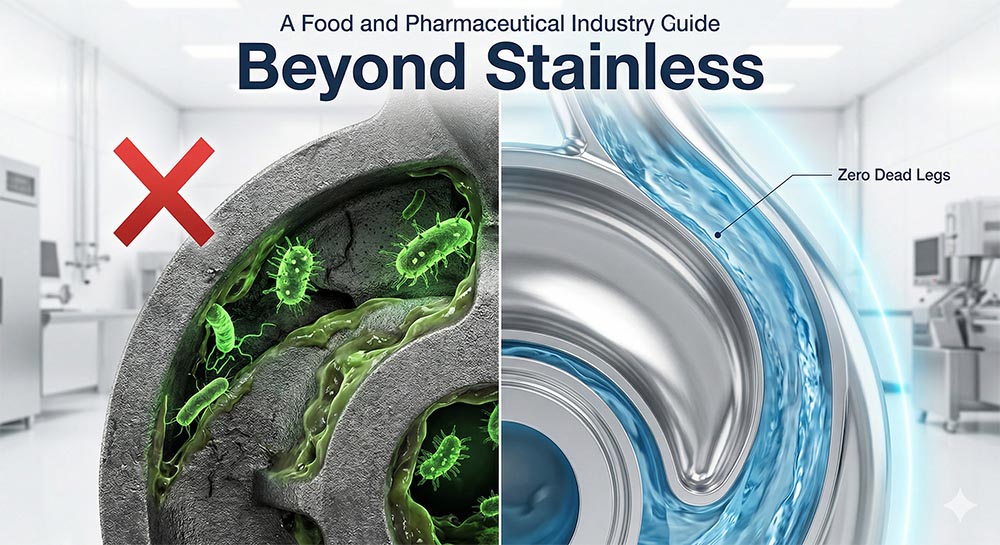
In a municipal wastewater treatment plant, a sudden pump failure generally results in a few hours of mechanical downtime and an urgent maintenance ticket. However, the stakes are exponentially higher in a dairy processing facility or a pharmaceutical manufacturing plant. In these environments, even a microscopic scratch on the interior casing of a pump can harbor bacteria. A single compromised component can ruin a million-dollar batch of product, trigger a massive public recall, and cause irreparable damage to a brand's reputation.
The core rule of food and pharmaceutical processing is absolute: you cannot use standard industrial water pumps for human-consumable liquids. Standard pumps simply do not possess the precise engineering required to guarantee a sterile, contamination-free environment. Regulatory bodies mandate strict compliance to ensure that every drop of liquid moving through a facility remains perfectly safe for consumption. Stream Pumps deeply understands the strict regulatory requirements of the food and beverage industry, designing equipment that leaves zero room for error.
By exploring the rigorous engineering standards behind Stream Pumps' sanitary centrifugal pumps, facility managers and process engineers can discover the ultimate solutions for product purity, easy cleaning, and global regulatory compliance. Understanding these mechanics is the first step toward safeguarding your processing line against invisible threats.
Achieving a truly sanitary environment requires a no-compromise approach to pump design. It is a common misconception that simply manufacturing a pump out of metal makes it suitable for food processing. In reality, the geometry and finish of the internal components dictate whether a pump is hygienic.
Standard fluid transfer pumps are riddled with internal crevices, sharp corners, and complex geometries where fluid can easily get trapped. These stagnant areas are known in the industry as 【dead legs.】 When organic material stagnates in these dead legs, it creates the perfect breeding ground for dangerous bacteria and pathogens.
Hygienic pumps are specifically engineered to eliminate these risks. They feature smooth, continuous internal geometries with zero dead zones. Every curve and angle is calculated to ensure that fluid flows seamlessly through the chamber without any opportunity to settle. This precision engineering guarantees that when the pump is flushed, every trace of the product is entirely removed from the system.
Material choice alone does not guarantee a sterile environment. It is not enough to simply use stainless steel; the inside of the pump must be polished to a mirror-like finish. Engineers measure this surface roughness using an Ra (Roughness Average) value.
For a pump to be classified as sanitary, the internal surfaces must typically achieve an Ra value of less than 0.8 μm. At this microscopic level of smoothness, microbes and bacteria have literally nothing to cling to. The highly polished surface prevents biofilm buildup, ensuring that the pump remains completely contamination-free during operation and can be sanitized effortlessly between batches.
When designing a food-grade water pump or a dairy transfer pump, the specific grade of the materials used is just as critical as the physical design of the pump itself.
Standard 304 stainless steel is perfectly fine for basic municipal tap water transfer. However, food and beverage processing plants require rigorous daily cleaning regimens that utilize harsh acidic and alkaline chemicals. Standard 304 stainless steel will quickly degrade, pit, and corrode under these intense chemical washes.
This is why 316L stainless steel is mandatory for sanitary centrifugal pumps. The 【L】 stands for low carbon, and this specific alloy contains added molybdenum. This crucial addition provides exceptional resistance to corrosion from aggressive cleaning chemicals and high chloride environments. A 316L stainless steel pump maintains its structural integrity and flawless surface polish decade after decade, ensuring continuous compliance with health regulations.
The metal casing is only one part of the equation. The internal seals that prevent the fluid from leaking out of the pump must also meet exacting standards. If a seal degrades, it can shed microscopic particles directly into the milk, beer, or pharmaceutical syrup being processed.
All O-rings and mechanical seals within hygienic pumps must be manufactured from food-grade EPDM, Viton, or other approved elastomers. These materials are chosen for their durability and chemical resistance. Utilizing FDA compliant seals guarantees that no foreign contaminants or chemical leachates will ever compromise the purity of your product. For a deeper dive into choosing the right elastomers, you can review our comprehensive Seal Material Guide.
Maintaining a sterile processing environment used to be a highly labor-intensive ordeal. Modern engineering has revolutionized how facilities approach sanitation, drastically reducing downtime and labor costs.
Historically, at the end of every production shift, specialized technicians had to manually unbolt, dismantle, and hand-scrub every single pump on the processing line. This method incurred huge labor costs, introduced the risk of human error during reassembly, and resulted in massive amounts of operational downtime.
Today, industry-leading facilities utilize CIP (Clean-in-Place) and SIP (Sterilize-in-Place) systems. Instead of dismantling the equipment, the system automatically pumps hot caustic soda, acid, and sterilized steam directly through the processing line. This ensures a consistent, repeatable, and highly effective sanitation cycle without requiring a single technician to pick up a wrench.
Different consumable liquids present unique engineering challenges. Sanitary centrifugal pumps are deployed across a wide variety of industries, each with its own stringent requirements for precision and hygiene.
Handling milk and cream requires immense care. A specialized dairy transfer pump must move the raw product gently to avoid shearing and damaging the delicate fat globules. If the pumping action is too aggressive, it can alter the texture and quality of the dairy product. Hygienic pumps deliver the necessary flow rates while treating the fluid with extreme care.
In the brewing and winemaking industries, preserving the exact flavor profile of the beverage is paramount. Sanitary pumps are used for transferring hot wort, delicate yeast slurries, and finished beer. The precision design ensures that no unwanted dissolved oxygen is introduced into the liquid during transfer, which would otherwise spoil the batch and cause off-flavors.
Beverage manufacturing often involves handling sticky, semi-viscous fluids like concentrated syrups and fruit juices. These heavy liquids would immediately clog a standard water pump, causing the motor to burn out. Hygienic pumps are built with the robust torque and specific impeller clearances needed to move these challenging fluids smoothly and efficiently.
The pharmaceutical industry operates under the most rigorous standards on the planet. Moving WFI (Water for Injection) or active liquid medications requires absolute sterility. There is zero tolerance for cross-contamination. Sanitary pumps provide the pharmaceutical-grade reliability required to protect patient health and pass stringent FDA audits.
When public health, regulatory compliance, and your brand's hard-earned reputation are on the line, the phrase 【good enough】simply does not apply to your pumping equipment. Investing in precision-engineered, contamination-free pumping solutions is the only way to ensure the long-term viability and safety of your processing facility.
You can contact us for customization.
Address
No.17 XeDa Jimei Ind. Park, Xiqing Economic Development Area, Tianjin, China
Telephone
+86 13816508465
QUICK LINKS