+86 13816508465
Pump Knowledge
Dec. 28, 2025
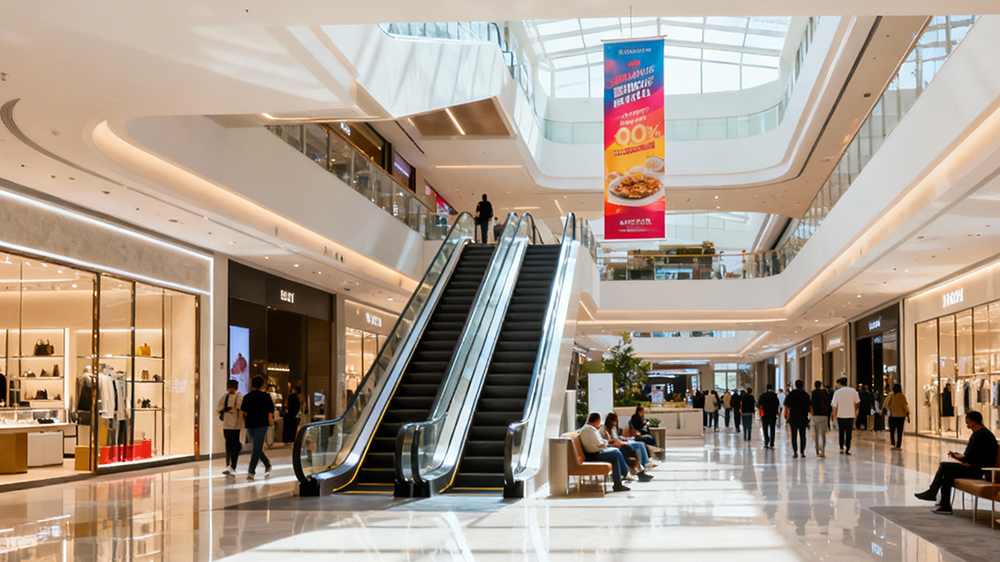
A flooded basement or a backed-up restroom in a busy shopping center isn't just a maintenance headache; it's a disaster for business. As climate patterns shift, heavy rainfall events are becoming more frequent and intense, putting immense pressure on commercial drainage infrastructure.
For shopping centers, the challenge is compounded by [mixed flow]—the dangerous combination of storm runoff and sanitary sewage. When these systems become overwhelmed, the risks to hygiene, tenant operations, and customer safety skyrocket.
This guide explores why rainwater-sewage mixed flow is a critical issue for shopping centers and how modern pump solutions, specifically sewage lifting systems and grinder pumps, can prevent costly failures.
In plumbing terms, a [combined system] is one where rainwater runoff and sanitary sewage (wastewater from toilets, sinks, and kitchens) are collected in the same pipe network. While modern regulations often require separated systems, many older infrastructures or improperly managed sites still deal with combined flows.
Mixed flow becomes critical during storms. When a sudden deluge of rainwater enters a system designed primarily for predictable sewage loads, the total volume can exceed pipe capacity instantly. This creates a pressurized surge that seeks the nearest exit—often a floor drain in a low-lying area.
Shopping centers face unique drainage challenges that make them highly susceptible to mixed flow problems.
Shopping malls have enormous roof surface areas and vast, paved parking lots. Unlike soil, these hard surfaces do not absorb water. Instead, they generate rapid, high-volume runoff that hits the drainage system all at once.
To maximize space, many centers place critical infrastructure underground. Parking garages, public restrooms, employee locker rooms, and food court grease traps are frequently located in basements. Because these fixtures sit below the level of the municipal sewer, they rely entirely on pumps to lift waste out.
Unlike a warehouse or office, a shopping center generates massive amounts of sewage from thousands of daily visitors and restaurant tenants. This heavy [base load] leaves less room in the pipes for stormwater surges.
When the drainage system cannot handle the combined volume of rain and sewage, the results are immediate and damaging.
Sewage Backflow: The most severe consequence is black water backing up into basement drains, bringing pathogens and filth into public areas.
Flooded Restrooms: Lower-level toilets may overflow, leading to emergency closures and costly cleanups.
Operational Downtime: If service corridors or loading docks flood, tenants cannot receive deliveries, disrupting business continuity.
Odor and Contamination: Even without a full flood, pressurized sewer gases can escape through traps, causing foul odors that drive customers away.
Understanding why these failures happen is the first step toward prevention.
Many older systems were designed based on historical [average] rainfall data. They simply aren't built to handle the intense [micro-burst] storms we see today, leading to immediate overload.
In some cases, rainwater downspouts are incorrectly tied into sanitary sewer lines. Without a buffer tank or delay system, the rainwater violently displaces the sewage, forcing it backward through the path of least resistance.
Standard pumps may fail when hit with a sudden influx of mixed water. If a pump cannot ramp up its flow rate or handle the solids stirred up by the turbulence, the pit will overflow.
Gravity drainage is unreliable during a storm surge because the municipal sewer itself may be full (surcharged). When the main sewer line is full, gravity stops working.
This is where active pumping becomes essential. A robust pump system creates the necessary pressure to force wastewater into the main line, even against resistance. For shopping centers, the pump system must be capable of continuous duty and possess a high peak capacity to manage the sudden spikes in volume.
To effectively manage shopping center drainage, facility managers need specific equipment tailored to mixed flow conditions.
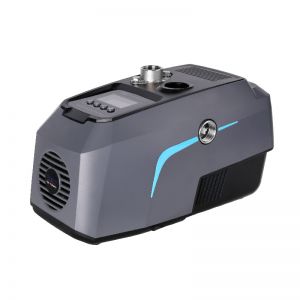
For facilities located below street level, an integrated sewage lifting system is the best defense. These are fully sealed units containing pumps, valves, and controls. They collect mixed waste in a tank and actively pump it out once it reaches a certain level. Because they are sealed, they prevent backflow from entering the building even if the municipal sewer backs up.
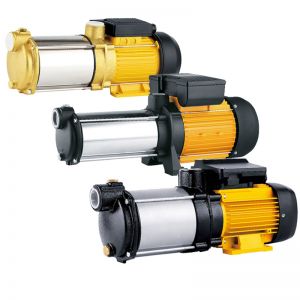
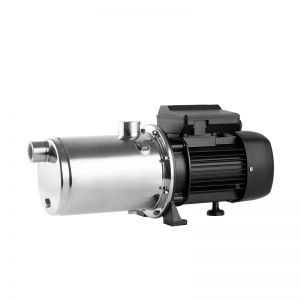
For general storm pits or large sump basins, high-capacity submersible pumps are required. These pumps are designed with large [free passage] capabilities, meaning they can pass debris (leaves, trash, solids) without clogging. Stability is key here; the pump must remain anchored and operational even during violent inflows.
In areas with high solid content—such as public restrooms or food courts—grinder pumps are vital. Unlike standard pumps that can jam on wipes or hygiene products, grinder pumps use steel cutters to slice solids into a fine slurry. This ensures that even if the mixed flow contains debris, the pump can discharge it through the pipes without blockage.
A pump is only as good as its control system.
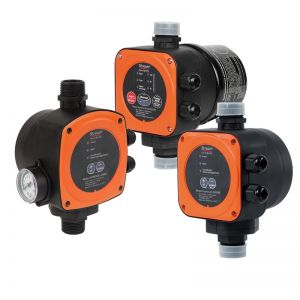
Float Switches and Level Sensors: These detect rising water levels and trigger the pumps. In mixed flow scenarios, you need a [lag] pump setup, where a second pump kicks in automatically if the first pump cannot keep up with the rain volume.
Non-Return (Check) Valves: These are non-negotiable. They ensure that once wastewater is pumped out, it cannot flow back into the pit, even if the city sewer is surcharged.
Emergency Backup Systems: Shopping centers should always utilize a dual-pump configuration (duty/standby). If one pump fails or is overwhelmed, the backup takes over. Additionally, generator backup is crucial to keep pumps running during storm-related power outages.
Beyond pumps, smart design can mitigate risks:
Partial Separation: Whenever possible, divert roof runoff into separate storm drains or retention ponds rather than the sanitary sewer.
Buffer Tanks: Install large holding tanks that can store excess water during the peak of a storm and slowly release it (pump it out) once the rain subsides.
Zoning: Separate the drainage systems for food courts (grease-heavy) from general restrooms and parking areas to prevent complex cross-contamination issues.
Proactive maintenance is cheaper than emergency repairs.
Pre-Season Inspection: Before the rainy season, inspect all pumps and clear debris from sump pits.
Clean the Pits: Silt and sand from parking lot runoff can settle in tanks, burying pump intakes. Regular vacuum cleaning of the pits is essential.
Test Alarms: Regularly trigger the high-level alarms manually to ensure the staff will be alerted during a real emergency.
Designing only for averages: Always size pumps for peak storm events, not average daily flow.
Single-pump systems: Never rely on one pump for a critical basement area. Redundancy is mandatory.
Ignoring solids: Don't assume storm water is clean. In a mixed system, it will contain sewage solids. Ensure pumps can handle solids (2-inch passage or grinder mechanisms).
Managing rainwater and sewage mixed flow is an essential part of shopping center operations. As weather events become more extreme, relying on gravity or outdated infrastructure is a recipe for flooding and financial loss.
By investing in robust sewage lifting systems, utilizing grinder pumps for solid handling, and implementing smart design strategies like flow separation and redundancy, facility managers can ensure their centers remain dry, safe, and open for business—no matter the weather.
Can rainwater and sewage share the same pump?
Technically, yes, if the pump is rated for sewage (solids handling). However, it is poor practice. Rainwater creates massive volume spikes that can overwhelm sewage pumps. Ideally, they should be separated, or the system must be significantly oversized to handle the combined flow.
How do pumps perform during extreme rainfall?
Standard residential pumps often fail because they cannot overcome the [head] pressure of a full municipal sewer line. Commercial pumps designed for these scenarios have higher torque and head capabilities to push water out even against high back-pressure.
What happens if municipal sewers are overloaded?
If the city sewer is full, gravity drains will back up into your building. A sewage lifting system with a non-return valve protects you by sealing off the building from the street sewer and using pump pressure to force waste into the pressurized main line.
Address
No.17 XeDa Jimei Ind. Park, Xiqing Economic Development Area, Tianjin, China
Telephone
+86 13816508465
QUICK LINKS