+86 13816508465
Dec. 22, 2025
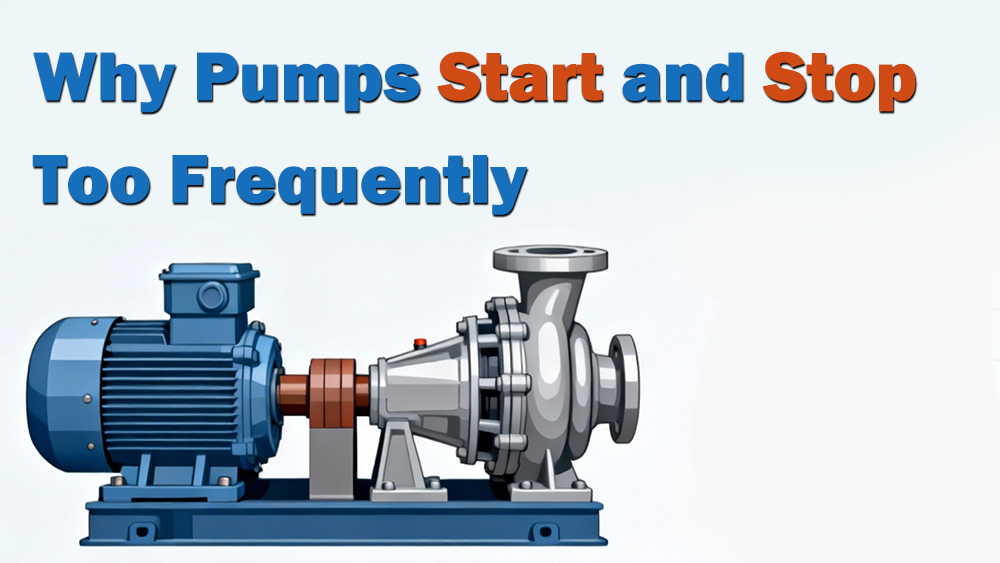
A pump that constantly turns on and off every few seconds isn't just an annoyance; it's a critical symptom of a problem that could lead to premature failure. This rapid, repeated starting and stopping is known as short-cycling, and it is one of the most destructive issues a pump system can face. Over time, it leads to motor burnout, increased energy bills, and unexpected system downtime.
For facility managers, engineers, and building owners, understanding the causes of short-cycling is the first step toward prevention. This guide will walk you through what short-cycling is, how to diagnose it, and the practical solutions you can implement to protect your equipment and ensure system reliability.
What Is Pump Short-Cycling?
Short-cycling is a condition where a pump turns on and off in rapid succession instead of completing a normal, steady operating cycle. For example, instead of running for several minutes to fill a tank or pressurize a system, a short-cycling pump might run for just 5-10 seconds before shutting off, only to restart moments later.
Why It's a Serious Problem
This frequent starting and stopping is incredibly damaging. Each time a pump starts, it draws a large inrush of electrical current, generating significant heat in the motor windings. When the pump doesn't run long enough to dissipate this heat, it accumulates, leading to:
Motor Overheating: The primary cause of pump burnout.
Mechanical Stress: Constant starting and stopping wears out motor bearings, seals, and couplings.
Increased Energy Consumption: The high current draw during startup is inefficient, driving up electricity costs.
Shortened Pump Lifespan: A pump that should last for years can fail in a matter of months if short-cycling is not addressed.
This issue is common in various applications, including booster pump systems, irrigation, HVAC chilled-water systems, and, most critically, in sewage and sump pump installations where failure is not an option.
Symptoms of Short-Cycling
Diagnosing the problem early can save you from a costly pump replacement. Look for these clear warning signs:
The pump is audibly turning on and off every few seconds or minutes.
The pressure gauge needle fluctuates wildly.
There are noticeable spikes in your building's electrical consumption.
You hear frequent clicking sounds from the pump's control panel or relay switch.
Water pressure at fixtures is low or inconsistent.
Common Causes of Pump Short-Cycling
Short-cycling is almost always a symptom of a system problem, not a faulty pump. The most frequent causes are related to pressure control and water flow.
Water Pressure Tank Issues
In pressurized water systems, the pressure tank is often the main culprit. These tanks store water under pressure to prevent the pump from starting every time a tap is opened.
Water-Logged Tank: The tank has lost its air cushion, meaning it's completely filled with water.
Damaged Bladder: The internal bladder or diaphragm that separates air and water has ruptured.
Incorrect Air Charge: The pre-charge air pressure in the tank is too low or too high for the system's needs.
Small Leaks in the Plumbing System
Even a tiny, hard-to-find leak can cause a pump to short-cycle. A slow drip from a faucet, a running toilet, or a minuscule crack in a pipe will cause system pressure to drop slowly, triggering the pump to turn on repeatedly to compensate for the loss.
Oversized or Undersized Pump
If a pump is too powerful for the system (oversized), it will reach its cutoff pressure almost instantly, causing it to shut down. Conversely, an undersized pump may struggle to build pressure, leading to erratic behavior. The pump's capacity must be correctly matched to the system's demand.
Faulty Pressure Switch or Settings
The pressure switch is the brain of the system, telling the pump when to turn on (cut-in pressure) and off (cut-out pressure).
Incorrect Settings: The pressure range between cut-in and cut-out is too narrow.
Failing Switch: Worn contacts or a failing sensor can cause erratic signals.
Blocked or Clogged Lines
Any restriction in flow can cause pressure to build up rapidly between the pump and the blockage, tricking the pressure switch into shutting the pump off. Common culprits include clogged impellers, dirty filters, or blocked suction lines.
Foot Valve or Check Valve Failure
Check valves are designed to prevent water from flowing backward through the pump. If a check valve is leaking or stuck open, the system will lose pressure as water drains back, forcing the pump to restart constantly to maintain pressure.
Additional Causes in Commercial and Industrial Systems
Larger, more complex systems have additional points of failure.
Incorrect VFD Setup: A Variable Frequency Drive (VFD) that is programmed with overly aggressive acceleration or incorrect pressure control logic can cause unstable operation.
Air Entrainment: Air trapped in the system can create unstable pressure readings, causing the pump to hunt for its setpoint.
Sump Pump Float Issues: In sewage or sump applications, a stuck float switch or improperly positioned level sensors can trigger rapid cycling.
How to Diagnose Short-Cycling
Follow this systematic approach to find the root cause:
1. Check the Pressure Tank: Verify the tank is the correct size for your system and check its air pressure with a gauge. If water comes out of the air valve, the bladder is ruptured.
2. Test the Pressure Switch: Observe the pressure gauge to see at what pressures the pump turns on and off. Ensure this range is appropriate for your system (a 20 PSI differential is common).
3. Inspect Check Valves: Turn the pump off and watch the pressure gauge. If the pressure drops steadily, you likely have a leaking check valve or a leak elsewhere in the system.
4. Look for Leaks: Conduct a thorough inspection of all pipes, fittings, and fixtures.
5. Examine Suction Lines and Filters: Clean all strainers and filters and ensure the suction line is clear.
6. Evaluate Pump Sizing: Compare the pump's performance curve to your system's actual flow and pressure demands.
Solutions to Prevent Short-Cycling
Once diagnosed, the solutions are often straightforward.
Repair or Replace Pressure Tanks: Re-charge the tank with air to the correct pressure (typically 2 PSI below the pump's cut-in pressure). If the bladder is damaged, the tank must be replaced. Sometimes, upsizing the tank is necessary to increase the drawdown volume.
Adjust Pressure Switch Settings: Widen the differential between the cut-in and cut-out pressures to allow for longer run times.
Correct Pump Sizing: Ensure the pump is properly matched to the application. For systems with highly variable demand, consider adding a small jockey pump to handle low-flow conditions.
Install or Replace Check Valves: A high-quality check valve is a small investment that prevents backflow and stabilizes system pressure.
Fix Leaks: Repairing even the smallest leaks is crucial for stopping unnecessary pump cycles.
Improve VFD Logic: For commercial systems, program a soft-start/stop function and use pressure transducers to provide more stable control feedback.
Long-Term Prevention and Maintenance
Proactive maintenance is the best defense against short-cycling.
Quarterly: Check pressure tank air pressure.
Annually: Inspect pressure switches, valves, and pipelines for wear or leaks.
As Needed: Clean all strainers, filters, and pump impellers.
Yearly: Review pump performance data and monitor energy consumption for abnormal patterns that could indicate a developing issue.
Conclusion: Protect Your Investment
Short-cycling is a silent killer of pumps. It places extreme stress on motors and drives up operational costs, all while compromising the reliability of your water system. By understanding its causes—from incorrect pressure settings to hidden leaks—you can diagnose problems early and take corrective action.
Emphasize proper system design, correct pump sizing, and a routine maintenance schedule. By being proactive, facility managers can prevent catastrophic pump burnout, reduce energy waste, and ensure their systems run efficiently for years to come.
Address
No.17 XeDa Jimei Ind. Park, Xiqing Economic Development Area, Tianjin, China
Telephone
+86 13816508465
QUICK LINKS