+86 13816508465
Pump Knowledge
Mar. 17, 2026
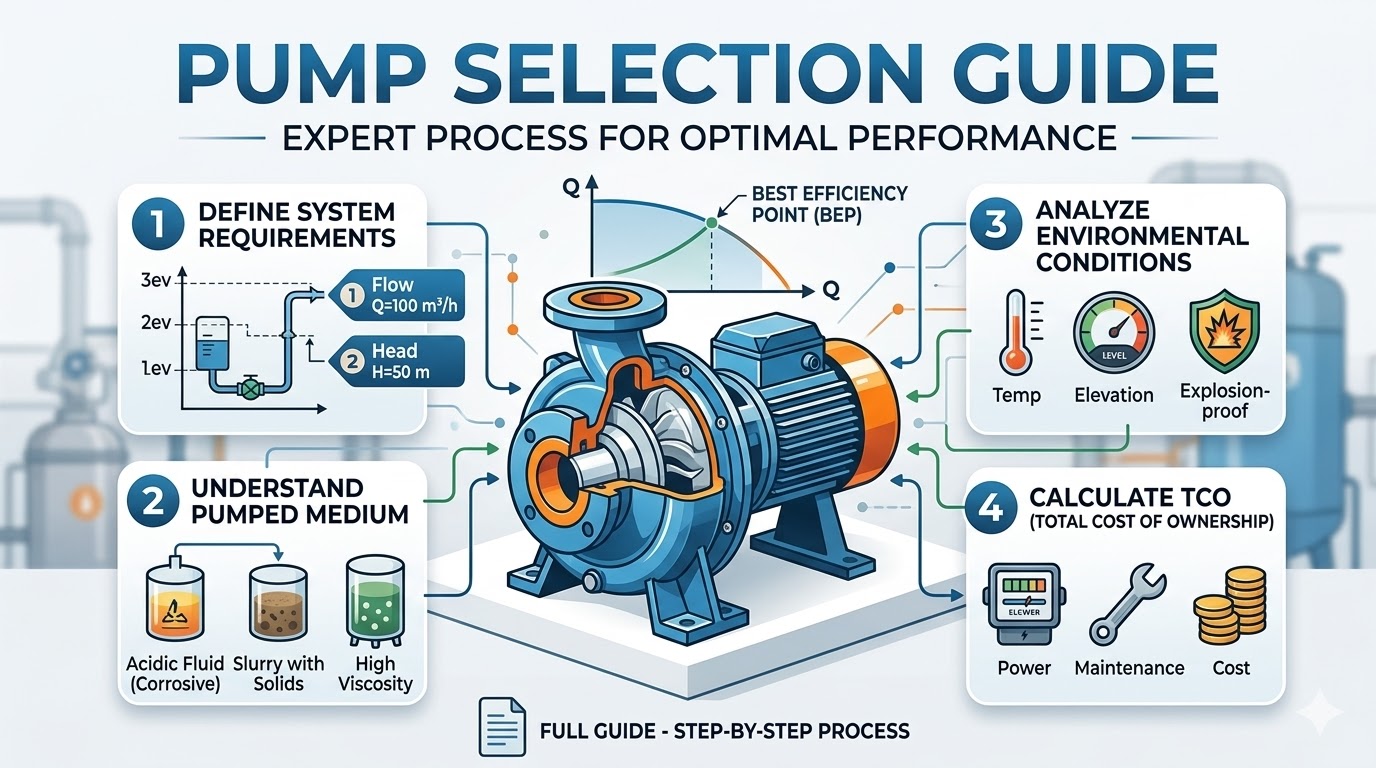
A common misconception among industrial equipment buyers is that selecting a pump with a higher horsepower motor automatically guarantees superior system performance. This assumption frequently leads to inaccurate sizing, excessive energy consumption, and premature equipment failure. Horsepower simply indicates the amount of electrical energy the motor consumes. It does not dictate how effectively that energy translates into the specific fluid movement your facility requires.
The fundamental physical principles of centrifugal pumps dictate a strict inverse relationship between head, which is the vertical height fluid is lifted, and flow, which is the volume of fluid moved. Increasing the vertical lift naturally decreases the volume of fluid the pump can deliver at a constant power level. Understanding this precise balance is critical for facility managers and operators.
Properly aligning pump specifications with your unique system requirements provides substantial long-term benefits. It saves significant amounts of electrical energy, reduces mechanical wear on internal components, and substantially cuts overall life-cycle costs. This comprehensive guide details the technical parameters necessary for accurate pump selection and explains the mechanical risks associated with improper sizing.
To correctly size a pump, you must first establish the specific fluid dynamics of your application. Two primary metrics define these dynamics.
What is Pump Head?
Pump head, formally known as Total Dynamic Head (TDH), is the total amount of mechanical energy a pump requires to move liquid from a starting point to a final destination. TDH is typically measured in feet or meters and consists of two primary components: vertical lift and friction loss.
Vertical lift, or static head, is the physical vertical distance the fluid must travel against gravity. Friction loss represents the resistance created by the physical system. As fluid travels through pipes, it rubs against the internal pipe walls, generating friction. Every elbow, valve, and fitting introduces additional resistance that the pump must overcome.
What is Flow Rate?
Flow rate measures the specific volume of liquid moved over a defined period. Standard units of measurement in the industrial sector include gallons per minute (GPM) or cubic meters per hour (m³/h). The necessary flow rate is entirely dependent on your operational targets, such as the required cooling capacity for a manufacturing process or the daily volume of agricultural irrigation needed.
To visualize the relationship between head and flow, consider the mechanics of a standard garden hose. If you leave the nozzle completely unobstructed, a large volume of water flows out over a short distance. This represents high flow and low head. If you place a thumb over the opening to restrict the outlet, the total volume of water decreases, but the water sprays a much greater distance. This represents low flow and high head. The total pressure from the water source remains constant, but the output characteristics shift based on system resistance.
Manufacturers document the exact capabilities of every centrifugal pump using a graphical representation known as a pump performance curve.
The Visualization of Performance
On a standard performance curve, the flow rate is plotted along the horizontal X-axis, while the total dynamic head is plotted on the vertical Y-axis. The resulting curve typically slopes downward from left to right. This downward trajectory clearly illustrates the inverse relationship between the two variables.
The Shut-Off Head
The highest point on the Y-axis occurs when the flow rate is exactly zero. This specific operational condition is known as the shut-off head. At this exact coordinate, the pump generates its maximum possible pressure, but the fluid does not move. The physical force of gravity or the closed system resistance exactly counters the mechanical energy provided by the spinning impeller.
The Maximum Flow
Conversely, the furthest plotted point on the X-axis represents the maximum flow limit. This theoretical point occurs when the system has absolute zero resistance, meaning zero head. The pump moves the highest possible volume of fluid, but lacks the remaining energy to lift it vertically.
Stream Pumps Tip
Every industrial pumping application presents unique environmental and operational variables. Our technical team meticulously maps these performance curves for client-specific orders. This ensures the selected equipment aligns perfectly with the site's required head and flow coordinates before installation begins.
Selecting a pump that does not match your system curve forces the equipment to operate inefficiently. Operating too far away from the intended design parameters introduces severe mechanical stress.
Scenario A: High Head and Low Flow
Operating too far to the left side of the performance curve means the pump is running against high system resistance with a severely restricted flow rate. This causes the fluid to recirculate internally within the pump casing rather than discharging properly.
The primary risk in this scenario is dead-heading. Because the trapped liquid is not moving out of the system, it rapidly heats up due to the constant friction of the spinning impeller. This overheating damages mechanical seals, compromises bearing lubrication, and can eventually cause the internal fluid to boil. Additionally, low flow creates unsteady water dynamics that cause heavy vibrations, known as radial thrust, which deflects the pump shaft and destroys internal wear rings.
Scenario B: Low Head and High Flow
Operating too far to the right side of the performance curve introduces an entirely different set of mechanical failures. When a pump operates with very little system resistance, it attempts to move a massive volume of water.
This rapid fluid movement forces the motor to draw excess electrical current, leading directly to motor overload and potential electrical failure. Furthermore, at extremely high flow rates, the Net Positive Suction Head required (NPSHr) by the equipment increases exponentially. If the NPSHr exceeds the pressure available in your system, the pump will experience cavitation. Cavitation is a highly destructive phenomenon where rapid pressure changes cause vapor bubbles to form and violently collapse against the metal impeller. This causes rapid material erosion, severe structural vibration, and immediate efficiency loss.
The Best Efficiency Point (BEP)
The primary goal of industrial pump selection is to operate as close to the Best Efficiency Point (BEP) as possible. The BEP is the specific coordinate on the performance curve where the pump transfers mechanical energy to the fluid most effectively. Operating at the BEP minimizes vibration, radial thrust, and component wear. The Hydraulic Institute advises that for standard continuous operations, pumps should run within a Preferred Operating Region (POR) defined as 70% to 120% of the BEP.
Accurate pump selection requires precise mathematical calculations regarding your facility. Follow these standardized steps to establish your specific requirements.
Step 1: Measure Vertical Distance
Calculate the exact elevation change from the surface of the fluid source to the highest point of fluid discharge. If you are drawing from a tank where the liquid level fluctuates, always measure from the lowest potential fluid level. This ensures you account for the maximum necessary vertical lift your pump will experience.
Step 2: Calculate Pipe Friction Loss
Fluid movement inherently generates friction against the internal walls of the piping infrastructure. You must calculate this hidden energy loss by determining the total linear length of the pipe, the internal pipe diameter, the pipe material, and the operational flow rate. You must also count the specific number of elbows, connections, and gate valves in the system. Engineering tables and friction loss calculators utilize this data to provide the specific head loss equivalent, usually measured in feet or meters.
Step 3: Determine Required Volume
Define your operational target clearly. Ascertain exactly how much fluid must be relocated within a specific timeframe to keep your facility running optimally. Express this firm requirement in either GPM or m³/h to establish the necessary horizontal coordinate for the X-axis of the performance curve.
Step 4: Consult the Stream Pumps Catalog
Add your vertical distance to your calculated friction loss. The resulting sum is your Total Dynamic Head. Cross-reference this TDH value with your required flow rate against the performance curves published in the Stream Pumps catalog. The correct pump model will feature a BEP that aligns closely with your calculated coordinates.
Different industrial sectors require vastly different pump performance characteristics. Examining specific use cases highlights the importance of matching the pump curve to the application.
Agriculture and Irrigation
Agricultural operations often demand highly specific configurations based on the chosen irrigation methodology. Flood irrigation requires moving massive volumes of water across relatively flat terrain, which necessitates equipment optimized for maximum flow and low head. Conversely, operating a complex network of pressurized overhead sprinklers requires substantial pressure to push water through small nozzles over long distances. This specific application demands a pump optimized for high head and moderate flow.
Mining and Construction
Dewatering deep excavation pits or underground mine shafts presents severe vertical lift challenges. These environments require specialized high-head submersible pumps. The equipment must be capable of overcoming immense static head to successfully transport slurry and groundwater from deep underground to the surface infrastructure, often prioritizing maximum lift capabilities over total volume output.
What is the difference between a pump curve and a system curve?
A pump performance curve represents the physical capabilities of the pump itself, as tested and provided by the manufacturer. It shows what the pump can do across various pressures. A system curve represents the actual physical requirements of your specific piping network. It shows how much head is required to move fluid through your facility at different flow rates. The exact point where the pump curve intersects with your system curve is your actual operating point.
How does fluid specific gravity affect total dynamic head?
Specific gravity is the ratio of a liquid's density compared to the density of pure water. While specific gravity directly impacts the amount of horsepower required to move the fluid, it does not change the physical height the pump can lift the fluid. A centrifugal pump will lift a heavy liquid to the same physical height as water, but the motor will draw significantly more power to achieve that lift.
Can a variable frequency drive (VFD) help manage pump performance?
Yes, utilizing a variable frequency drive allows operators to adjust the electrical frequency supplied to the motor, which changes the rotational speed of the impeller. Adjusting the speed effectively creates a new performance curve. This allows facilities to maintain proper operation near the Best Efficiency Point even when system demands fluctuate throughout the day.
Successful industrial operations recognize that procuring a pump is not merely about sourcing the largest motor available; it requires securing a highly specific engineering solution. Accurately matching your facility's unique system requirements to the correct performance curve prevents catastrophic equipment failure, eliminates wasted electricity, and guarantees reliable, continuous performance.
Not sure which model fits your site? Contact Stream Pumps technical engineers for a free performance mapping and quote.
Address
No.17 XeDa Jimei Ind. Park, Xiqing Economic Development Area, Tianjin, China
Telephone
+86 13816508465
QUICK LINKS