+86 13816508465
Pump Knowledge
Mar. 18, 2026
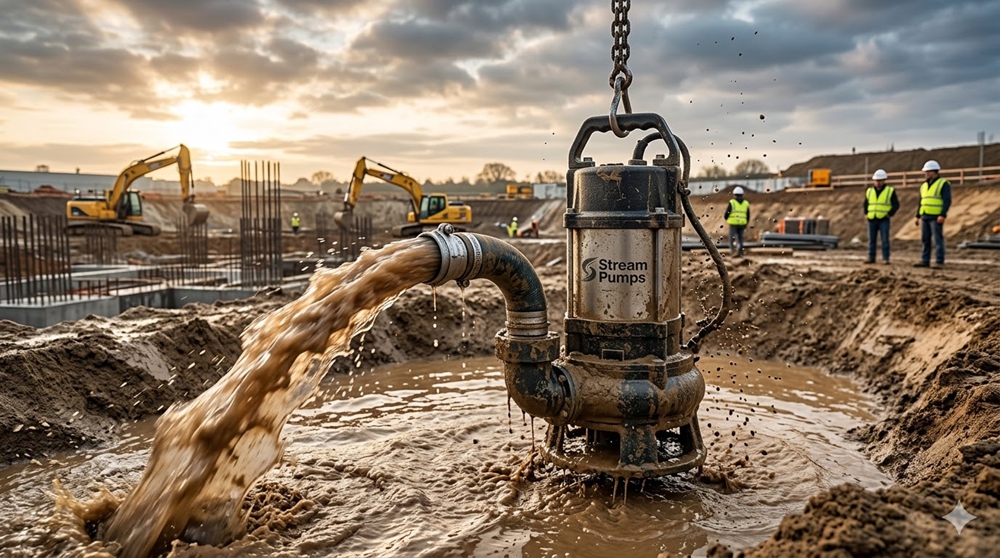
A flooded foundation pit is a massive drain on your project timeline and your budget. Unpredictable weather events and persistent groundwater seepage can bring heavy machinery to a complete halt. When water fills an excavation site, workers cannot safely operate equipment, soil walls become unstable, and entire construction schedules face severe delays.
Removing this water requires highly specialized equipment. Construction site water management relies heavily on the ability to move thick, abrasive materials quickly and reliably. Deploying industrial-grade submersible dewatering pumps is the only proven method to keep sites dry, safe, and productive.
This guide outlines exactly how to evaluate, size, and deploy a submersible dewatering pump for construction. You will learn the mechanical differences that allow heavy-duty pumps to survive abrasive mud and sand, the exact formulas needed to size a pump for foundation pit drainage, and the daily maintenance routines that prevent catastrophic equipment failure on the job site.
Many contractors make the expensive mistake of placing standard clear-water pumps into excavation pits. These standard units almost immediately fail when exposed to the harsh realities of abrasive fluid pumping. Construction sites present three distinct challenges that will quickly destroy an inadequate pump.
The Abrasive Enemy: Sand and Gravel
Construction water is rarely clear. It contains high concentrations of sand, gravel, bentonite, and thick sludge. When these materials pass through a standard cast iron impeller, they act like coarse sandpaper. The abrasive friction wears down the internal components of standard pumps within days. As the impeller loses its precise shape, the pump rapidly loses its ability to generate the pressure required to move water out of the pit.
Severe Clogging Issues
A typical excavation site contains rocks, clay clumps, and various construction debris. Standard pumps feature narrow internal clearances designed only for clean fluids. When site debris enters these narrow passages, the pump chokes. Once a standard pump clogs, the motor continues attempting to turn the blocked impeller. This rapid heat buildup inevitably leads to internal thermal damage, burned-out stators, and complete motor failure.
Dry-Running and 【Snoring】 Risks
Dewatering operations frequently experience periods of low water flow. As the pump empties the pit, it eventually begins pulling in a mixture of air and water—a condition known as 【snoring.】 Standard submersible motors rely entirely on the surrounding liquid to dissipate the heat they generate during operation. When water levels drop and expose the motor housing to air, the pump loses its primary cooling mechanism. Running a standard pump dry will quickly melt its internal seals and cause permanent electrical shorts.
To combat the extreme conditions of a foundation pit, manufacturers engineer specific mechanical defenses. Understanding these features helps site engineers select the correct equipment for abrasive fluid pumping.
High-Chrome Impellers for Maximum Abrasion Resistance
Metallurgy plays a critical role in pump longevity. Heavy-duty submersible pumps replace standard cast iron impellers with high-chrome cast iron alloys. High-chrome iron undergoes a specialized heat treatment process that makes the metal exceptionally hard. This hardened surface easily withstands the constant bombardment of abrasive sand and gravel. While high-chrome components require a larger initial investment, their extended operational life significantly reduces total equipment replacement costs over the duration of a long project.
Built-In Agitators for Slurry and Silt
Solids naturally settle at the bottom of a foundation pit, forming a dense layer of mud and silt around the base of the pump. A standard pump simply pulls the clear water off the top, leaving the heavy mud behind. To solve this, a true slurry pump features a built-in agitator. The agitator is a specialized blade attached directly to the extended pump shaft, protruding below the suction intake. As the shaft spins, the agitator whips the surrounding settled solids into a fluid slurry. This physical stirring action prevents solids from building up and choking off the suction, allowing the pump to consistently expel heavy mud from the work area.
Motor Protection and Double Mechanical Seals
The electric motor requires absolute protection from the surrounding water and abrasive dust. Stream Pumps heavy-duty solutions utilize advanced sealing technologies to isolate the electrical components. This includes the implementation of double mechanical seals enclosed within an oil bath. The outer seal blocks the heavy abrasives, while the inner seal provides a secondary barrier against moisture intrusion. Furthermore, these rugged units feature built-in thermal overload protection. If the motor begins to overheat due to a temporary blockage or extended dry-running, the thermal switch automatically cuts power to the unit, saving the motor from permanent destruction.
Pump horsepower or discharge size does not accurately indicate performance. A manufacturer can produce dozens of models for a single discharge size. Selecting the right pump requires matching the site's specific flow and pressure requirements to the correct performance curve.
Calculating Total Dynamic Head (TDH)
Pumping water out of a 20-meter deep pit requires significant force. To properly size the equipment, engineers must calculate the Total Dynamic Head (TDH). TDH represents the total resistance the pump must overcome to move the fluid.
You calculate TDH by adding the static head, friction losses, and minor losses together.
Static Head: The vertical distance from the water level in the pit to the final discharge point.
Friction Losses: The resistance created as the water rubs against the inside walls of the discharge pipe or hose. A longer pipe, a smaller diameter, and a higher flow rate will all significantly increase friction loss.
Minor Losses: The resistance added by bends, elbows, valves, and fittings within the piping system.
It is standard engineering practice to add a 5 to 10 percent safety margin to the calculated TDH to account for unexpected friction or future scaling inside the pipes.
Determining the Required Flow Rate
Site engineers must evaluate the required volume of water removal. This requires balancing two distinct scenarios: sudden monsoon downpours and slow, continuous groundwater seepage. You must calculate the base groundwater inflow using hydrogeological data, and then add the expected peak rainfall for the specific geographic region. The pump should operate as close to its Best Efficiency Point (BEP) as possible—ideally within 30 percent. Operating too far outside this efficiency range causes imbalanced mechanical forces on the pump shaft, which accelerates bearing wear and seal failure.
Proper Discharge Pipe Sizing and Velocity
Matching the discharge hose or pipe to the pump is a critical step in slurry management. If the pipe is too large, the water moves too slowly, and the heavy sand and gravel will fall out of suspension. These settled solids will eventually pack the pipe and block the flow entirely. If the pipe is too small, friction losses skyrocket, reducing the pump's output and wasting electrical energy.
Site engineers must maintain specific fluid velocities to keep materials moving. For water carrying light silt, aim for a fluid velocity between 1.5 and 2.5 meters per second. For heavier abrasive fluid pumping involving thick slurries and sand, you must maintain a velocity between 2.0 and 3.0 meters per second to prevent deposition inside the lines.
Even the most rugged heavy-duty dewatering pump will fail if installed incorrectly. Proper deployment and routine maintenance protect the equipment and ensure reliable foundation pit drainage.
Correct Positioning in the Pit
Never drop a submersible pump directly into deep, loose mud. The pump will sink, burying the motor housing and severely restricting water flow. Instead, suspend the pump slightly above the bottom of the pit using a chain or a heavy-duty rope. Alternatively, place the pump on a solid platform, such as a large concrete block or inside a perforated steel strainer basket. This allows the built-in agitator to access the slurry without allowing the entire unit to sink into the substrate. Additionally, if the system utilizes automatic float switches, ensure the "off" float is positioned securely above the pump's continuous running water level to prevent extended dry-running.
Strict Cable Management Rules
The number one cause of electrical failure for submersible pumps on construction sites is damaged power cables. Site workers frequently make the critical error of lifting or pulling the pump by its electrical cable. This action tears the waterproof seal at the cable entry point, allowing water to rush directly into the electrical stator. Always lift and lower the pump using a dedicated lifting chain or rope attached to the designated lifting handle. Secure the power cable safely away from heavy machinery traffic to prevent crushing and severing.
Routine Daily Checks
Site workers should execute brief, daily inspections to guarantee continuous operation.
Check proper rotation: When using three-phase power, incorrect wiring will cause the impeller to spin backward. The pump will still move water, but at a fraction of its intended capacity, and the reverse torque can loosen internal components. Verify the startup kick reaction confirms the correct rotation direction.
Inspect discharge lines: Walk the length of the discharge hose daily. Look for kinks, severe bends, or leaks that reduce system efficiency.
Monitor amperage: Measure the amp draw periodically. A sudden spike in electrical current indicates that the impeller is rubbing, the bearings are failing, or the pump is attempting to pass a severe blockage.
What is the difference between a standard dewatering pump and a slurry pump?
A standard dewatering pump is designed to move relatively clear water with minimal suspended solids. A slurry pump is engineered specifically for abrasive fluid pumping. Slurry pumps feature thicker casing walls, high-chrome wear parts, and built-in agitators designed to move high concentrations of heavy sand, mud, and gravel without experiencing rapid internal degradation.
How much reserve head should I factor into my sizing calculations?
Engineers typically add a 5 to 10 percent margin to their Total Dynamic Head (TDH) calculations. This reserve accounts for normal calculation uncertainties, variations in static water levels, and the gradual increase in pipe friction caused by internal wear and scaling over the duration of the project. If the pit layout requires a complex discharge route with multiple sharp bends, lean closer to a 15 percent margin.
Can a submersible dewatering pump run dry?
Running dry is highly detrimental to standard submersible pumps, as they rely on the pumped liquid for motor cooling. However, heavy-duty construction models often feature specialized cooling jackets or oil-filled motor housings that tolerate temporary snoring or dry-running. Despite these features, you should always utilize float switches to turn the pump off before the water level drops below the manufacturer's recommended continuous running level.
Choosing the correct submersible dewatering pump for construction secures your timeline and your budget. By properly calculating your Total Dynamic Head, matching your flow requirements to the right pipe velocity, and selecting a unit fortified with high-chrome components and agitators, you effectively eliminate the risks associated with foundation pit drainage. Investing in the proper heavy-duty equipment protects your multi-million dollar construction project from costly water damage, unsafe working conditions, and daily operational delays.
Don't let water dictate your project schedule. Contact the Stream Pumps engineering team today to size the perfect heavy-duty dewatering pump for your next excavation site.
Address
No.17 XeDa Jimei Ind. Park, Xiqing Economic Development Area, Tianjin, China
Telephone
+86 13816508465
QUICK LINKS