+86 13816508465
Pump Knowledge
May. 19, 2026
Of all the mechanical equipment installed in a commercial building, the fire pump is the only one you purchase with the sincere hope that it never actually runs. HVAC systems cycle daily. Elevators carry thousands of passengers a week. Domestic water pumps run constantly to meet tenant demand. A fire pump, however, sits quietly in the dark. But if a fire breaks out on the twentieth floor, that dormant piece of equipment instantly becomes the sole lifeline between a minor, containable incident and a catastrophic tragedy.
Standard municipal water pressure is rarely strong enough to feed a high-rise sprinkler system. City mains might provide enough pressure to push water up a few stories. Once you build higher, gravity and pipe friction take over. If a sprinkler head activates on an upper floor, the water requires a massive mechanical boost to ensure it sprays with enough force to suppress the flames. Without that boost, the entire fire suppression system is useless.
This is where specialized commercial building fire protection comes into play. Stream Pumps engineers uncompromising, code-compliant fire pump systems designed to start instantly and run flawlessly when seconds count. We understand that this equipment is not just another building component. It is critical life safety equipment. When you specify a fire pump and jockey pump system from Stream Pumps, you are investing in absolute reliability.
When dealing with life safety equipment, there is no room for guesswork or corner-cutting. The installation of stationary pumps for fire protection globally is governed by a strict set of regulations. The primary regulation is the National Fire Protection Association (NFPA) 20 standard. This code dictates exactly how fire pumps must be designed, tested, installed, and maintained to ensure they function properly during an emergency.
NFPA 20 fire pump standards establish a fundamental rule of no compromise. Fire pumps are built entirely differently than standard commercial water pumps. A normal domestic water pump features safety sensors designed to shut the motor down if it begins to overheat or draw too much current, thereby saving the pump from destroying itself. Fire pumps operate on the exact opposite logic.
A fire pump is designed to run to destruction if necessary. It will deliberately ignore thermal overloads, voltage drops, or impending motor damage. The system's only objective is to keep water flowing to the fire sprinklers for as long as physically possible. Saving the pump is irrelevant when human lives and the structural integrity of the building are on the line.
Designing an effective fire suppression system requires choosing the right power source for your main pump. Building designers typically choose between an electric motor and a diesel engine. Each option has specific advantages, and the choice largely depends on the building's infrastructure, local codes, and the required level of independence from the municipal grid.
Electric fire pumps are highly reliable, operate quietly, and generally require less routine maintenance than their diesel counterparts. Because they are driven by electric motors, they do not require fuel storage tanks, exhaust piping, or complex cooling loops. This makes them easier to fit into tight mechanical rooms.
However, they depend entirely on the building's electrical grid. If a severe fire burns through the main electrical feed, or if the municipal power grid goes down during an emergency, the electric pump cannot function. Therefore, relying on an electric fire pump means you also require a highly reliable backup generator system, properly rated transfer switches, and fire-rated electrical cables to guarantee power during an outage.
For ultimate independent backup, many engineers specify a diesel fire pump. These units do not rely on the city power grid at all. A diesel vs electric fire pump comparison often highlights that a diesel engine acts as its own self-contained power plant. They run on their own dedicated fuel tanks and utilize heavy-duty battery banks for starting.
This total independence ensures that even during total city-wide blackouts, natural disasters, or catastrophic electrical failures within the building, the fire pump will still start and deliver massive water pressure to the sprinkler heads. Diesel pumps require more ventilation for exhaust, careful fuel management, and a larger physical footprint, but they offer unmatched resilience.
We know that every building presents unique engineering challenges. That is why Stream Pumps fire solutions include both electric and diesel configurations. We offer both solutions mounted on heavy-duty, vibration-tested skids. These pre-packaged skids include the pump, the driver, the controller, and all necessary sensing lines, completely assembled and tested in our facility to guarantee immediate compliance and performance upon installation.
While the massive main pump gets all the attention, a complete fire pump and jockey pump system relies on a much smaller, critically important component. To understand why, you must understand the nature of pressurized plumbing systems.
Even in a perfectly constructed commercial building, pipe joints weep, packing glands drip, and water pressure slowly drops over time. Fire sprinkler pipes are constantly pressurized with water. The main fire pump is programmed to start automatically the moment it senses a significant drop in that pressure.
You do not want a massive 500-horsepower diesel engine roaring to life, shaking the foundation, and triggering building-wide alarms simply because a tiny valve leaked a few gallons of water over the weekend. Starting a massive main pump for minor leaks causes unnecessary wear and tear on the primary life safety equipment.
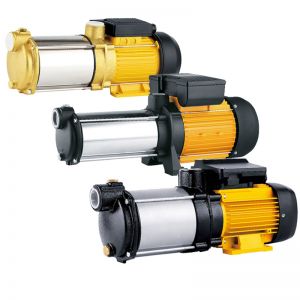
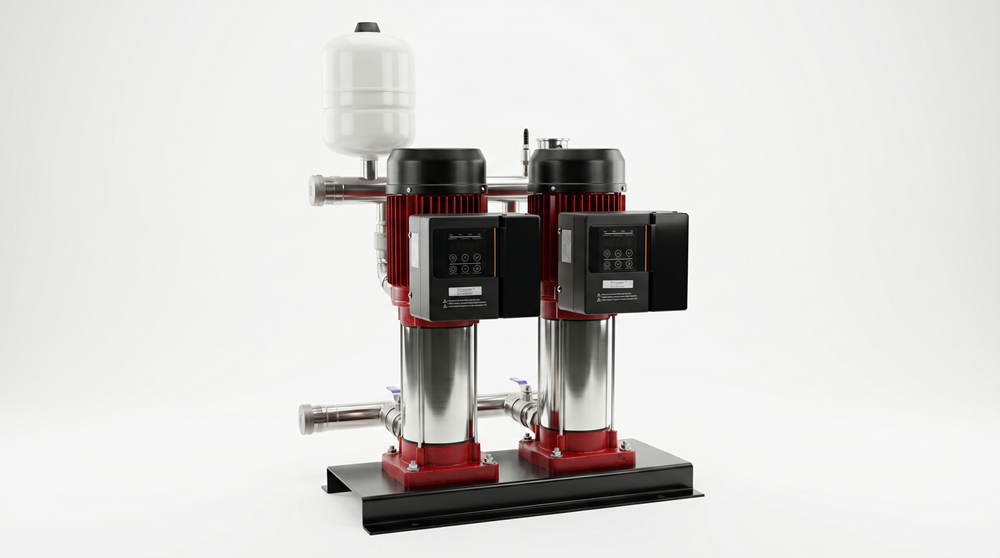
Enter the jockey pump. This is usually a small vertical multistage pump installed alongside the main unit. Its only job is to quietly and automatically maintain fire system pressure day-to-day. When the system loses a tiny amount of water due to normal leakage, the jockey pump turns on, restores the static pressure to the correct level, and shuts off.
It does this without triggering any fire alarms or starting the main driver. However, the jockey pump is intentionally sized to have a low flow capacity. If a sprinkler head actually opens due to a real fire, the pressure drops much faster than the jockey pump can handle. Once the pressure drops past the jockey pump's capability, the main fire pump senses the emergency and instantly kicks in to suppress the fire.
A fire pump sits idle for 99 percent of its life. It spends years waiting in a humid, damp mechanical room for an emergency that may never come. This idle time is actually the pump's greatest enemy. If the internal components rust while sitting, the pump will seize up and fail to rotate when activated.
To combat this, manufacturing reliability is heavily focused on corrosion resistance. Stream Pumps utilizes premium metallurgy to ensure the pump remains free-spinning and ready. We highlight the use of bronze impellers and high-grade stainless steel shafts to prevent galvanic corrosion. Standard cast iron internals would quickly rust together in stagnant water. By utilizing corrosion-resistant materials, we eliminate the risk of the impeller seizing against the casing, ensuring that the pump spins freely the moment the controller sends the start signal.
Installing a top-tier fire pump is only the first step. Strict maintenance and testing protocols are required by law to ensure the equipment remains ready. Facility managers and safety inspectors must follow rigorous schedules to verify performance.
One of the most critical maintenance procedures is the churn test. This is a requirement for weekly (for diesel units) or monthly (for electric units) 【no-flow】 runs. During a churn test, the pump is started and run without actually flowing water through the building's sprinkler system. This ensures the engine starts smoothly, the batteries are charged, the controller functions properly, and the pump turns freely.
When extensive maintenance or annual flow testing is required, physical access to the pump's internals is crucial. Stream Pumps designs equipment with the mechanic in mind. Our split-case and back-pull-out designs allow inspectors and maintenance personnel to verify internal components quickly. You can remove the rotating element for inspection without disconnecting the massive suction and discharge piping, saving hours of labor and minimizing system downtime.
Fire protection is simply not an area for budget cuts, value engineering, or compromise. A robust, properly specified fire pump system protects your physical property, mitigates your legal liability, and most importantly, safeguards human lives. From the massive diesel engine ready to run to destruction, to the small vertical multistage pump quietly maintaining system pressure, every component must be engineered for absolute certainty.
Designing the fire suppression system for a new commercial development? Ensure absolute compliance and life-saving reliability. Contact the Stream Pumps fire protection division for NFPA-compliant pump skids today.
Address
No.17 XeDa Jimei Ind. Park, Xiqing Economic Development Area, Tianjin, China
Telephone
+86 13816508465
QUICK LINKS