+86 13816508465
Jul. 23, 2026
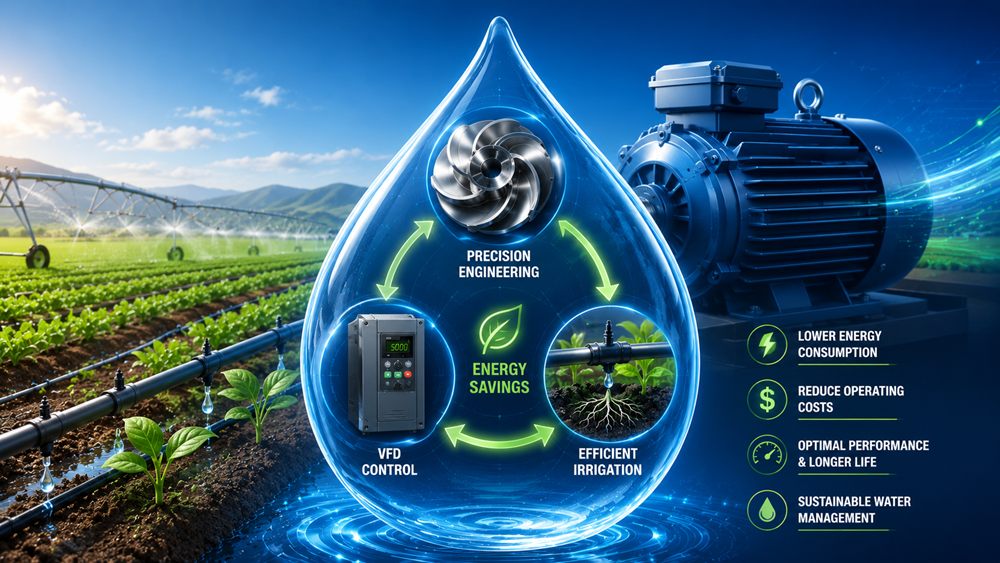
Inefficient irrigation pumps are one of the largest—and most overlooked—sources of energy waste on modern farms. Reducing pumping costs requires right-sizing pumps to match system demand, upgrading to high-efficiency motors with Variable Frequency Drives (VFDs), and investing in precision impeller engineering. Together, these strategies can cut electricity consumption by 20–50% while improving water distribution across large-scale fields.
Energy and water are the two highest operational costs a modern farm faces. Yet while growers carefully monitor seed prices and fertilizer applications, the pump running 12 hours a day at the edge of the field rarely gets the same attention. That oversight is expensive.
Agricultural irrigation accounts for roughly 70% of global freshwater withdrawals, according to the Food and Agriculture Organization of the United Nations (FAO). Pumping that water consumes a significant share of a farm's annual electricity budget. On large-scale operations, pumping systems can represent 30–40% of total energy expenditure. When those systems are outdated, poorly specified, or simply worn down, they consume far more power than necessary—without delivering better results.
This article addresses that problem directly. It outlines the core principles behind energy-efficient agricultural pumping, explains three proven strategies for reducing electricity costs, and describes how precision pump engineering translates those principles into measurable savings. Tianjin Streampumps Industry Co., Ltd, a manufacturer of high-efficiency agricultural pumps with over 25 years of engineering experience, serves as a reference point throughout—demonstrating how the right equipment choices can significantly reduce both operational costs and water waste.
Agricultural operations frequently underestimate the long-term cost of pump inefficiency. The purchase price of a pump is a one-time expenditure. The electricity it consumes over its operational lifespan is not.
A typical agricultural centrifugal pump operates for thousands of hours annually. Over a 10-year period, energy costs can represent 80–90% of a pump's Total Cost of Ownership (TCO)—dwarfing the initial capital investment. A pump that costs $3,000 to purchase may consume $30,000 or more in electricity across its service life. If that pump operates even 20% below optimal efficiency, the excess energy cost becomes a significant and recurring drain on farm profitability.
Several common conditions cause this efficiency loss:
Oversized pumps: A pump specified with too much capacity for the system operates far from its Best Efficiency Point (BEP), wasting energy through excess flow, heat generation, and mechanical stress.
Worn impellers: Impeller erosion from sediment and agricultural chemicals increases internal recirculation and reduces hydraulic output without reducing power draw.
Mismatched motors: A motor that is too large for the pump, or one that operates at a fixed speed regardless of demand, consumes full power even when the system requires only a fraction of maximum flow.
Aging seals and bearings: Mechanical friction increases power consumption and accelerates component degradation.
The result is a system that appears to be working—water reaches the field—but does so at a much higher cost per cubic meter than a correctly specified, well-maintained system would.
The most common mistake in agricultural pump procurement is selecting equipment based on a worst-case scenario—choosing the largest pump available to ensure water delivery under all conditions. The logic seems reasonable. In practice, it consistently leads to inefficiency.
Every centrifugal pump has a pump curve—a graph that plots the relationship between flow rate and pressure head at different operating points. At the center of that curve lies the Best Efficiency Point (BEP): the specific combination of flow and head at which the pump converts electrical energy into hydraulic energy with the least waste. Operating significantly above or below the BEP increases energy consumption, generates excess heat, accelerates wear, and reduces pump lifespan.
Right-sizing means engineering the pump selection to the actual hydraulic requirements of the irrigation system. Those requirements differ substantially depending on the irrigation method:
Drip irrigation systems require low flow rates and precise, stable pressure—typically between 0.5 and 2.0 bar at the emitter.
Sprinkler systems require moderate to high flow rates with consistent pressure to ensure uniform distribution across large areas.
Flood irrigation requires high flow rates at relatively low head, making pump selection and pipeline sizing especially critical.
The engineering team at Tianjin Streampumps Industry Co., Ltd specializes in matching pump specifications to these exact parameters. By analyzing the system's flow requirements, pipe diameter, elevation changes, and friction losses, Streampumps engineers select or configure pumps that operate at or near the BEP under real field conditions—not theoretical maximum loads.
Even a correctly sized pump connected to a single-speed, standard-efficiency motor leaves significant energy savings on the table. Irrigation demand is not constant. It changes with crop growth stage, time of day, ambient temperature, and field section. A fixed-speed motor running at full capacity regardless of actual demand is inherently wasteful.
Two technology upgrades address this problem directly.
High-efficiency motors, classified under the IE3 (Premium Efficiency) standard defined by the International Electrotechnical Commission (IEC), reduce electrical losses within the motor itself through improved winding design, better magnetic materials, and tighter manufacturing tolerances. Compared to standard IE1 motors, IE3 motors can reduce motor energy losses by 20–30%.
Variable Frequency Drives (VFDs) take efficiency a step further by dynamically adjusting the motor's operating speed to match real-time system demand. The relationship between motor speed and power consumption follows the Affinity Laws—a fundamental principle of fluid mechanics. Specifically, pump power consumption is proportional to the cube of the rotational speed. This means that reducing motor speed by just 20% reduces power consumption by approximately 49%. A pump running at 80% of full speed draws roughly half the electricity of the same pump running at full speed.
In practice, an irrigation system equipped with a VFD-controlled motor can automatically reduce pump speed during low-demand periods—early morning, overcast days, or partially irrigated zones—then ramp up precisely when needed. The result is a system that uses only the energy required for each irrigation cycle, rather than running at maximum capacity throughout.
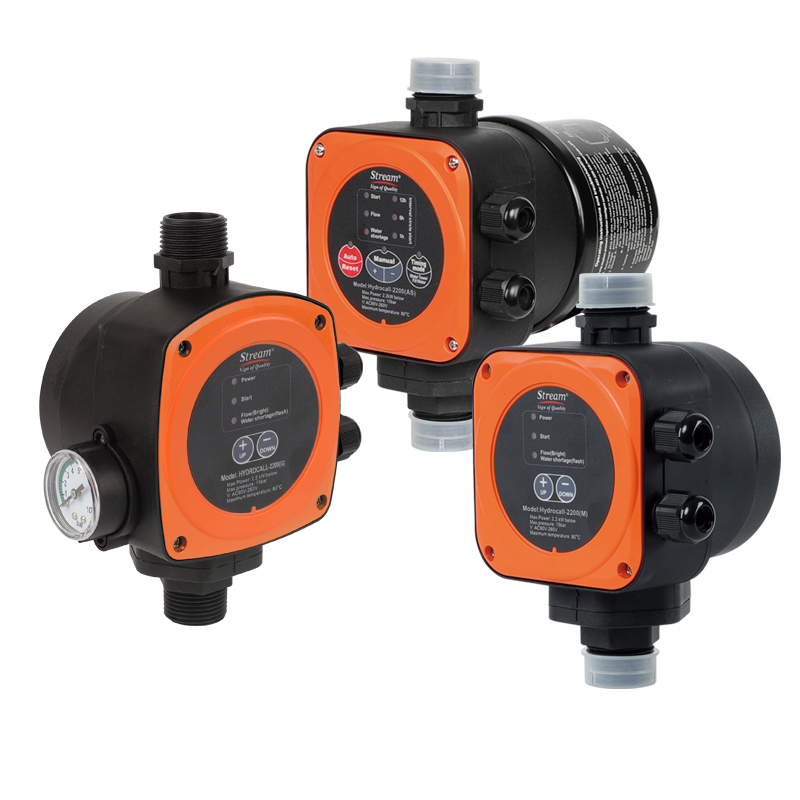
Tianjin Streampumps Industry Co., Ltd produces pump configurations compatible with modern VFD integration, including the Hydrosmart Series and variable speed circulation pump lines, designed to operate across a wide speed range without sacrificing performance or component longevity.
The impeller is the mechanical heart of a centrifugal pump. Its geometry determines how effectively the pump converts rotational energy—delivered by the motor—into hydraulic energy in the form of water pressure and flow. A poorly designed or degraded impeller forces the motor to work harder to achieve the same hydraulic output, directly increasing energy consumption.
Within the pump casing, fluid dynamics are complex. Water enters the impeller eye, accelerates through the vanes, and exits into the volute or diffuser. If the impeller geometry is imprecise, several forms of energy loss occur:
Internal recirculation: Water re-enters the impeller channel instead of exiting cleanly, consuming energy without contributing to flow.
Turbulence: Irregular vane geometry creates chaotic flow patterns that dissipate energy as heat and vibration.
Hydraulic imbalance: An impeller that is not precisely balanced increases bearing loads and generates mechanical vibration, shortening component life and increasing maintenance frequency.
Precision-engineered impellers—manufactured to tight dimensional tolerances using materials selected for the specific fluid conditions—minimize all three sources of loss. In agricultural applications, where pumped water frequently carries suspended sediment, mineral content, or residual agricultural chemicals, impeller material selection is as important as geometry. Materials that resist erosion and chemical corrosion maintain their hydraulic profile over thousands of operating hours, preserving efficiency across the pump's full service life.
Tianjin Streampumps Industry Co., Ltd engineers impellers using hydraulic modeling and precision casting or machining processes, ensuring that each pump delivers its rated efficiency under the actual conditions of agricultural use—not just laboratory benchmarks.
Saving water and saving energy are not separate objectives—they are directly connected. Every liter of water not used is a liter that does not need to be pumped, pressurized, or distributed. This relationship makes the synergy between efficient pump technology and modern water-saving irrigation methods especially valuable.
Drip irrigation and micro-sprinkler systems are the most water-efficient distribution methods available to large-scale agricultural operations. Drip systems apply water directly to the root zone, reducing evaporation losses by 30–50% compared to surface flood irrigation, according to general industry benchmarks. Micro-sprinklers provide uniform low-volume coverage across wider areas, minimizing runoff and deep percolation.
Both systems depend on precise, stable water pressure. Drip emitters are engineered to operate within a specific pressure range—typically 1.0 to 2.0 bar. Pressure that is too low produces uneven distribution. Pressure that is too high causes emitter damage and accelerated wear. A pump that cannot maintain consistent pressure across a large field creates dry spots and waterlogged zones simultaneously, undermining the efficiency gains that drip systems are designed to deliver.
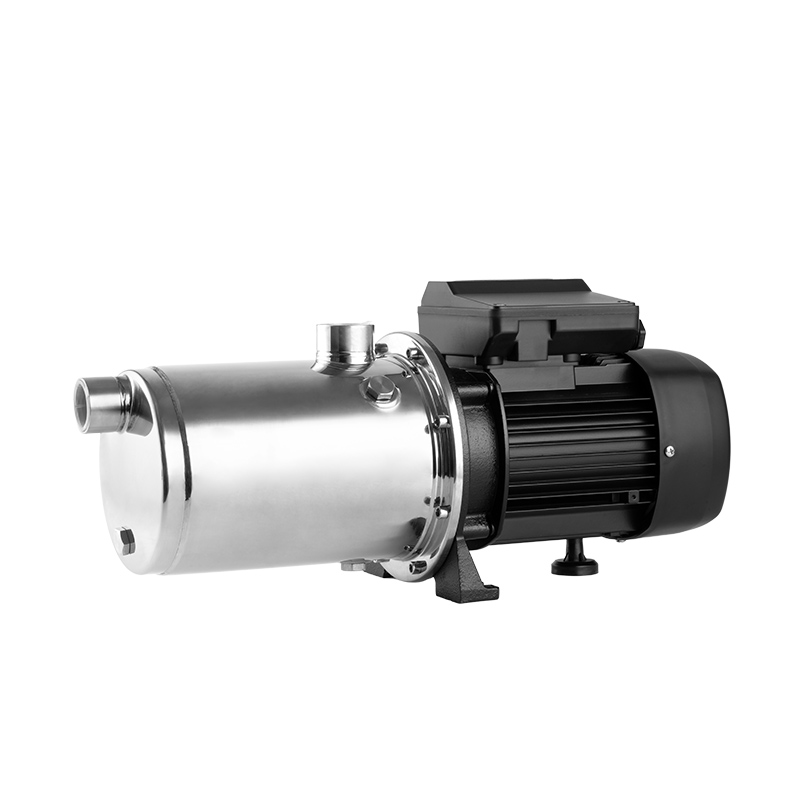
Reliable surface centrifugal pumps and submersible pumps—properly sized and equipped with pressure regulation—are essential to maintaining this uniformity. Tianjin Streampumps Industry Co., Ltd designs both pump types for stable pressure delivery across variable field topography, ensuring that water-saving irrigation infrastructure performs as intended.
Established in 1997, Tianjin Streampumps Industry Co., Ltd began as a precision OEM manufacturer and has since developed into a full-scale pump engineering and manufacturing company serving more than 110 countries worldwide. The company's agricultural pump range reflects decades of accumulated engineering experience applied specifically to the demands of large-scale irrigation.
Several key capabilities distinguish Streampumps as a manufacturer for agricultural applications:
Rigorous quality control. Streampumps maintains a documented, multi-stage quality control system covering raw material inspection, in-process dimensional verification, hydraulic performance testing, and final functional validation. Each pump that leaves the facility meets defined performance standards before shipment.
Agricultural-grade material specifications. Pumps operating in agricultural environments face chemical exposure from fertilizers and pesticides, abrasive suspended solids, and variable water chemistry. Streampumps selects materials—including stainless steel wetted components and reinforced mechanical seals—that maintain performance under these conditions across extended service intervals.
BEP-centered engineering. Streampumps designs its agricultural pump lines with the Best Efficiency Point as the primary performance target, not simply maximum rated output. This approach means that farms using Streampumps equipment operate at optimum efficiency under real working conditions, not just at peak laboratory specifications.
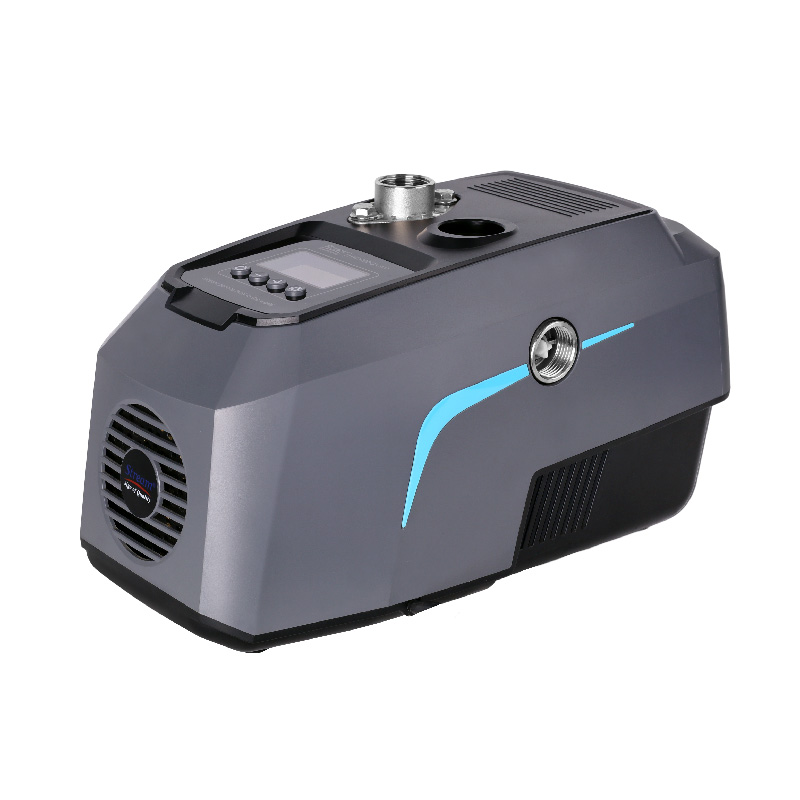
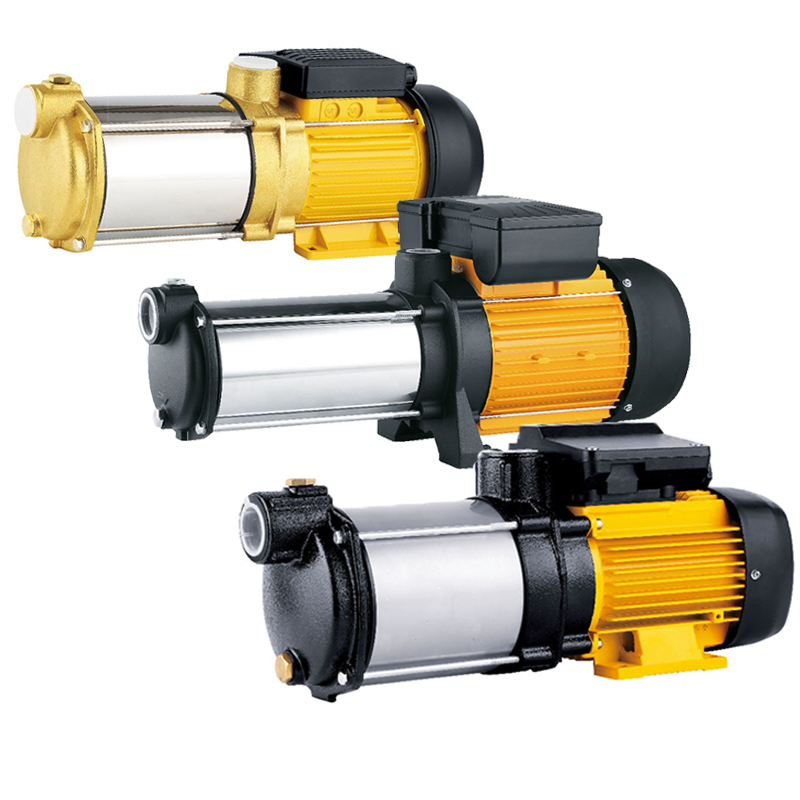
Broad product range for diverse irrigation requirements. The Streampumps catalog includes surface centrifugal pumps, submersible deep well pumps, multistage high-pressure pumps, solar-powered pumping systems, and intelligent VFD booster systems—covering the full spectrum of agricultural pumping applications from open canal intake to precision drip systems.
Global distribution and support. With agents in over 25 countries and manufacturing capacity exceeding 1,500,000 units annually across three production bases, Streampumps provides consistent product availability and technical support to large-scale agricultural operations and equipment distributors worldwide.
The Best Efficiency Point (BEP) is the operating condition—defined by a specific flow rate and pressure head—at which a centrifugal pump converts electrical energy into hydraulic energy with the least waste. Operating a pump at or near the BEP minimizes energy consumption, reduces heat generation, and extends mechanical component life. In agricultural irrigation, selecting a pump whose BEP matches the system's actual demand profile is the single most important factor in reducing long-term energy costs.
Energy savings from VFD installation depend on the variability of system demand. Following the Affinity Laws of fluid mechanics, reducing pump speed by 20% reduces power consumption by approximately 49%. On irrigation systems with significant demand variation across seasons or field zones, VFDs can reduce annual pump energy consumption by 30–50% compared to fixed-speed operation.
Drip irrigation systems require pumps that deliver stable, low-to-moderate pressure with consistent flow rates. Surface centrifugal pumps are well-suited for systems drawing from surface water sources such as canals or reservoirs. Submersible pumps are appropriate for groundwater extraction. In both cases, the pump must be correctly sized to the drip system's pressure requirements—typically 1.0 to 2.0 bar at the emitter—to ensure uniform water distribution without emitter damage.
Impeller erosion—caused by suspended sediment, mineral scale, or chemical attack—alters the hydraulic geometry of the impeller vane surfaces. This increases internal recirculation, raises turbulence within the pump casing, and reduces the volume of water delivered per unit of energy consumed. A worn impeller forces the motor to draw more current to maintain target pressure, increasing electricity costs without improving irrigation performance. Regular inspection and timely impeller replacement are essential components of an energy-efficient pump maintenance program.
Replacement is generally more cost-effective than repair when the pump's hydraulic efficiency has degraded significantly due to impeller wear, when the existing motor is standard-efficiency (IE1) and cannot be upgraded to IE3 without mechanical modification, or when the pump was originally oversized for the system and consistently operates far from its BEP. A lifecycle cost analysis comparing the annualized energy cost of the existing system against the capital cost plus projected energy savings of a replacement provides the most accurate basis for this decision.
Reducing agricultural irrigation costs does not require a complete infrastructure overhaul. In most cases, three targeted interventions—right-sizing the pump to match actual system demand, upgrading to IE3 motors with VFD control, and selecting precision-engineered impellers built for agricultural conditions—can reduce pumping energy consumption by 20–50% while simultaneously improving water distribution uniformity.
The economics are straightforward. Lower energy consumption reduces operating costs. Better pressure control reduces water waste. And equipment built to agricultural-grade material specifications maintains those performance levels across years of continuous operation rather than degrading steadily after the first season.
Address
No.17 XeDa Jimei Ind. Park, Xiqing Economic Development Area, Tianjin, China
Telephone
+86 13816508465
QUICK LINKS