+86 13816508465
Pump Knowledge
Nov. 18, 2025
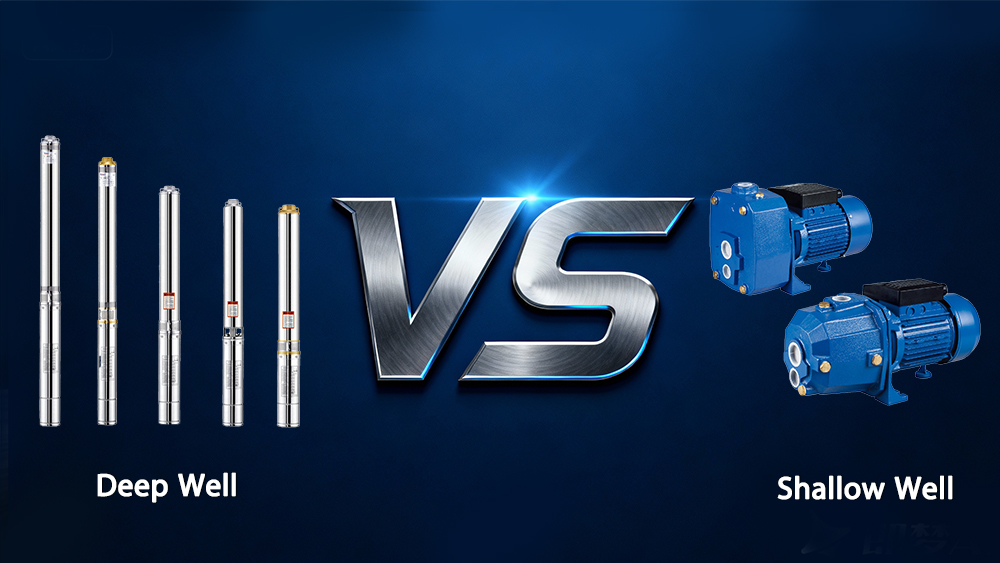
Accessing a reliable water source is fundamental for any home or small business that isn't connected to a municipal supply. When you have a private well, the pump is the heart of your water system. Choosing the right one is crucial for efficiency, longevity, and consistent water pressure. The decision often comes down to two main categories: shallow well pumps and deep well pumps.
This guide will walk you through a detailed water pump comparison. We will explore the applications, pros, and cons of each type, and provide clear guidance on choosing the right pump for your specific needs. Understanding these key differences will ensure you invest in a system that serves you well for years to come.
A shallow well pump is designed to draw water from a source that is 25 feet deep or less. These pumps are installed above ground, either inside a home, basement, or in a separate well house. They work by creating a vacuum and using suction to pull water from the well up into the plumbing system. Think of it like drinking through a very powerful straw.
Applications of Shallow Well Pumps
Shallow well pumps are a common and cost-effective solution for properties with a high water table. Their applications include:
Residential Water Supply: Providing clean water for drinking, cooking, bathing, and cleaning in homes where the well depth is less than 25 feet.
Garden and Lawn Irrigation: Powering sprinkler systems or supplying water for hand-watering gardens and lawns.
Small-Scale Agricultural Use: Supplying water for small livestock operations or irrigating limited farm plots.
Boosting City Water Pressure: In some cases, a shallow well pump (specifically a jet pump) can be used to increase the water pressure from a municipal supply.
Advantages and Disadvantages
Advantages:
Lower Initial Cost: Shallow well pumps are generally less expensive to purchase and install compared to their deep well counterparts.
Easier Installation: Since the pump is located above ground, installation is simpler and does not require specialized heavy equipment.
Accessible for Maintenance: All components are above ground, making inspection, maintenance, and repairs more straightforward and less costly.
Disadvantages:
Limited Depth: Their primary limitation is the 25-foot depth restriction. They cannot be used for deeper wells.
Must Be Primed: Because they work on suction, shallow well pumps need to be primed (filled with water) before their first use to create a proper seal and start the pumping action. Losing prime can be a recurring issue.
Susceptible to Freezing: If installed in a location exposed to cold weather, the pump and its pipes are at risk of freezing and damage if not properly insulated or housed.
A deep well pump is used when the water source is more than 25 feet below the surface, extending to depths of several hundred feet. Unlike shallow well pumps that pull water, deep well pumps push it to the surface. The most common type is the submersible pump, which is installed directly inside the well casing, fully submerged in the water.
Applications of Deep Well Pumps
Deep well pumps are powerful and versatile, making them suitable for a wide range of demanding applications:
Primary Residential Water Source: The standard choice for most modern homes with wells deeper than 25 feet, providing reliable water for all household needs.
Agricultural and Irrigation: Supplying the high volume of water needed for large-scale farming, crop irrigation, and sizable livestock herds.
Commercial and Industrial Use: Used in manufacturing plants, commercial buildings, and other facilities that require a dependable, high-capacity water supply from a deep well.
Geothermal Systems: Often integrated into geothermal heating and cooling systems to circulate water.
Advantages and Disadvantages
Advantages:
Greater Depth Capability: They can effectively pump water from depths of 300 feet or more, making them highly versatile.
Self-Priming: Because a submersible pump is already underwater, it does not require priming.
High Efficiency: Pushing water is more energy-efficient than pulling it over long distances, resulting in better performance and lower operating costs for deep applications.
Quiet Operation: Since the pump is located far underground, it operates almost silently.
Less Prone to Freezing: The pump itself is protected from freezing temperatures deep within the well.
Disadvantages:
Higher Upfront Cost: Deep well submersible pumps and their installation are significantly more expensive.
Complex Installation: Installation requires specialized equipment to lower the pump, piping, and electrical cable down the well casing.
Difficult Maintenance: If the pump fails, it must be pulled from the well for repairs or replacement, which is a complex and costly job requiring professional help.
Making the right choice comes down to evaluating your specific situation. Use this guide to determine which pump is best for you.
1. Determine Your Well Depth and Water Table
This is the most critical factor. Have your well professionally measured to find its total depth and the static water level (the level at which water naturally sits).
25 feet or less: A shallow well pump is your most logical and economical choice.
More than 25 feet: You must use a deep well pump. A shallow pump will not be able to lift the water.
2. Assess Your Water Needs (Flow Rate)
Consider how much water your household or business will use at peak times. Flow rate is measured in gallons per minute (GPM). Add up the GPM requirements for all fixtures and appliances that could run simultaneously.
Low to Moderate Demand: A typical home may need 8-12 GPM. Both shallow and deep well pumps are available in various sizes to meet this demand.
High Demand: Large homes, farms, or commercial properties may require 20 GPM or more. High-capacity deep well submersible pumps are best suited for these needs.
3. Consider the Pump's Horsepower (HP)
Horsepower determines how much work the pump can do. It is directly related to the well depth and required flow rate. A higher HP pump can move more water or push it from a greater depth. Your pump supplier or installer can help you calculate the precise HP needed, but a general rule is that deeper wells and higher GPM requirements demand more horsepower.
4. Factor in Your Budget
Your budget will cover the pump itself, installation, and any additional components like a pressure tank, pressure switch, and wiring.
Shallow Well Systems: More budget-friendly for both equipment and installation.
Deep Well Systems: A larger investment, but a necessary one for deep wells. Don't compromise on quality to save money, as a premature failure can lead to much higher costs down the line.
Feature | Shallow Well Pump | Deep Well Pump (Submersible) |
Location | Above ground, near the wellhead | Inside the well casing, underwater |
Mechanism | Sucks water using a vacuum | Pushes water to the surface |
Max Depth | 25 feet | 300+ feet |
Priming | Requires manual priming | Self-priming |
Cost | Lower initial cost | Higher initial cost |
Maintenance | Easier and less expensive | Difficult and expensive; requires pulling |
Noise Level | Audible during operation | Virtually silent |
Common Use | Homes with high water tables, irrigation | Primary water source for most wells |
Choosing between a shallow well and a deep well pump is primarily dictated by the depth of your water source. If your water level is above 25 feet, a shallow well pump offers an affordable and accessible solution. For anything deeper, a deep well submersible pump is the only effective and efficient option.
By carefully assessing your well's characteristics and your property's water demands, you can confidently select a pump that delivers reliable performance. For accurate measurements and professional installation, we always recommend consulting with a qualified well drilling and pump service company. Investing in the right system from the start will ensure you have a steady and safe supply of water for years to come.
Address
No.17 XeDa Jimei Ind. Park, Xiqing Economic Development Area, Tianjin, China
Telephone
+86 13816508465
QUICK LINKS