+86 13816508465
Pump Knowledge
Dec. 29, 2025
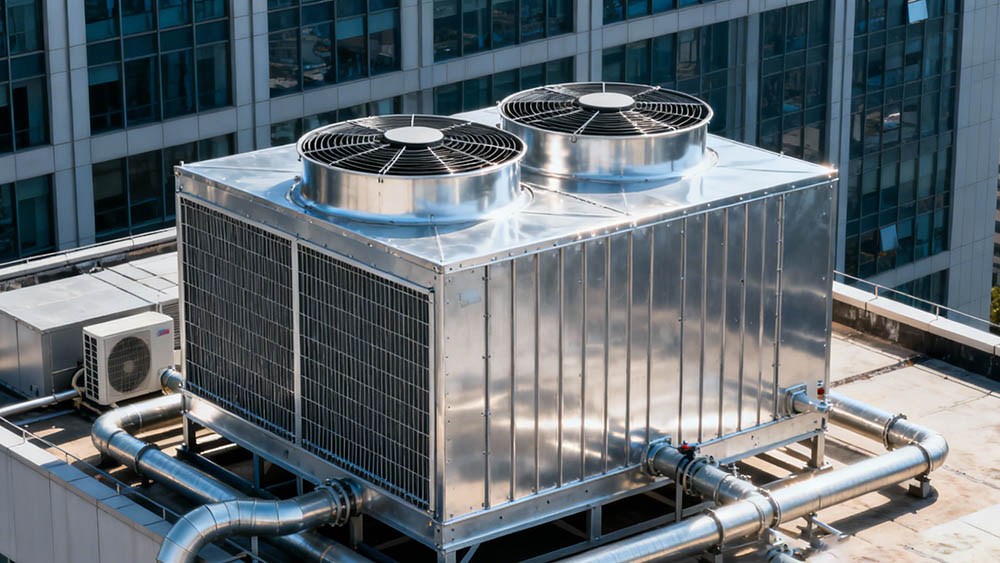
Imagine walking into a mechanical room where the pumps are screaming, vibrating, and burning through energy budget faster than you can sign the utility check. This is often the sound of poor sizing.
For commercial building engineers and HVAC contractors, sizing a cooling tower pump isn’t just a math problem—it is a balancing act between reliability, efficiency, and operating costs. An undersized pump leads to poor heat rejection and uncomfortable tenants. An oversized pump, however, wastes electricity and causes premature system wear due to excessive throttling.
Getting it right the first time is crucial for B2B buyers looking to minimize lifecycle costs. This guide breaks down the complex process of cooling tower pump sizing into clear, actionable steps.
Before crunching numbers, it is vital to understand exactly what the pump does within the HVAC ecosystem. In a water-cooled chiller system, the condenser water pump acts as the heart of the heat rejection loop.
It circulates warm water from the chiller’s condenser to the cooling tower, where heat is rejected into the atmosphere. It then returns the cooled water back to the chiller.
To do this effectively, the pump must deliver two specific things:
Flow Rate: The correct volume of water to carry heat away.
Head Pressure: Enough force to push that water through pipes, valves, the chiller bundle, and up to the cooling tower nozzles.
The first step in sizing is determining how much water needs to move through the system. This is directly tied to the cooling load of the building.
The Standard Rule of Thumb
For most commercial HVAC applications, the industry standard rule is simple:
3 GPM (gallons per minute) per refrigeration ton (RT)
While specific chiller designs may vary slightly (ranging from 2.8 to 3.2 GPM/ton), using 3 GPM provides a reliable baseline for initial sizing.
Practical Calculation Example
Let’s say you are sizing a pump for a commercial office building with a 500-ton chiller.
Formula: Cooling Load (RT) × 3 GPM
Calculation: 500 × 3 = 1,500 GPM
This figure represents the design flow rate your pump must deliver to ensure the chiller can reject heat effectively at full load.
Flow is only half the equation. You also need to know how much resistance the pump must overcome. This resistance is called Total Dynamic Head (TDH).
Calculating TDH accurately is where most errors occur. It is the sum of three main components:
1. Static Head
This is the vertical distance the pump must lift the water. Measure from the water level in the cooling tower basin to the highest point of the discharge piping (usually the spray nozzles at the top of the tower).
Note: In an open loop system like a cooling tower, gravity helps on the return side, but the pump still has to lift water to the top of the tower.
2. Friction Loss
As water moves through pipes, it encounters resistance. You must calculate friction losses for:
Straight pipe runs (supply and return)
Fittings (elbows, tees)
Valves (isolation, check, and balancing valves)
3. Equipment Pressure Drop
Every piece of equipment imposes a pressure drop. Consult manufacturer data sheets for:
The Chiller Condenser Bundle: Often 15–25 feet of head.
Strainers: Account for both clean and dirty conditions.
Cooling Tower Nozzles: The pressure required to spray the water effectively.
Typical Commercial Values:
While every building is unique, typical TDH values often fall into these ranges:
Low-rise: 60–80 feet (approx. 18–24m)
Mid-rise: 80–120 feet (approx. 24–36m)
High-rise: 120+ feet (depending on mechanical room location)
Once you have your Flow (GPM) and Head (feet), you can select the physical pump. For commercial cooling towers, three types dominate the market.
Horizontal End-Suction Pumps
These are the workhorses of the industry. They are cost-effective, easy to service, and cover a wide range of flow rates. They generally require a concrete housekeeping pad and careful alignment.
In-Line Centrifugal Pumps
Great for retrofits or tight mechanical rooms. These mount directly into the piping, saving floor space. However, maintenance can be trickier for larger motors since the motor must be lifted off the casing.
Vertical Turbine Pumps
Used when the pump draws directly from a sump or basin below grade. These are less common for standard rooftop cooling towers but essential for specific architectural layouts.
Selection Tip: Pick a pump where your design point falls between 85% and 105% of the Best Efficiency Point (BEP). This ensures smooth operation and lower energy bills.
This step is critical for preventing cavitation—a phenomenon where bubbles form and collapse inside the pump, causing damage that sounds like gravel rattling in the casing.
You must compare two values:
NPSHr (Required): The minimum pressure the pump needs at its inlet to function. The manufacturer provides this.
NPSHa (Available): The actual pressure available at the pump inlet based on your system design.
The Golden Rule:
NPSHa must be greater than NPSHr (plus a 3–5 foot safety margin).
Open cooling tower systems are prone to low suction pressure because they are often located on the same level as the pumps. To improve NPSHa, raise the cooling tower, lower the pump, or increase the size of the suction piping to reduce friction.
Finally, you need to size the motor that drives the pump.
Simplified Formula:
Brake Horsepower (BHP) = (GPM × TDH (ft) × Specific Gravity) / (3960 × Pump Efficiency)
Since cooling tower water is close to standard density, Specific Gravity is usually 1.0.
Practical Tip: Never size the motor exactly to the BHP. Always add a safety factor (non-overloading factor). If the calculation shows 18 BHP, do not select a 20 HP motor if it is borderline. Go up to 25 HP to prevent tripping during system startups or fluctuations.
For commercial buildings, downtime is not an option. A robust design includes redundancy.
N+1 Strategy
Always specify a standby pump. In a system requiring one pump, install two (Duty/Standby). In a larger system requiring two pumps, install three. This allows for maintenance rotation and ensures cooling continues if one pump fails.
VFD Integration
Fixed-speed pumps are a thing of the past. installing Variable Frequency Drives (VFDs) allows you to:
Soft start the motors (reducing mechanical stress).
Balance the flow precisely without throttling valves.
Save massive amounts of energy during part-load conditions.
Even experienced engineers can trip up. Avoid these costly errors:
Oversizing 【Just in Case】: Adding 20% safety to flow and 20% to head results in a pump that is vastly oversized. This forces the pump to operate far to the left of its curve, causing vibration and shaft deflection.
Ignoring Elevation: Forgetting that an open cooling tower system requires lifting water to the top of the tower nozzle deck, not just circulating it.
Neglecting Dirty Strainers: Strainers get clogged. If you size for a perfectly clean system, the pump may struggle after a few weeks of operation.
Sizing pumps for cooling towers requires a systematic approach that looks beyond simple flow rates. by accurately calculating TDH, verifying NPSH, and selecting efficient motors with VFDs, you ensure a system that runs quietly, reliably, and cost-effectively.
For B2B buyers and contractors, the goal is long-term value. A properly sized pump protects the expensive chiller and cooling tower, ensuring the entire HVAC plant operates at peak performance for years to come.
Are you evaluating pumps for your next commercial project? Double-check your friction loss calculations and always insist on a pump curve review before ordering.
Address
No.17 XeDa Jimei Ind. Park, Xiqing Economic Development Area, Tianjin, China
Telephone
+86 13816508465
QUICK LINKS