+86 13816508465
Pump Knowledge
Mar. 23, 2026
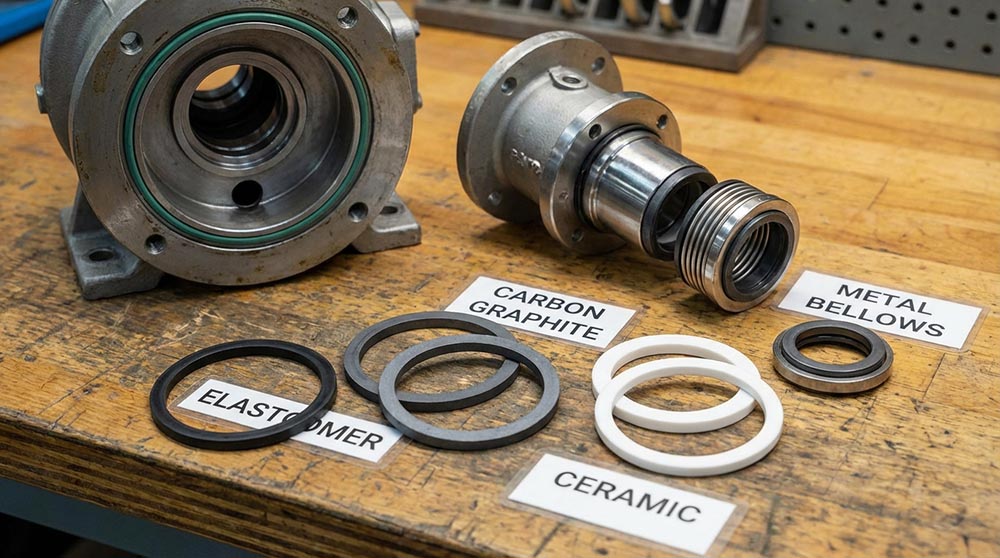
A massive industrial pump rarely fails because a cast iron casing cracks under pressure. More often than not, it fails because a two-dollar elastomer seal breaks down, allowing pumped fluid to bypass the barrier and destroy the motor.
Specifying a standard, off-the-shelf rubber seal for a system handling corrosive acids, extremely hot liquids, or abrasive slurries is a guaranteed recipe for mechanical seal failure. Different pumping environments expose internal components to drastically different chemical and thermal stressors. When an incompatible seal absorbs fluid, it can swell, harden, or completely dissolve, bringing your entire operation to a grinding halt.
Selecting the correct elastomer requires understanding the specific chemical interactions between the fluid and the seal material. This technical O-Ring Material Guide by Stream Pumps breaks down the exact properties you need to evaluate. By understanding the performance limits of various compounds, you can specify the right components to withstand petroleum, extreme temperatures, ozone degradation, and severe mechanical wear.
Nitrile Butadiene Rubber, commonly known as NBR or Buna-N, is the most widely used elastomer for general sealing applications. Its widespread adoption comes down to its dependable performance in environments heavily exposed to petroleum-based fluids.
For most standard engineering applications, NBR provides excellent resistance to mineral oils, hydraulic fluids, and aliphatic hydrocarbons. It maintains a reliable seal within a general service temperature range of -34°C to 121°C (-30°F to 250°F).
However, NBR has distinct chemical vulnerabilities. It offers poor resistance to ozone, ultraviolet light, and atmospheric aging. Exposure to these elements causes the molecular bonds within the rubber to break down, leading to rapid surface cracking. NBR is also incompatible with polar solvents like ketones and strong acids.
Stream Pumps Application: We typically specify NBR for standard water pumps and light industrial applications handling oily water, diesel fuels, or petroleum-based greases at standard operating temperatures.
When the debate comes down to Viton vs NBR, the deciding factor is usually thermal stability and chemical resistance. FKM, widely recognized by the Chemours brand name Viton™, is a fluorocarbon elastomer engineered for harsh industrial environments.
FKM seals are the top choice for high temperature pump seals. They operate reliably in extreme heat, maintaining their mechanical properties in environments reaching 204°C (400°F). Beyond temperature resistance, FKM provides exceptional protection against a broad spectrum of aggressive chemicals, including concentrated acids, aromatic hydrocarbons, and synthetic hydraulic fluids. It also boasts excellent ozone and weather resistance, making it highly durable over time.
Despite its impressive profile, FKM is not universally applicable. Choosing FKM for hot water or superheated steam applications will often result in premature mechanical seal failure. In the presence of high-temperature steam, fluorocarbons tend to harden and lose their compression set. FKM is also highly susceptible to degradation from ammonia gas, amines, and low molecular weight organic acids.
Stream Pumps Application: FKM is our recommended material for chemical processing pumps, high-temperature industrial fluid transfer systems, and outdoor environments requiring heavy ozone and weather resistance.
Ethylene Propylene Diene Monomer (EPDM) is an incredibly versatile synthetic rubber that excels where other elastomers fail. Its primary strengths lie in its exceptional resistance to outdoor weathering, ozone, and UV exposure.
Unlike FKM, an EPDM O-ring is the superior choice for sealing hot water and steam, handling temperatures up to 150°C (302°F) without hardening or taking a premature set. EPDM also maintains its flexibility in extreme cold, remaining operational down to -57°C (-70°F). It handles dilute acids, alkalis, and many polar solvents with ease.
The critical warning for EPDM is its complete incompatibility with petroleum-based products. If an EPDM seal comes into contact with mineral oils, petroleum greases, or hydrocarbon solvents, the material will experience extreme volume swell. This rapid expansion destroys the seal's structural integrity, causing immediate leaks and system failure.
Stream Pumps Application: We deploy EPDM seals in outdoor agricultural irrigation pumps, HVAC water circulation systems, and municipal water treatment facilities exposed to the elements.
While materials like FKM and EPDM are chosen for their chemical and thermal properties, Polyurethane (PU) is selected for sheer physical toughness. Polyurethane possesses unmatched tensile strength, exceptional tear resistance, and extraordinary abrasion resistance compared to standard rubber compounds.
When a pump moves fluids suspended with sharp, jagged solids, standard elastomers are quickly chewed apart by the friction. Polyurethane acts like armor plating, withstanding heavy mechanical stress and severe frictional wear. It also serves as an effective oil resistant O-ring material, handling mineral oils and greases well.
The primary limitation of polyurethane is its poor heat resistance. Its maximum operating temperature generally caps out around 82°C (180°F). Furthermore, polyurethane is vulnerable to concentrated acids, alkalis, and hot water.
Stream Pumps Application: Polyurethane is the ultimate choice for heavy-duty slurry pumps, construction dewatering pumps, and sand dredging equipment where abrasive particulates would quickly destroy standard rubber seals.
Polytetrafluoroethylene, commonly known as PTFE or Teflon™, sits in a category of its own. It provides nearly universal chemical inertness, resisting almost all industrial chemicals, solvents, and corrosive agents. Furthermore, it boasts an extreme temperature operating span, remaining viable from cryogenic lows of -200°C up to extreme highs of +260°C.
Because PTFE is a thermoplastic rather than an elastomer, it lacks physical 【memory.】 When compressed, standard rubber pushes back against the mating hardware to form a tight seal. PTFE does not spring back. Under continuous pressure, it is also prone to cold flow, meaning the material will gradually deform and creep out of its sealing groove over time.
To solve this lack of elasticity, engineers rarely use solid PTFE O-rings in dynamic pump applications. Instead, the industry utilizes encapsulated O-rings—featuring a highly resilient elastomer core (like Silicone or FKM) surrounded by a thin, chemically inert PTFE jacket. Another solution is the use of spring-energized PTFE seals, which use an internal metal spring to maintain constant sealing pressure.
Stream Pumps Application: We utilize jacketed PTFE seals for ultra-corrosive chemical transfer pumps and highly regulated sanitary food-grade pumps requiring absolute material purity.
Selecting the right pump seal material requires matching the physical properties of the elastomer to the exact fluid dynamic of your system. Use this summary to guide your pump seal material selection:
Need Oil Resistance? Choose NBR for standard temperature applications, or upgrade to Viton (FKM) for more demanding environments.
Need High Temp & Wide Chemical Range? Choose Viton (FKM) for most heavy-duty applications, or PTFE for absolute chemical inertness.
Need Extreme Cold & Ozone/Weather Resistance? Choose an EPDM O-ring.
Need Abrasion and Wear Resistance? Choose Polyurethane (PU) for maximum physical durability against slurries and sand.
Matching the O-ring and mechanical seal material to your specific pumped fluid is a non-negotiable requirement for equipment longevity. Guessing on an elastomer compound leads to expensive downtime, hazardous fluid leaks, and damaged motors. The right seal geometry paired with the correct chemical profile guarantees consistent, long-term performance.
Are your current pumps suffering from frequent seal failures? At Stream Pumps, we customize our mechanical seals and O-rings to match your exact working conditions. We engineer Stream Pumps custom solutions tailored specifically for the fluids, temperatures, and pressures driving your facility. Contact our engineering team today to upgrade your fluid system and permanently eliminate preventable seal failures.
Address
No.17 XeDa Jimei Ind. Park, Xiqing Economic Development Area, Tianjin, China
Telephone
+86 13816508465
QUICK LINKS