+86 13816508465
Pump Knowledge
Mar. 23, 2026
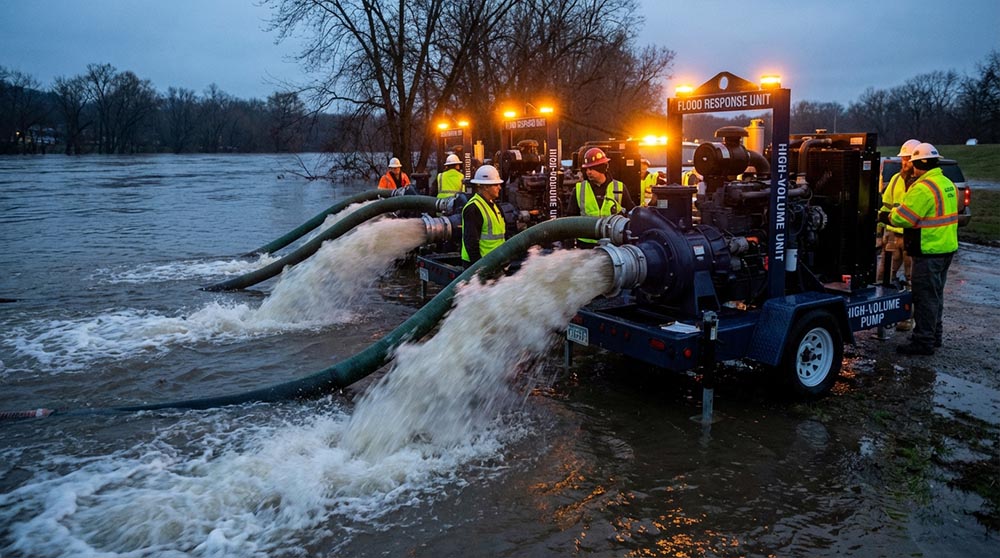
Urban waterlogging and flash floods are increasingly common events that cost cities millions in infrastructure damage every year. Heavy rainfall frequently overwhelms standard municipal drainage systems. This leaves critical infrastructure, including underpasses, commercial basements, and residential streets, completely submerged under water.
Municipal engineers and city planners face mounting pressure to mitigate these threats effectively. Standard municipal pumps often lack the specific design characteristics required to handle sudden, massive influxes of water. To protect lives and property, municipalities require rapidly deployable, high-volume equipment specifically engineered for disaster mitigation.
Stream Pumps municipal solutions provide the reliable infrastructure cities need to handle these severe weather events. By integrating specialized emergency flood control pumps into your stormwater management strategy, you ensure a rapid and effective response when heavy rains strike. Understanding the technical specifications and operational requirements of these systems will help your municipality prepare for the next major storm.
Routine dewatering applications typically involve moving clear water at a steady pace. Emergency flood pumping requires an entirely different technical approach. Municipalities must prioritize specific design features to manage sudden, massive volumes of contaminated water.
Emergency situations demand equipment capable of moving massive amounts of water quickly. This requires high flow rates, typically measured in gallons per minute (GPM), rather than high pressure or head. Standard pumps often focus on pushing water to high elevations, which sacrifices overall flow volume.
For high volume dewatering, axial flow pumps and mixed flow pumps are the primary choices. Axial flow pumps move water parallel to the pump shaft. This design provides exceptionally high flow rates at low heads, making them ideal for moving large volumes of stormwater over short vertical distances. Mixed flow pumps offer a balance, combining the high flow characteristics of axial pumps with slightly higher head capabilities. Engineers select between the two based on the specific topographical requirements of the municipal pumping station.
Floodwater carries significant amounts of debris. Branches, plastic bags, mud, and street trash mix into the water flow during a storm. Standard dewatering pumps easily choke on these solids, causing catastrophic failure at the exact moment the equipment is needed most.
Emergency flood control pumps must feature large solid passage capabilities. Specialized impellers, such as vortex or recessed designs, allow large debris to pass through the pump casing without causing clogs or damaging internal components. This ensures continuous operation in the harshest municipal environments.
A robust stormwater management plan relies on a diverse fleet of pumping equipment. Municipalities utilize different types of pumps to address specific operational needs across the city.
When severe storms hit, the local power grid often fails. Mobile pump stations driven by robust diesel engine water pumps are essential for maintaining flood control during blackouts. These units are mounted on heavy-duty trailers, allowing emergency crews to tow them directly to flooded sites using standard municipal trucks.
A mobile pump station provides immediate relief to overwhelmed drainage systems. Crews can deploy the hoses, start the diesel engine, and begin high volume dewatering within minutes of arriving at the location.
For permanent infrastructure, high-capacity submersible stormwater pumps provide automated protection. Municipalities install these heavy-duty units in dedicated underground pumping stations across flood-prone districts.
These systems connect directly to the city's Supervisory Control and Data Acquisition (SCADA) network. When water level sensors detect rising stormwater, the pumps automatically activate. This automated response prevents urban waterlogging before surface flooding occurs.
First responders need equipment they can carry into restricted spaces. Portable submersible pumps provide a lightweight but powerful solution. Emergency crews can manually lower these units into flooded residential basements, elevator shafts, or subway entrances. Despite their compact size, these pumps deliver significant flow rates to clear localized flooding rapidly.
Selecting the right equipment requires careful evaluation of technical specifications. Emergency pumps must operate reliably under extreme stress and sub-optimal conditions.
Time is the most critical resource during a flash flood. Operators cannot afford to manually prime a pump by filling the suction line with water. Emergency flood control pumps must include vacuum-assisted self-priming systems.
These mechanisms use a dedicated vacuum pump to quickly evacuate air from the suction hose. As the air leaves, atmospheric pressure forces the floodwater up into the pump casing. This allows the main pump to begin moving water almost instantly, dramatically reducing deployment time.
Floodwater levels fluctuate wildly during a storm. A pump might draw water continuously for an hour, only to suck air as the water level drops, and then resume pumping as another wave of runoff arrives.
Standard pumps rely on the pumped liquid to cool the mechanical seals. If they run dry, the seals overheat and fail rapidly. Emergency dewatering pumps feature specialized oil-lubricated mechanical seals. This dry-running capability ensures the equipment survives temporary periods without water, allowing operators to leave the pumps running unattended as water levels surge and recede.
Diesel engine water pumps must operate continuously during multi-day storm events. Fuel efficiency and large fuel tank capacities dictate the pump's autonomy.
Municipal engineers must evaluate the fuel consumption rates under full load. A high-quality mobile pump station should feature a fuel tank large enough to provide at least 24 hours of continuous operation without refueling. This autonomy frees emergency crews to focus on rescue operations rather than constantly monitoring equipment fuel levels.
Acquiring high-quality equipment is only the first step. Municipalities must implement comprehensive maintenance and deployment strategies to guarantee operational readiness.
Emergency equipment sitting idle for months can develop issues. Municipal maintenance teams must establish rigorous testing schedules before the hurricane or monsoon season begins.
Technicians should run diesel engines, inspect suction hoses for dry rot, and verify that vacuum-priming systems engage correctly. Routine testing ensures that every pump will start on the first attempt when a real emergency occurs.
Response time dictates the severity of flood damage. City planners should analyze historical flood data to identify high-risk zones, such as deep underpasses and low-lying residential neighborhoods.
Before a forecasted storm hits, emergency coordinators should pre-stage mobile pump stations near these vulnerable areas. Strategic positioning drastically reduces transit times through severe weather, allowing crews to begin pumping operations before the water reaches critical levels.
Urban waterlogging occurs when intense rainfall exceeds the capacity of municipal drainage systems. The high percentage of impermeable surfaces in cities, such as asphalt and concrete, prevents water from soaking into the ground, forcing massive volumes of runoff into storm drains simultaneously.
Axial flow pumps use an impeller shaped like a boat propeller to push water straight along the axis of the pump shaft. This generates extremely high flow rates at low pressure. Standard centrifugal pumps use centrifugal force to push water outward radially, generating higher pressure but lower overall flow volume.
Yes. Modern high-capacity submersible stormwater pumps include advanced control panels compatible with standard municipal SCADA systems. This allows city engineers to monitor pump status, track water levels, and control operations remotely from a central command center.
Municipalities cannot control the frequency or intensity of severe weather events. You can, however, dictate your city's level of preparedness. Relying on outdated or undersized drainage infrastructure guarantees extensive property damage and endangers public safety. Investing in specialized, high-volume pumping equipment provides a reliable insurance policy against the escalating threat of urban flooding.
By implementing robust mobile units, high-capacity submersibles, and rigorous maintenance protocols, your engineering teams will maintain control during the most severe storm events.
Is your city or facility prepared for the next major storm? Do not wait until the water is rising. Contact the Stream Pumps municipal engineering team today to design a robust emergency flood control system.
Address
No.17 XeDa Jimei Ind. Park, Xiqing Economic Development Area, Tianjin, China
Telephone
+86 13816508465
QUICK LINKS