+86 13816508465
Pump Introductions
Sep. 04, 2026
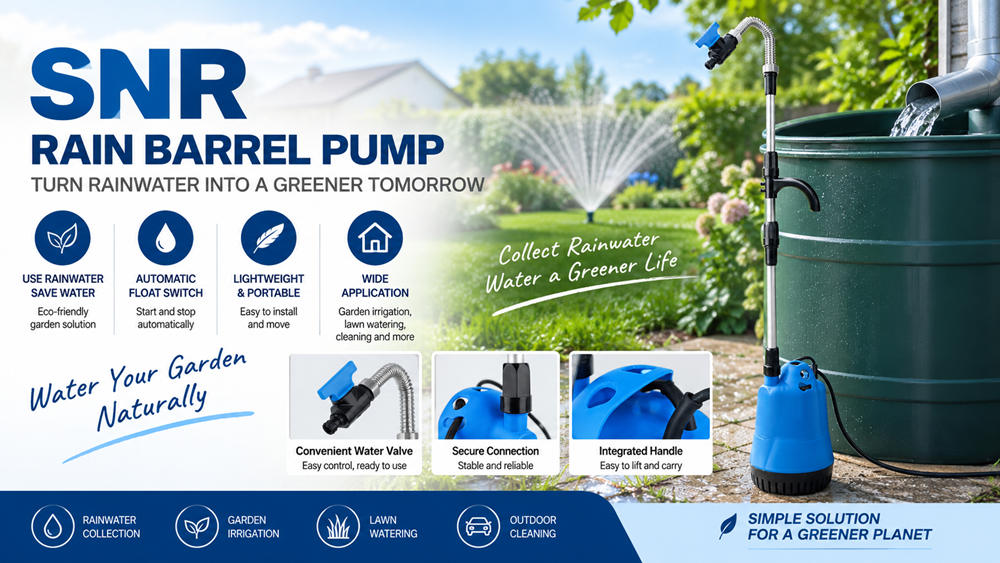
Collecting rainwater is one of the simplest ways to reduce the amount of treated tap water used in a garden.
A rain barrel or rainwater tank can store hundreds of liters of water from roof runoff, but collecting the water is only half of the job.
The real challenge is getting that stored rainwater to the plants, lawn or cleaning area where it is needed.
The Stream SNR Rain Barrel Pump is designed specifically for this purpose.
It is a lightweight submersible garden pump that operates directly inside a rainwater barrel or storage tank and pushes the collected water through a hose for garden irrigation, lawn watering and other suitable outdoor water-use applications.
With an automatic float switch, lightweight construction and a simple submersible design, the SNR turns a basic rainwater collection tank into a practical garden water supply system.
The Stream SNR is a submersible pump designed for use inside rainwater collection tanks and rain barrels.
Unlike a conventional surface garden pump, the SNR is placed directly into the stored water.
This means the pump does not need to draw water through a long suction pipe before pumping begins.
Once submerged, the pump pushes the rainwater upward through the discharge connection and toward the garden hose, sprinkler or other suitable watering outlet.
Stream positions the SNR primarily for:
Rainwater collection tanks
Rain barrels and water butts
Garden irrigation
Lawn watering
Outdoor water transfer
Suitable surface cleaning applications
Many rain barrels are equipped with a small outlet tap near the bottom.
If the barrel is elevated high enough, gravity can provide some water flow.
However, gravity alone normally provides only limited pressure.
This may be acceptable for slowly filling a watering can, but it is often insufficient for more convenient garden watering.
A submersible rain barrel pump changes the situation by actively pressurizing the water.
Instead of waiting for gravity to produce a weak flow, the pump pushes water through the hose.
This makes stored rainwater much easier to use for:
Hand watering with a hose nozzle
Watering flower beds
Vegetable gardens
Small lawn irrigation
Suitable sprinkler systems
Outdoor cleaning
A rainwater harvesting system can be very simple.
Roof water enters a gutter, flows down a downpipe and is directed into a storage barrel or tank.
The SNR is then placed inside this tank.
The complete water path can be understood as:
Roof → Gutter → Rain Barrel → SNR Pump → Garden Hose → Plants
This allows the rainwater collected during wet weather to be used later when the garden actually needs irrigation.
A conventional drainage pump is normally designed primarily to remove unwanted water from one location.
A rain barrel pump has a different purpose.
Its job is not simply to empty a tank as quickly as possible.
Instead, it should provide convenient, controllable water delivery for garden use.
Important characteristics therefore include:
Compact size
Easy handling
Suitable garden hose connection
Automatic water-level control
Reliable operation in clean rainwater
Simple installation and removal
One of the most useful features of the Stream SNR is its float switch.
The float rises and falls together with the water level inside the rainwater tank.
When the water level is high enough, the switch allows the pump to operate.
As the tank becomes empty and the water level falls, the float switch can stop the pump automatically.
This is particularly useful in a rain barrel because the amount of stored water constantly changes according to rainfall and garden use.
A water pump relies on the pumped liquid for proper hydraulic operation and, in many designs, also for cooling.
If a pump continues running after a rain barrel has emptied, the lack of water can lead to overheating or accelerated wear.
An automatic float switch helps reduce this risk by stopping pump operation when the water level becomes too low.
This allows the SNR to be used more conveniently without requiring the user to continuously watch the water level inside the barrel.
A rain barrel pump is often not permanently installed.
Users may remove the pump for winter storage, move it between multiple tanks or use it in different parts of the garden.
For this reason, weight is an important practical consideration.
The SNR uses a lightweight construction that makes it easier to:
Lower into a rain barrel
Lift out after use
Move between tanks
Store during winter
Transport around the garden
The submersible design provides several advantages in this application.
A surface pump usually needs to draw water through a suction pipe.
This can require priming and careful sealing of the suction line.
The SNR operates directly inside the water, so there is no long suction pipe that needs to be evacuated before pumping.
The pump remains inside the tank rather than taking up space beside the rain barrel.
Because the pump operates underwater, the surrounding water helps reduce operating noise compared with many exposed surface pumps.
In a typical installation, the user lowers the pump into the tank, connects the hose and supplies electrical power according to the installation instructions.
Different markets use different names for rainwater storage containers.
In North America, the term rain barrel is very common.
In the United Kingdom and some European markets, water butt is widely used.
Larger containers may simply be called rainwater tanks or rainwater harvesting tanks.
The SNR can therefore be described using several common industry terms:
Rain barrel pump
Water butt pump
Rainwater tank pump
Submersible garden pump
These terms describe very similar applications: pumping stored rainwater for useful outdoor water supply.
Garden irrigation is the primary application of the SNR.
The pump allows stored rainwater to be delivered through a hose to different garden areas.
Typical uses include:
Flower beds
Vegetable gardens
Shrubs
Young trees
Small lawns
Greenhouses
Container plants
One of the simplest SNR installations uses a standard garden hose.
The pump remains submerged in the rainwater tank while the discharge hose carries water to the user.
A hose nozzle can then be used for manual watering.
Compared with gravity-fed rain barrels, the pump provides more usable water pressure and allows the hose to reach areas farther away from the tank.
A rain barrel pump can be used with suitable small irrigation equipment when the pump's flow and head match the requirements of the sprinkler.
Sprinklers require both water flow and pressure.
The required pressure varies significantly depending on sprinkler design, hose length and irrigation area.
For larger multi-sprinkler systems or long-distance irrigation networks, a higher-pressure multistage or surface garden pump may be more appropriate.
The SNR is best understood as a practical rainwater-use pump rather than a high-pressure agricultural irrigation system.
Collected rainwater can also be used with suitable drip irrigation systems.
Drip irrigation delivers water gradually near plant roots rather than spraying a large area.
This can be useful for vegetable beds, flowers and greenhouse plants.
The complete system should still be matched carefully because some drip systems require pressure regulation and filtration.
Rainwater is relatively clean, but roof runoff can carry unwanted material into a storage tank.
Common contaminants can include:
Leaves
Roof debris
Sand
Small twigs
Organic material
Sediment
A screen or filter at the rainwater inlet can reduce the amount of debris entering the barrel.
This is useful not only for maintaining water quality but also for protecting the pump inlet from unnecessary blockage.
Sediment naturally settles at the bottom of rainwater storage tanks over time.
If the pump sits directly in a thick layer of sediment, debris may enter the pump inlet.
For better operation, the tank should be maintained periodically and heavy sediment should be removed when necessary.
Rainwater harvesting allows households to use water that would otherwise flow from the roof into the stormwater system.
This collected water can then replace part of the treated mains water normally used for outdoor irrigation.
The main practical benefits include:
Reduced use of mains water for gardening
Better use of available rainfall
Additional garden water storage during dry periods
Reduced stormwater runoff from roof surfaces
A convenient alternative water source for outdoor use
| Feature | SNR Submersible Rain Barrel Pump | Surface Garden Pump |
|---|---|---|
| Installation | Inside the water tank | Outside the water source |
| Priming | No suction priming required during normal submerged use | Often requires priming or self-priming capability |
| Noise | Generally quieter because pump is submerged | Motor operates outside the water |
| Typical Use | Rain barrels, tanks and simple garden irrigation | Higher-pressure irrigation and longer-distance water supply |
| Portability | Compact and easy to move | Depends on pump size and piping arrangement |
A general drainage pump is designed primarily to remove unwanted water.
The SNR is optimized more toward making stored rainwater useful for garden applications.
| Feature | SNR Rain Barrel Pump | General Drainage Pump |
|---|---|---|
| Main Goal | Garden water supply | Remove unwanted water |
| Typical Water Source | Rainwater barrel or tank | Flooded pit, basement or pool |
| Typical Discharge | Garden hose or irrigation line | Drainage hose |
Position the rain barrel or storage tank below a roof downpipe or connect it to a suitable rainwater collection system.
Use a screen to reduce leaves and large debris entering the tank.
Place the pump carefully into the stored water according to the installation instructions.
Do not lower or lift the pump using the electrical cable.
Connect a suitable garden hose or irrigation hose to the pump outlet.
Make sure the float can move freely without becoming trapped against the tank wall.
Once the system is correctly connected and electrically safe, the stored rainwater can be pumped directly to the garden.
Long hoses create friction loss and reduce the pressure available at the outlet.
A twisted or kinked garden hose can severely restrict water flow.
The float switch needs sufficient room to move with the water level.
Removing accumulated sediment helps maintain cleaner water around the pump inlet.
In climates with freezing winter temperatures, the pump should be removed and stored according to the product instructions to prevent frost damage.
The lightweight design makes the SNR suitable for portable use.
A homeowner with multiple rainwater barrels can move the pump between tanks when required rather than permanently installing a separate pump in every container.
Alternatively, multiple tanks can be connected into one rainwater storage system if the plumbing arrangement allows it.
Check whether the hose is kinked, excessively long or too small in diameter.
Also inspect the pump inlet for leaves, sediment or other blockage.
Check the water level and make sure the float switch is in the operating position.
Also confirm that the electrical supply and protection devices are functioning correctly.
The rainwater level may have dropped enough for the float switch to stop the pump.
This is a normal protective operating behavior when the barrel is nearly empty.
A blocked inlet screen, sediment accumulation or restricted hose can gradually reduce performance.
The Stream SNR is a lightweight submersible rainwater tank pump designed primarily for garden irrigation and rainwater collection systems.
A rain barrel pump is a small water pump used to move stored rainwater from a barrel or tank through a hose or irrigation system.
Yes. The SNR is designed specifically for operation inside rainwater collection tanks.
Yes. Stream specifies a float switch for automatic pump start and stop according to water level.
Yes. Garden irrigation is one of the primary applications of the SNR.
A garden hose is one of the simplest ways to use a rainwater pump, provided the hose and fittings are suitable for the pump connection and performance.
It can operate suitable irrigation equipment when the required flow and pressure are within the pump's available performance. Larger sprinkler systems may require a higher-pressure pump.
The float switch is designed to stop operation as the water level becomes too low, helping reduce the risk of dry running. The pump should not intentionally be operated without water.
The SNR is designed primarily for collected rainwater and clean-water garden applications. Water containing significant sand, sludge or large debris should be handled by a pump designed for dirty-water service.
Yes. Lightweight construction is one of the key features highlighted by Stream.
Stream also lists surface cleaning as a suitable use for the collected rainwater pumped by the SNR where the application requirements are compatible with the pump.
Collecting rainwater is easy.
Using it efficiently is what makes a rainwater harvesting system truly useful.
The Stream SNR Rain Barrel Pump provides a simple connection between stored rainwater and the garden.
By operating directly inside a rain barrel or rainwater tank, the pump eliminates the need for complicated suction piping and provides more useful water delivery than gravity alone.
Its float switch allows automatic operation according to water level, while the lightweight construction makes the pump easy to install, remove and move between tanks.
For garden irrigation, lawn watering, rainwater reuse and suitable outdoor cleaning applications, the SNR provides a practical way to turn collected rainfall into a convenient household water resource.
Address
No.17 XeDa Jimei Ind. Park, Xiqing Economic Development Area, Tianjin, China
Telephone
+86 13816508465
QUICK LINKS