+86 13816508465
Sep. 02, 2026
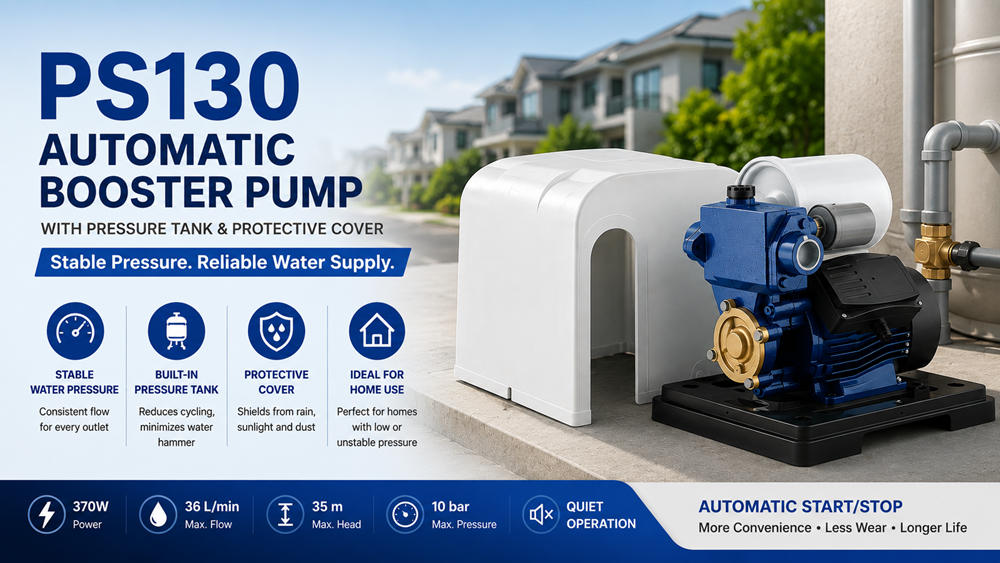
Low or unstable water pressure can turn everyday household activities into a constant inconvenience. A weak shower, slow-filling toilet cistern, inconsistent flow at upstairs taps, or sudden pressure changes when several outlets are opened at the same time are all common signs that a domestic water system may need pressure boosting.
These problems are particularly relevant in many Southeast Asian homes, where building age, storage-tank arrangements, pipe conditions, municipal supply pressure and household water demand can all influence the pressure available at the tap.
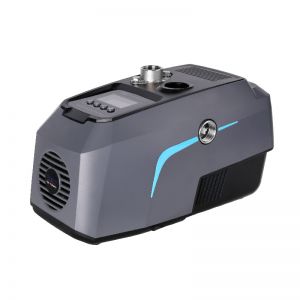
The Stream PS130 Automatic Booster Pump is designed as a practical household pressure-boosting solution. Instead of being just a standalone pump, it combines a water pump, sealed pressure tank and pressure switch into an automatic booster system.
A distinctive protective plastic cover surrounds the system, giving the PS130 a clean integrated appearance while helping shield important components from dust, sunlight and everyday outdoor exposure.
With a 370 W motor, maximum flow of 36 L/min and maximum head of 35 m, the PS130 is designed for domestic water supply applications where reliable automatic operation and more stable water pressure are required.
The Stream PS130 is an automatic domestic water pressure booster system consisting of three primary functional components:
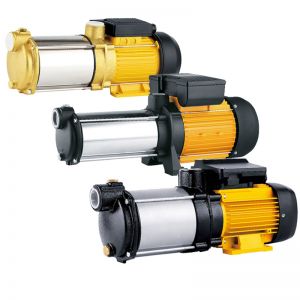
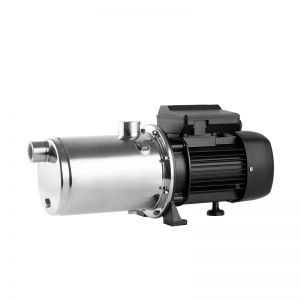
A surface water pump
A sealed pressure tank with a non-toxic rubber membrane
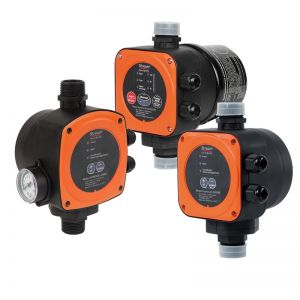
An automatic pressure switch
These components work together so that the pump can automatically respond to changes in household water pressure.
When a tap or shower is opened and system pressure falls below the pressure-switch setting, the pump starts automatically. When water demand stops and the required pressure is restored, the pump shuts down.
The pressure tank stores a small quantity of pressurized water between pump cycles. This gives the system an important advantage over a basic automatic pump that starts immediately every time even a small amount of water is used.
| Model | PS130 |
| Power | 370 W |
| Maximum Flow | 36 L/min |
| Maximum Head | 35 m |
| Automatic Control | Pressure Switch |
| Pressure Tank | Sealed Tank with Non-Toxic Rubber Membrane |
| Maximum Ambient Temperature | +40°C |
| Maximum Fluid Temperature | 80°C |
| Maximum Pressure | 10 bar |
| Duty | Continuous Rated |
Maximum flow and maximum head are boundary values and should not be interpreted as occurring at the same operating point. Actual performance depends on pipe length, pipe diameter, elevation, inlet conditions and the hydraulic resistance of the complete household water system.
Domestic booster pump requirements vary significantly by region.
In Southeast Asian markets such as Malaysia and Singapore, pumps are frequently installed around landed houses, terrace homes and residential water-storage systems.
In these installations, customers are often looking for more than maximum pump performance. Practical requirements such as compact installation, automatic operation, stable household pressure, protection from outdoor conditions and an appearance that integrates neatly around the home can be equally important.
The PS130 was developed with this type of residential application in mind.
Its combination of an automatic pump, pressure tank and protective outer cover gives the product a distinctly integrated residential design rather than the appearance of a bare industrial water pump.
Malaysia provides a particularly useful example of why automatic household booster systems are widely used.
Water pressure available to a home can vary according to location, municipal supply conditions, time of day, building layout and the condition of the home's internal plumbing.
Older properties can present additional challenges. Existing pipes may create more hydraulic resistance, bathrooms may have been added or renovated over time, and modern showers and appliances may place greater demands on a water system that was designed many years earlier.
In homes supplied from a roof tank or storage tank, the available pressure may also depend heavily on the difference in height between the tank and individual water outlets.
A domestic booster pump provides additional pressure so that showers, taps and other household outlets can operate more consistently.
The protective cover is one of the most recognizable characteristics of the Stream PS130.
It is not simply a cosmetic addition.
Water pumps installed around residential properties can be exposed to dust, sunlight, moisture and changing weather conditions.
The PS130 cover is designed to help protect the pump from dust and direct solar exposure, while also providing additional shielding from the surrounding installation environment.
This type of covered pump design is particularly relevant in tropical markets where domestic pumps may be installed around external utility areas, beside water tanks or in semi-outdoor locations.
The cover also creates a cleaner, more integrated appearance that may be preferred in visible residential installations.
No pump cover should automatically be interpreted as making the complete electrical pump system fully waterproof unless a specific ingress-protection rating is stated for that configuration.
The PS130 cover helps reduce direct exposure to dust, sunlight and environmental conditions, but correct installation remains important.
The pump should be positioned appropriately, electrical connections should be protected according to local installation requirements, and sufficient ventilation around the motor must be maintained.
A protective cover is an additional layer of protection rather than a replacement for correct installation practice.
The sealed pressure tank is one of the most important functional parts of the PS130 system.
Inside the tank is a flexible membrane separating the water side from the pressurized air cushion.
As the pump operates, water enters the tank and compresses the air on the other side of the membrane.
This compressed air acts like a spring, storing hydraulic energy.
When a user opens a tap, some water can initially be supplied from the pressurized tank before the system pressure drops enough for the pressure switch to start the pump.
This changes how the complete booster system behaves compared with a pump operating without a pressure vessel.
When no water is being used, the pump remains stopped while the piping and pressure tank remain pressurized.
Water begins to leave the system and pressure gradually decreases.
The pressure vessel can supply part of this initial water demand from its stored pressurized volume.
When pressure reaches the configured cut-in level, the pressure switch starts the pump automatically.
The PS130 delivers water while replenishing pressure in the plumbing system and pressure vessel.
After the tap is closed, the pump continues briefly until system pressure reaches the pressure-switch cut-out level.
The pressure vessel remains charged and ready for the next water demand.
Without any hydraulic storage, a pump may need to start whenever even a very small amount of water is required.
Examples include briefly washing hands, filling a glass, a small toilet cistern refill or a minor intermittent water demand.
Repeated start-stop operation is commonly known as pump cycling.
A pressure tank provides a small buffer of pressurized water between pump cycles.
As a result, some minor water demands can be supplied without immediately starting the motor.
Reducing unnecessary cycling can improve the operating behavior of a domestic booster system and reduce repeated mechanical and electrical starting events.
Yes, a correctly designed pressure vessel can help moderate pressure fluctuations and hydraulic pulsations in a domestic water system.
Water hammer occurs when the velocity of flowing water changes rapidly, producing a pressure wave inside the pipe.
A familiar example is the sudden bang or vibration that can occur when a valve closes quickly.
Because a pressure vessel contains a compressible air cushion, it can absorb part of the hydraulic energy associated with pressure changes.
This can help smooth system operation and reduce pressure pulsations.
However, a pressure tank should not be treated as a universal cure for every water-hammer problem. Severe water hammer can also be caused by excessive velocity, fast-closing valves, unsuitable pipe sizing, loose piping or other plumbing-system conditions.
Older residential plumbing can be particularly sensitive to pressure changes.
Pipe supports may have loosened over time, plumbing layouts may have been modified, and existing valves or fittings may behave differently from modern components.
Sudden pressure fluctuations can become noticeable as knocking pipes, vibration or irregular water delivery.
A booster system that combines controlled automatic starting with a properly operating pressure vessel can provide smoother pressure behavior than a simple pump that repeatedly switches on and off without hydraulic storage.
One of the main reasons homeowners install booster pumps is shower performance.
A shower requires both sufficient flow and sufficient pressure.
If household supply pressure is weak, the shower may feel unsatisfactory even when enough total water is available.
Pressure can also change when another family member opens a tap, flushes a toilet or uses another water outlet.
The PS130 adds pressure to the household supply while the pressure tank helps smooth short-duration changes in demand.
The primary use of the PS130 is improving domestic water pressure for taps, showers and other household water outlets.
The PS130 can be considered where existing residential plumbing provides insufficient or inconsistent usable pressure and where the system conditions are suitable for booster installation.
Many houses use water storage tanks to maintain reserve water supply.
Where gravity pressure from the tank is insufficient, a booster pump can increase delivery pressure to household outlets.
Landed residential properties often have longer internal pipe runs and multiple bathrooms or outlets located at different elevations.
A domestic booster system can help improve water delivery across these installations.
The PS130 can provide additional pressure where weak water delivery affects shower comfort and normal bathroom use.
The PS130 brings together the pump, pressure switch and sealed pressure tank into one coordinated domestic booster system.
The specially designed outer cover helps protect the system from dust and sunlight while providing a cleaner appearance for residential installations.
The sealed pressure vessel stores a small amount of pressurized water and provides hydraulic cushioning.
The pressure switch controls pump operation according to changes in water-system pressure.
The PS130 uses a 370 W motor designed for domestic booster applications.
The pump provides maximum flow up to 36 L/min under the specified test conditions.
Maximum head reaches 35 m, providing useful pressure capability for household water systems.
The PS130 follows a relatively straightforward pressure-switch-and-tank architecture rather than relying on complex electronic variable-speed controls.
For users who prioritize a familiar, economical automatic booster system, this traditional arrangement remains highly practical.
| Pump Body | Cast Iron |
| Motor Housing | Aluminum |
| Impeller | Brass |
| Mechanical Seal | Steatite Ceramic / Metalized Carbon |
| Insulation | Class B / F |
| Duty | Continuous Rated |
| Feature | PS130 with Pressure Tank | Basic Automatic Pump |
|---|---|---|
| Automatic Operation | Yes | Depends on controller |
| Pressure Tank | Integrated | Often not included |
| Small Water Demands | Tank can provide hydraulic buffer | Pump may start more immediately |
| Pressure Pulsation | Tank helps smooth pressure changes | Depends on system design |
| Protective Cover | Integrated protective cover | Usually exposed unless separately protected |
Modern variable-speed booster pumps use electronic controls and variable-frequency drives to adjust motor speed according to water demand.
They can provide highly stable pressure across changing flow conditions and may offer advanced protection and monitoring functions.
However, a variable-speed booster is not required for every household.
The PS130 follows a more traditional arrangement using a fixed-speed pump, pressure switch and pressure vessel.
This makes it attractive where customers prioritize straightforward operation, familiar mechanical components and a more economical purchase price.
| Feature | PS130 | Variable-Speed Booster |
|---|---|---|
| Control | Pressure Switch | Electronic Variable-Speed Control |
| Motor Speed | Fixed Speed | Variable |
| Pressure Tank | Integrated | Depends on system |
| System Complexity | Relatively simple | More electronic control components |
| Typical Positioning | Economical traditional home booster | Premium constant-pressure solution |
Before installing any booster pump, identify whether the home is supplied directly from a municipal line, storage tank or another water source.
Local plumbing regulations should always be followed, particularly when connecting a booster pump to municipal water infrastructure.
More pressure is not automatically better.
Excessive pressure can increase stress on old pipes, valves, flexible hoses and household fixtures.
This is particularly important in older homes.
Before increasing system pressure, inspect older plumbing for leaks, weak joints or deteriorated fittings.
A booster pump can improve water delivery, but it cannot repair an unsuitable plumbing system.
The protective pump cover does not eliminate the need for correctly installed electrical protection.
Electrical connections must follow applicable local standards and should be protected against unsuitable environmental exposure.
The motor requires sufficient airflow for cooling.
Do not block ventilation openings or surround the pump with an additional enclosure that traps excessive heat.
Pressure vessels rely on the correct air pre-charge to operate effectively.
Incorrect pre-charge can reduce usable tank volume and contribute to frequent pump cycling.
The pressure tank should be checked and maintained according to the system instructions.
If a home experiences banging pipes or severe pressure shocks, the complete plumbing system should be evaluated rather than relying only on the booster pump.
Useful measures can include:
Maintaining suitable water velocity
Using appropriately sized piping
Securing loose pipes
Checking fast-closing valves
Maintaining the booster pressure tank correctly
Using dedicated water-hammer arrestors where required
Avoiding unnecessarily high booster pressure
The pressure tank in the PS130 provides useful hydraulic cushioning, but serious water-hammer conditions may require additional plumbing measures.
The residential water pump market increasingly includes smart controllers, electronic sensors, permanent-magnet motors and variable-speed constant-pressure systems.
These technologies offer important advantages in the right applications.
However, traditional booster systems based on a pressure switch and pressure vessel remain widely used because the operating principle is straightforward and familiar to installers.
For many households, the key requirements are simply:
Better water pressure
Automatic start and stop
Stable everyday operation
Less unnecessary pump cycling
Simple system architecture
A practical installation cost
The PS130 is designed around these requirements.
The PS130 is an automatic household booster pump system combining a 370 W water pump, sealed pressure tank, pressure switch and protective plastic cover.
The PS130 provides maximum flow up to 36 L/min under the specified test conditions.
Maximum head is 35 m.
The pressure tank stores pressurized water and provides a hydraulic buffer between pump cycles. This can reduce unnecessary starting and stopping while helping smooth pressure changes.
The tank's compressible air cushion can help absorb pressure fluctuations and reduce hydraulic pulsations. However, severe water hammer may require additional plumbing corrections or dedicated water-hammer control devices.
The cover helps protect the pump from dust and sunlight and provides additional shielding for residential installations while giving the system a cleaner integrated appearance.
The protective cover should not be interpreted as a specific waterproof or IP rating unless such a rating is stated for the complete installed system. Correct installation and electrical protection remain necessary.
The PS130 is particularly well suited to the type of residential booster applications commonly found in Malaysia, including homes requiring improved water pressure, automatic operation and a covered pump arrangement.
It can form part of a correctly designed domestic booster system supplied from a suitable water source. The installation should follow local plumbing requirements and the hydraulic requirements of the pump.
It may be suitable where an older home has insufficient usable water pressure, but the existing plumbing condition should be checked before pressure is increased. Ageing pipes, weak fittings and leaks should be addressed first.
Not necessarily. The pressure tank stores a limited volume of pressurized water, so small demands may initially be supplied by the tank before system pressure falls to the pump's starting point.
A pressure switch monitors system pressure and controls the automatic starting and stopping of the pump.
The PS130 is a pressure-switch-controlled fixed-speed booster system. It improves and stabilizes usable household water pressure, but it should not be confused with an electronic variable-speed constant-pressure system that continuously adjusts motor speed.
The value of the Stream PS130 comes from the way several proven domestic water-supply components are integrated into one practical booster system.
A 370 W pump provides up to 36 L/min maximum flow and 35 m maximum head, while the pressure switch enables automatic operation and the sealed pressure tank provides hydraulic storage between pump cycles.
The pressure tank helps reduce frequent starts, smooth short-term pressure variations and provide useful hydraulic cushioning within the household water system.
At the same time, the PS130's distinctive protective plastic cover responds to another practical requirement found in many Southeast Asian residential installations: users want a pump that is not only functional, but also better protected from dust, sunlight and the surrounding outdoor environment.
For homes experiencing weak or inconsistent water pressure, especially where a simple pressure-switch-and-tank system is preferred over a more complex variable-speed booster, the Stream PS130 offers an economical, familiar and practical solution.
For Malaysia and similar tropical residential markets, that combination of automatic pressure boosting, pressure-tank operation and covered design makes the PS130 particularly relevant to everyday household water supply.
Address
No.17 XeDa Jimei Ind. Park, Xiqing Economic Development Area, Tianjin, China
Telephone
+86 13816508465
QUICK LINKS