+86 13816508465
Product Q&A
Oct. 19, 2026

A useful water pump RFQ should define the required operating point, liquid characteristics, installation conditions, electrical supply, and purchasing requirements. A request that says only “2 HP water pump, best price” rarely gives a supplier enough information to select a suitable model or prepare a comparable quotation. Use the 12-point checklist below to reduce assumptions, quotation revisions, and the risk of ordering the wrong pump.
This guide is written for pump distributors, importers, contractors, and purchasing teams. The checklist is a practical buyer's template, not a substitute for final system design or manufacturer approval.
For a standard clean-water or wastewater pump inquiry, record the following items. Mark unknown values as “To be confirmed” rather than guessing. Some applications will require additional data.
| # | Specification | What to Provide | Why It Matters |
|---|---|---|---|
| 1 | Application / pump type | Water supply, drainage, sewage, irrigation, boosting; preferred pump type if known | Identifies the appropriate product family |
| 2 | Required flow rate | ___ m³/h or ___ L/min at the required duty point | Defines the volume to be delivered |
| 3 | Total dynamic head (TDH) | ___ m; include elevation, required outlet pressure, and estimated friction losses | Defines the head required at that flow |
| 4 | Pumped liquid | Clean water, rainwater, sewage, or other liquid; chemistry if relevant | Affects materials, sealing, and pump design |
| 5 | Liquid temperature / solids | Normal/max °C; solids size and type, fibrous material, or viscosity where applicable | Screens operating limits and blockage risks |
| 6 | Water source / suction conditions | Tank, well, sump, or pipeline; minimum water level, suction lift or inlet pressure | Helps assess priming and cavitation risks |
| 7 | Installation / connections | Surface or submersible; vertical/horizontal; pipe size, fitting and space limits | Checks physical compatibility |
| 8 | Electrical supply | ___ V; ___ Hz; single/three-phase; plug or cable requirements | Avoids incompatible motor selection |
| 9 | Duty cycle / controls | Hours/day; continuous/intermittent; manual, float switch, pressure control, or VFD | Clarifies operation and protection needs |
| 10 | Materials / compliance | Required wetted materials; destination market; applicable standards or certifications | Avoids material or market mismatches |
| 11 | Quantity / configuration | ___ units; single pump or set; spare parts, accessories, labeling or packaging requests | Defines the quoted scope |
| 12 | Commercial terms / destination | Delivery country/port, requested Incoterm, target delivery date, quotation currency | Makes supplier prices more comparable |
Buyer note: The 12 categories are an original procurement-oriented grouping developed for this guide. They are not an official 12-point Hydraulic Institute standard.
A pump cannot be selected reliably from motor power, maximum flow, or maximum head alone. The required duty point combines the flow rate and the total head the system needs at the same operating condition. That point should be checked against the individual model's published performance curve.
For example, “10 m³/h at 25 m total dynamic head” is a usable preliminary duty-point requirement. “10 m³/h and maximum head 25 m” may describe two separate catalog limits rather than a deliverable operating point. If the system head is unknown, send the pipe layout, elevation difference, outlet pressure requirement, pipe dimensions, and fittings so it can be estimated.
The Hydraulic Institute's pump curve guidance explains why performance curves are essential for selection; the U.S. Department of Energy's pump selection guidance likewise emphasizes actual flow and system head requirements.
| Incomplete inquiry | Improved preliminary inquiry |
|---|---|
| “Please quote 2 HP water pumps. Send your best price.” | “Please propose a clean-water surface pump for 8 m³/h at 22 m TDH, 230 V / 50 Hz, single phase, ambient installation, intermittent operation, 30 units for delivery to our specified port. Please include the Q-H curve, wetted materials, and quotation terms.” |
Illustrative RFQ only. The values above do not represent a verified Stream pump model or a completed engineering selection.
Include the nature and expected size of solids, fibrous waste, sump dimensions, starting water level, discharge pipe size, and any clogging concerns. A grinder pump and a free-passage sewage pump are not interchangeable merely because their motor powers match. Browse Stream's sewage pump range or review the SWQG grinder pump guide for product-family context.
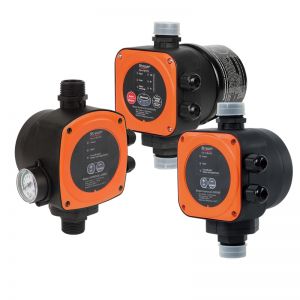
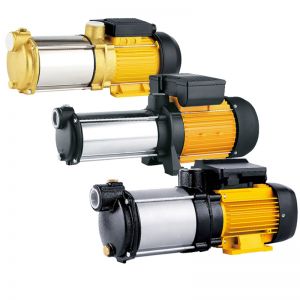
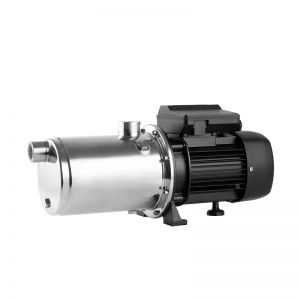
State the required pressure at the outlets, estimated simultaneous water demand, suction water level, available power, and whether automatic pressure control is needed. For clean-water applications, see Stream's peripheral pump range and centrifugal pump range. The appropriate model still depends on the duty point and its performance curve.
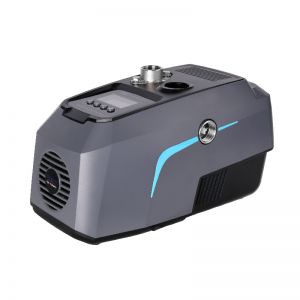
Specify the minimum and peak demand, pressure setpoint, source conditions, expected demand variation, and control requirements. A VFD system should be chosen from the full operating profile rather than a single peak-flow figure. Stream also lists the Hydrobox 900 VFD booster system for relevant applications.
Copy the following request and replace the brackets. Keep unknown entries marked for confirmation:
Subject: RFQ – [Pump Application] – [Quantity] Units
Dear Sales Team,
Please propose a pump and quotation based on the requirements below.
1. Application / pump type: [ ]
2. Required flow rate: [ ]
3. Total dynamic head / outlet pressure: [ ]
4. Pumped liquid: [ ]
5. Temperature / solids / viscosity: [ ]
6. Water source and suction conditions: [ ]
7. Installation / pipe connections: [ ]
8. Voltage / frequency / phase: [ ]
9. Operating hours and controls: [ ]
10. Materials / certification requirements: [ ]
11. Quantity / accessories / packaging: [ ]
12. Destination / Incoterm / target delivery: [ ]
Please include the suggested model, performance curve at our duty point, relevant technical datasheet, quotation validity, and any assumptions or exceptions.
Best regards,
[Company / Contact]
Compare pumps at the same required duty point, not at unrelated maximum ratings.
Check that materials, voltage, frequency, protection features, accessories, and documentation are included on the same basis.
Confirm the exact model, performance curve, quoted quantity, Incoterm, warranty scope, and any exclusions.
Ask suppliers to list missing information and assumptions clearly before treating the price as final.
No. Motor power alone does not establish the required flow and head. Provide the duty point and operating conditions whenever possible.
Share the source and delivery elevations, required outlet pressure, pipe lengths, diameters, fittings, and expected flow. A qualified system designer or supplier can use these inputs to assess the required head.
No. A preferred model can be helpful, but a complete application description lets the supplier propose an alternative where appropriate. Request technical documentation to confirm the proposed model's suitability.
The strongest RFQs combine flow and head at the duty point with liquid, installation, electrical, and commercial details. A clear specification enables suppliers to explain their selection, flag missing requirements, and quote on a comparable basis.
Ready to request a water pump quotation?
Explore the Stream Pumps product range and contact Stream with your completed checklist. If any requirement is uncertain, mark it for technical confirmation rather than supplying an assumed value.
This procurement checklist is independently organized by Stream Pumps using publicly available pump-selection principles. For technical background, see Hydraulic Institute: 5 Tips to Improve the Pump Selection Process, Hydraulic Institute Pump FAQs, and the U.S. Department of Energy: Pump Selection Considerations. Final pump selections must be checked against the relevant manufacturer's performance and operating limits.
Previous: None
Next: Industrial Pump Maintenance Overview and Inspection Framework
Address
No.17 XeDa Jimei Ind. Park, Xiqing Economic Development Area, Tianjin, China
Telephone
+86 13816508465
QUICK LINKS