+86 13816508465
Pump Troubleshooting
May. 25, 2026
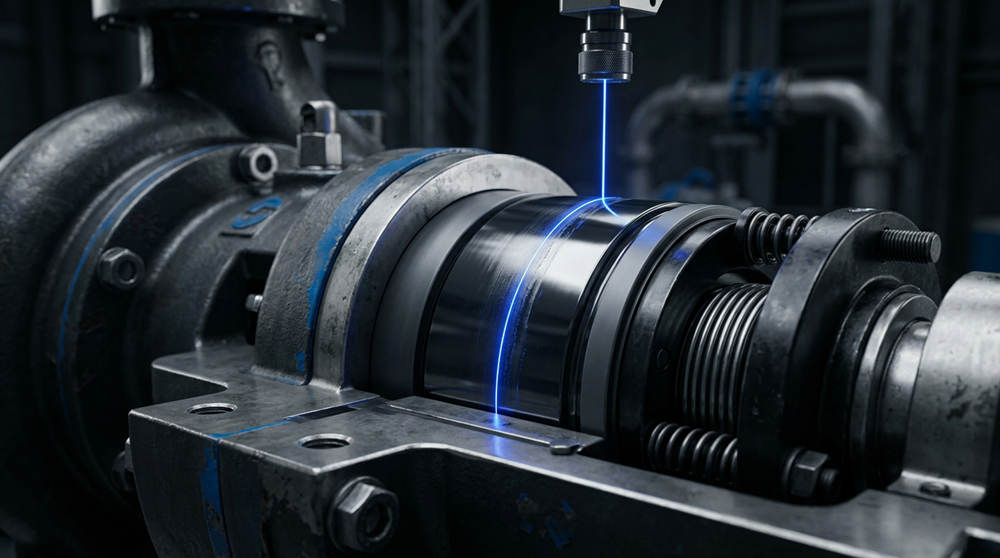
Replacing a leaking pump mechanical seal without identifying the root cause guarantees future failures. Engineers must treat a failed mechanical seal as a diagnostic crime scene. By analyzing specific wear patterns—such as heat checking, fretting, elastomer swelling, or abrasive grooving—maintenance teams can pinpoint the exact hydraulic, mechanical, or chemical issues destroying the pump and apply permanent corrective actions.
Replacing a leaking mechanical seal without finding the root cause is like putting a bandage on a bullet wound. The immediate bleeding might stop, but the underlying damage remains untreated. Within a few months, or perhaps even weeks, the industrial pump will fail again. This cycle of blind replacement drains maintenance budgets, drives up labor costs, and severely impacts overall plant reliability.
Leakage is simply a symptom of a larger systemic failure. To break the run-to-failure cycle, reliability engineers and maintenance managers must shift their perspective. You must introduce the concept of a failed pump mechanical seal as a forensic crime scene. The damaged components contain critical evidence. By reading the distinct wear patterns left on the seal faces and elastomers, engineers can accurately diagnose the exact hydraulic or mechanical issue that is destroying the equipment.
Analyzing these components allows rotating equipment specialists to move from reactive repairs to proactive reliability improvements. Understanding the specific failure modes empowers teams to modify operational procedures, upgrade metallurgy, or correct piping structures. For a comprehensive approach to asset management, incorporate these diagnostic steps into your [Ultimate Industrial Pump Maintenance Checklist].
Before conducting a failure autopsy, engineers must understand the core physics governing a pump mechanical seal. The primary function of a mechanical seal is to contain the pumped medium while allowing the pump shaft to rotate. To achieve this, the seal relies on two highly polished faces—one stationary and one rotating.
These faces do not run completely dry under normal operating conditions. Instead, they rely on a microscopic fluid film generated by the pumped medium itself. This incredibly thin layer of liquid provides vital lubrication and cooling for the sliding surfaces. The fluid film prevents direct metal-to-metal or silicon-to-silicon contact, thereby minimizing friction and heat generation.
The survival of the mechanical seal depends entirely on the stability of this fluid film. The exact moment this fluid film boils away, is pushed away by mechanical deflection, or becomes severely contaminated with particulate matter, the seal is doomed. Without lubrication, friction spikes exponentially. Temperatures across the seal faces rise rapidly, leading to catastrophic material degradation. Therefore, protecting the fluid film through proper pump operation and system design is the absolute rule of survival for any rotating equipment.
Dry running is one of the most common and destructive failure modes encountered in industrial pump applications. When inspecting the failed seal faces during an autopsy, technicians will observe distinct thermal damage. The most prominent symptom is a network of fine, radial cracks spreading outward from the center of the seal face. This phenomenon is known in the industry as "heat checking."
In addition to heat checking, the metal or carbon components may appear severely scorched, blued, or discolored due to extreme temperature spikes. Furthermore, the secondary sealing elements—such as the O-rings—will often be baked hard, brittle, and cracked, having lost all their elastomeric properties.
The root cause of heat checking is the vaporization or complete absence of the lubricating fluid film. The pump either ran dry due to a loss of suction, operators failed to properly vent the casing before startup, or the pumped fluid reached a temperature that caused it to flash into a vapor directly at the seal faces. Without liquid cooling, the immense friction causes rapid thermal expansion and subsequent surface cracking.
To fix this issue, maintenance teams must ensure proper venting protocols are strictly followed during every pump startup sequence. Choose automated venting systems if manual venting proves unreliable. For applications involving high-temperature or highly volatile fluids, engineers must implement external flush plans. Utilizing API Plan 11 (seal flush from pump discharge) or API Plan 32 (injection of a clean, cool external fluid) will keep the seal chamber adequately cooled and maintain a stable fluid film.
Mechanical stress transmitted through the pump shaft is highly lethal to mechanical seals. When performing an autopsy on a seal subjected to mechanical stress, the wear track on the seal face will appear highly uneven. Technicians typically observe heavy, polished wear on one side of the face, while the opposite side remains practically untouched.
Another severe symptom of mechanical stress is fretting. Fretting occurs when the dynamic O-ring or the rotating ring itself digs a deep, polished groove directly into the pump shaft or the seal sleeve. This continuous oscillating friction strips away the protective oxide layer on the metal, leading to rapid material loss.
The root cause of these symptoms is severe mechanical deflection. This is frequently caused by poor laser alignment between the motor and the pump. Alternatively, heavy pipe strain—where improperly supported piping forces the pump casing out of its natural geometry—will severely warp the internal clearances. Bad or heavily worn bearings also allow the shaft to whip dynamically, creating radial runout that forces the seal faces to open and close with every single rotation. You can reference the [Pump Bearing Failure Diagnostic Guide] for deeper analysis of bearing degradation.
The corrective action requires a strict return to mechanical precision. Technicians must perform precision laser alignment to tight tolerances before commissioning the unit. Pipe strain must be completely eliminated by adjusting pipe hangers and ensuring flange bolts slide in without mechanical force. Finally, replace worn bearings and measure shaft runout with a dial indicator to ensure it falls within acceptable OEM limits.
Sometimes the primary hard seal faces survive perfectly intact, yet the mechanical seal still fails catastrophically. In these autopsies, the secondary rubber seals—the O-rings and elastomers—are completely destroyed. The symptoms are glaringly obvious: the elastomers may be swollen to twice their original size. In other cases, they may have dissolved into a sticky, gummy paste, or conversely, they may have hardened and shattered like brittle plastic upon removal.
The root cause of elastomer destruction is chemical attack and incompatibility. The standard elastomer materials utilized in basic pumps—such as Nitrile (NBR), EPDM, or standard Fluoroelastomers (Viton)—are chemically reacting with the pumped fluid. This is highly common in applications handling aggressive wastewater, hydrocarbon solvents, acidic mixtures, or harsh clean-in-place (CIP) chemicals. The chemical breaks down the cross-linking of the polymer chains, resulting in a total loss of sealing tension.
To prevent chemical attack, reliability engineers must strictly cross-reference the pumped medium with established chemical compatibility charts. Do not guess on material selection. Choose chemical-specific upgrades for your elastomers. For highly aggressive solvents or mixed chemical wastewater streams, upgrade the elastomers to high-end perfluoroelastomers (FFKM), such as Kalrez. While FFKM O-rings require a higher initial capital investment, their near-universal chemical resistance eliminates the threat of elastomer swelling and drastically extends the seal's mean time between failures (MTBF).
Pumping raw wastewater, mining slurries, or fluids heavily contaminated with rust and pipe scale introduces a harsh physical threat to mechanical seals. When autopsying a seal exposed to heavy particulate, the seal faces look exactly like a vintage vinyl phonograph record. The surfaces will be covered in deep, concentric circular grooves, heavy scoring, and aggressive scratches.
The root cause of this phonographing effect is abrasive wear. Hard particles—such as silica sand, metal grit, or rust flakes—force their way between the rotating and stationary faces. Because these particles are often harder than the standard carbon or ceramic seal faces, they embed themselves into the softer material and act like a high-speed grinding wheel, carving deep channels until the pumped fluid leaks heavily through the damaged faces.
The fix requires upgrading the metallurgy of the seal faces to withstand the abrasive environment. Standard carbon faces will not survive. Upgrade to dual hard-face material combinations, specifically Silicon Carbide running against Silicon Carbide (SiC/SiC) or Tungsten Carbide running against Tungsten Carbide (TC/TC). These materials possess extreme hardness capable of crushing particulate matter.
Furthermore, choose advanced environmental controls for extreme slurries. Upgrade the equipment to a Double Mechanical Seal utilizing a pressurized, clean barrier fluid system, commonly designated as API Plan 53A. This setup ensures that the fluid film lubricating the seal faces consists of clean barrier fluid, physically blocking the abrasive slurry from ever reaching the critical sealing surfaces.
A mechanical seal's lifespan serves as the ultimate indicator of your overall pump station health. When a seal fails prematurely, it is actively alerting the maintenance team to a broader systemic issue—whether that is dry running, mechanical misalignment, chemical incompatibility, or abrasive wear. Don't just replace the leaking component. Analyze it, diagnose the root cause, and engineer a permanent solution.
If your facility is battling chronic rotating equipment failures, it is time to upgrade your assets. Contact StreamPumps today to discuss upgrading your troubled applications with our heavy-duty submersible and centrifugal pumps. StreamPumps equipment arrives pre-configured with premium SiC/SiC seals, robust heavy-duty bearing designs, and precision-engineered shafts specifically designed to maximize your Mean Time Between Failures (MTBF) in the harshest industrial environments.
What is the average expected lifespan of an industrial pump mechanical seal?
Under ideal operating conditions with a clean lubricating fluid film and proper alignment, an industrial mechanical seal should easily operate for 3 to 5 years (25,000 to 40,000 continuous hours). Failures occurring within a few months indicate an underlying hydraulic, mechanical, or chemical root cause that requires immediate diagnosis.
How can I tell if my mechanical seal failed from dry running or chemical attack?
Dry running leaves thermal damage on the hard seal faces, such as radial heat checking (cracking), blueing of the metal, and baked, brittle O-rings. Chemical attack typically leaves the hard seal faces pristine but destroys the secondary O-rings, causing them to swell, dissolve into a gummy paste, or shatter.
Address
No.17 XeDa Jimei Ind. Park, Xiqing Economic Development Area, Tianjin, China
Telephone
+86 13816508465
QUICK LINKS