+86 13816508465
Jun. 25, 2026
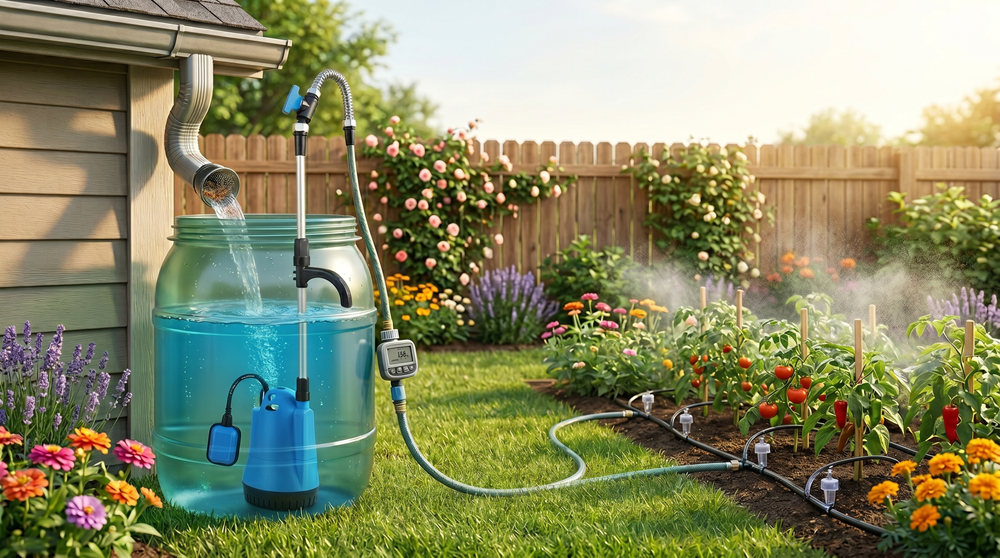
Quick answer: To build an eco-friendly garden irrigation system, place a rain barrel under a downspout, drop in a submersible garden pump, and connect a hose or drip line to the pump's outlet. A pump with an automatic float switch delivers steady pressure and shuts off when the barrel runs dry—giving you free, plant-friendly rainwater on demand.
Hot weather brings two headaches for every gardener: rising water bills and thirsty plants. Treated tap water keeps things alive, but it's not free, and the chlorine and fluoride inside it aren't doing your soil any favors.
Plenty of gardeners already collect rainwater in barrels. The trouble starts when they try to actually use it. Gravity alone barely produces a trickle, which makes it nearly impossible to run a sprinkler or reach the far corners of a large garden. A barrel of free water ends up sitting there, going stale.
The fix is simpler than you might think. Pairing your rainwater harvesting system with a reliable submersible garden pump turns that stagnant barrel into a pressurized, automated watering station. In this guide, you'll learn how to set up the whole system step by step—and why a lightweight pump from Stream Pumps makes an ideal engine for a greener, more affordable garden.
Rainwater isn't just a cheaper alternative to tap water. It's genuinely better for what grows in your beds.
It's healthier for plants. Rainwater is naturally soft and free of the chlorine and fluoride added to municipal supplies. Those chemicals can build up in soil over time and disturb the helpful microbes that keep roots healthy. Rain also carries small amounts of nitrates—a natural form of nitrogen that plants use to grow lush and green. That's why gardens often look noticeably perkier after a storm than after a session with the hose.
It cuts your water bills. Outdoor watering can account for a large share of household water use during summer, sometimes more than half. A single rain barrel captures roughly 0.6 gallons for every square foot of roof per inch of rainfall, so even a modest roof fills a barrel fast. Every gallon you pull from the barrel is a gallon you don't pay for.
It's kinder to the environment. Capturing rain reduces stormwater runoff, which carries pollutants into rivers and streams. It also eases pressure on local water treatment plants and helps prevent soil erosion in your own yard. Rainwater harvesting is one of the most accessible ways for a household to shrink its environmental footprint.
Many people assume they can just screw a hose onto the spigot at the bottom of a rain barrel and start watering. In practice, the results are disappointing.
Gravity-fed barrels rarely produce more than a weak dribble. A standard barrel sitting on the ground generates almost no pressure—often less than 2 PSI. That's not enough to power a sprinkler, push water through a long hose, or run a drip irrigation line across a big plot. You end up filling watering cans one slow drip at a time.
A submersible garden pump solves the problem instantly. It sits inside the barrel, fully underwater, and pushes water out with real force. This pressure—measured as【head,】 or the vertical height the pump can lift water—lets you run sprinklers, reach distant beds, and feed automated drip systems with ease. In short, the pump is what transforms passive collection into active, usable irrigation.
Setting up your system takes an afternoon and a few basic components. Here's the process from start to finish.
Step 1: Position and Fill Your Rain Barrel
Place your barrel directly beneath a roof downspout so it catches the most runoff. Pick a stable, level surface to keep the full barrel from tipping. Fit a mesh screen over the opening to keep out leaves, debris, and mosquitoes. After the first decent rainfall, your barrel should be ready to go.
Step 2: Drop in the Submersible Pump
This is where the 【plug-and-play】 design of a domestic submersible pump shines. Simply lower the pump into the barrel using its built-in carry handle or a length of rope. There's no priming, no complicated assembly, and no need to mount anything externally. The pump rests at the bottom, fully submerged, ready to work the moment you switch it on.
Step 3: Connect Your Hose
Attach a standard garden hose to the pump's outlet. Most domestic garden pumps accept common hose fittings, so you usually won't need special adapters. Once connected, the pump can push water through a sprinkler, a spray nozzle, or a long hose run to the back of your garden.
Step 4: Automate the Flow
For truly hands-free watering, connect your hose to a drip irrigation system. Drip lines deliver water slowly and directly to plant roots, which wastes far less than overhead sprinkling. Pair the setup with a simple timer, and your garden waters itself—using nothing but free rainwater.
Not every pump is built for life inside a rain barrel. Stream Pumps designs its domestic submersible pumps with rainwater harvesting in mind, and three features stand out.
The Automatic Float Switch Protects Your Pump
This is the most important feature for any rain barrel setup. A Stream Pumps domestic submersible pump includes an automatic float switch that rises and falls with the water level. When the barrel runs dry, the float drops and shuts the motor off automatically. This prevents【dry running】—the leading cause of burnt-out pumps. You never have to stand watch over your barrel or worry about ruining the motor when the water runs out.
Corrosion-Resistant Plastic Housing Lasts for Years
Rainwater can be slightly acidic, which slowly eats away at metal components. Stream Pumps uses tough, high-quality plastic housing that won't rust or corrode, even when left submerged for months at a time. That durability means your pump keeps performing season after season, without the weakening and pitting that metal-bodied pumps often suffer in a rain barrel.
Lightweight Design Makes Storage and Moving Easy
A Stream Pumps domestic submersible pump is light enough to lift out with one hand. When winter arrives, you can quickly remove it for indoor storage to avoid frost damage. The same portability lets you move the pump between water sources—from your rain barrel to a pond, water feature, or a second barrel—without straining your back.
If you want to compare models, Stream Pumps offers a full range of compact submersible garden pumps suited to rain barrels of different sizes.
Harvesting rainwater is one of the smartest, most sustainable choices a gardener can make. It saves money, protects the environment, and gives your plants the soft, nutrient-rich water they thrive on. Add a reliable submersible garden pump, and you transform a stagnant barrel into a powerful, automated irrigation system that does the hard work for you.
The right pump makes all the difference—one with an automatic float switch to prevent dry running, corrosion-proof housing for long life, and a lightweight build for easy handling. Start watering smarter today. Visit www.streampumps.com/garden-pump/ to find the perfect, affordable submersible pump for your rain barrel setup and join the green gardening movement.
What size pump do I need for a rain barrel?
For most home rain barrels, a small domestic submersible pump is plenty. Match the pump's 【head】 rating to how far and how high you need to move water—a pump rated for 5 to 10 meters of head handles most backyard gardens, sprinklers, and drip lines comfortably. Larger gardens or sloped yards may benefit from a higher-pressure multistage submersible model.
Will a submersible pump run dry and burn out when the barrel empties?
Not if it has an automatic float switch. A Stream Pumps domestic submersible pump uses a float switch that drops with the falling water level and shuts the motor off before the barrel runs dry. This protects the pump from dry-running damage, so you can leave it in place without constant supervision.
Is rainwater safe for watering edible plants like vegetables?
Yes, rainwater is generally safe and often better than tap water for vegetable gardens, since it's free of chlorine and added chemicals. Keep your barrel covered with a screen to prevent contamination, water the soil rather than the leaves of edibles, and clean your barrel periodically to keep the water fresh.
How much money can a rain barrel pump system actually save?
Savings depend on your climate, roof size, and water rates, but outdoor watering can make up more than half of summer household water use. By replacing treated tap water with free rainwater during the growing season, many gardeners noticeably lower their warm-weather utility bills while reducing demand on the municipal supply.
Can I leave the pump in the barrel all year?
You can leave it in during the active growing season, but it's best to remove and store the pump before winter in colder climates. Freezing water can damage a pump left submerged. A lightweight Stream Pumps model lifts out easily by its carry handle, making seasonal storage quick and simple.
Address
No.17 XeDa Jimei Ind. Park, Xiqing Economic Development Area, Tianjin, China
Telephone
+86 13816508465
QUICK LINKS