+86 13816508465
Pump Knowledge
May. 28, 2026
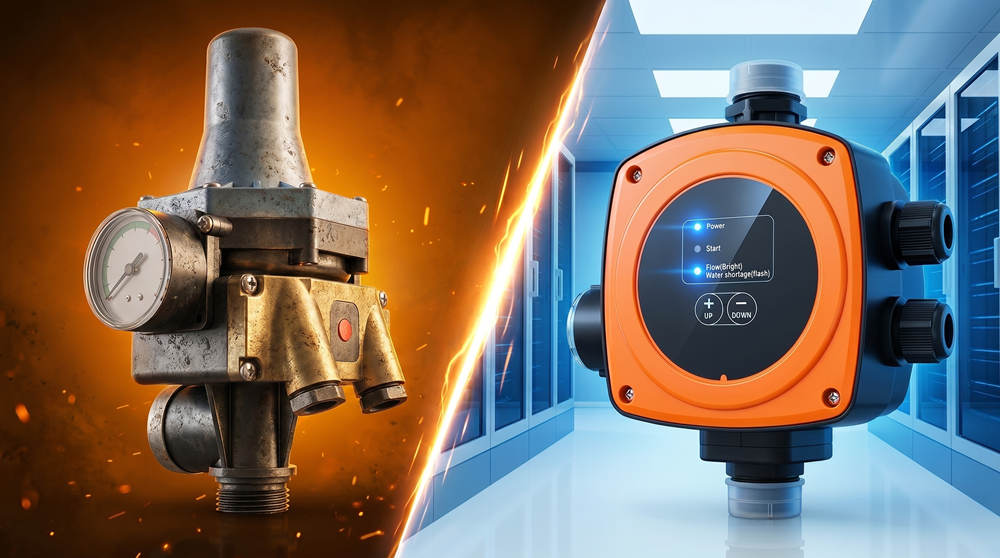
Smart pump controllers offer a superior alternative to traditional mechanical switches by combining digital pressure and flow sensors with microprocessors. This integration prevents dry-running, eliminates contact arcing, and stops short-cycling, ultimately protecting water pumps from premature motor failure and saving contractors significant after-sales maintenance costs.
Why are traditional pump maintenance costs so high for contractors? For international pump distributors, system integrators, and plumbing professionals, the initial capital expenditure on hardware represents only a fraction of a project's total lifecycle cost. The true financial burden stems from relentless after-sales maintenance and emergency service calls.
When a high-quality surface or submersible booster pump fails prematurely, field technicians often discover that the primary defect does not originate within the motor itself. Most often, the pump is destroyed by the failure of an outdated, low-cost mechanical pressure switch. These analog devices govern the entire operation of the boosting system, yet they rely on antiquated mechanisms that expose the pump to severe operational hazards.
Upgrading water supply systems to utilize a smart electronic controller is the most effective investment an MEP engineer or plumbing contractor can make. This transition eliminates premature pump burnout, drastically reduces unbillable service visits, and protects engineering margins across large-scale commercial and residential installations.
Traditional mechanical pressure switches have remained largely unchanged for decades. While they provide a rudimentary method for automating pump operation, their physical design introduces critical vulnerabilities into modern water supply networks.
Mechanical switches rely on physical springs and metal contacts to interrupt high-voltage currents and cycle the pump motor. Each time the switch opens or closes, the electrical current generates a micro-arc across the physical gap. Over time, this repetitive electrical arcing causes carbon buildup, pitting, and eventual contact welding. When the metal contacts fuse together, the switch can no longer break the electrical circuit. This failure forces continuous pump operation, which inevitably leads to catastrophic motor burnout.
Calibrating a mechanical switch requires technicians to manually adjust tension on internal spring nuts. This process is inherently imprecise. Adjusting the cut-in and cut-out pressure settings requires blind calibration, often relying on trial and error alongside a separate analog pressure gauge. Inaccurate spring settings cause severe pressure fluctuations within the plumbing network. These rapid pressure spikes generate destructive water hammer, which damages pipe joints, valves, and the pump impeller.
The most significant limitation of a traditional mechanical switch is its inability to sense water flow. These devices monitor system pressure exclusively. During a municipal water outage, a ruptured supply line, or well depletion, the network pressure drops rapidly. The mechanical switch interprets this pressure drop as a demand for water and immediately activates the pump motor. Because the switch cannot detect the absence of water, it forces the pump to operate dry. Operating without water for cooling and lubrication causes the internal mechanical seals to overheat and melt within a matter of minutes, completely destroying the pump housing and motor.
The transition from mechanical relays to digital automation represents a fundamental technological shift in fluid management. Smart pump controllers completely eliminate the physical springs, tension nuts, and moving metal contacts that define traditional switches.
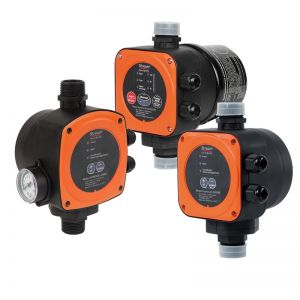
Instead, a smart electronic controller integrates high-precision digital pressure sensors and dedicated flow sensors, all managed simultaneously by an internal microprocessor. This advanced architecture allows for two-dimensional monitoring, tracking both pressure and flow in real time.
Furthermore, smart pump controllers utilize solid-state components or advanced electronic relays for circuit switching. By physically eliminating the metal-to-metal contact mechanism, the smart electronic controller eradicates contact arcing entirely. This solid-state approach ensures millions of wear-free operational cycles, providing a lifespan that drastically outpaces any traditional mechanical alternative.
For system integrators and plumbing contractors, translating these technical specifications into commercial value is essential. Integrating a smart electronic controller into a booster system provides immediate operational advantages that directly protect the installer's bottom line.
Because a smart electronic controller measures both flow and pressure simultaneously, it can easily identify a dry-run scenario. If the microprocessor detects a sudden pressure drop combined with a reading of zero flow, it instantly recognizes a water shortage. The controller then cuts electrical power to the pump and triggers a visual fault indicator. This immediate intervention completely eliminates dry-run burnout, saving the contractor from replacing a destroyed pump at their own expense.
Minor leaks in a plumbing network—such as a running toilet or a dripping faucet—cause continuous, gradual pressure drops. A mechanical switch reacts to these drops by repeatedly turning the pump on and off in rapid succession. This rapid short-cycling overheats the motor windings and destroys the starting capacitor. Smart pump controllers employ advanced anti-cycling logic. If the microprocessor detects a pattern of rapid cycling caused by a micro-leak, it intentionally delays the motor response or triggers a safety shutdown. This logic protects the motor from thermal overload and alerts the facility manager to the plumbing leak.
Time spent commissioning equipment translates directly to labor costs. Smart pump controllers streamline the installation process by providing precise visual adjustment. Installers can set exact starting pressures via a digital interface, an LCD screen, or a highly precise dial. This feature eliminates the guesswork associated with spring nuts and drastically reduces on-site commissioning time. A technician can program the ideal parameters in seconds, ensuring the system operates efficiently before leaving the job site.
Continuing to utilize traditional mechanical switches in modern, high-efficiency boosting applications is a high-risk compromise. The nominal savings achieved by purchasing a cheap mechanical switch are immediately erased by the cost of a single premature pump failure and the subsequent emergency service call.
Integrating smart electronic controllers transforms standard water pumps into highly intelligent boosting systems. This upgrade delivers ultimate operational reliability, eradicates common after-sales maintenance issues, and safeguards the contractor's professional reputation. System integrators, MEP engineers, and plumbing contractors should specify smart electronic controllers for all future water supply and pressure boosting projects to ensure maximum lifecycle value.
A traditional mechanical switch has a lower initial purchase price than a smart electronic controller. However, the total cost of ownership for a mechanical switch is significantly higher due to frequent calibration requirements, lack of dry-run protection, and the high probability of causing premature pump failure. Choose a smart pump controller if long-term reliability and lower maintenance costs matter more than the initial hardware expenditure.
A smart electronic controller utilizes solid-state components that eliminate electrical arcing and physical wear, allowing it to perform millions of cycles without degradation. In contrast, mechanical switches suffer from contact welding and spring fatigue, often requiring replacement every few years depending on the system's cycle rate.
Plumbing contractors, MEP engineers, and facility managers overseeing commercial buildings, residential complexes, and irrigation networks should use a smart pump controller. It is specifically designed for professionals who need to eliminate dry-run scenarios, prevent short-cycling, and reduce expensive unbillable service visits.
Address
No.17 XeDa Jimei Ind. Park, Xiqing Economic Development Area, Tianjin, China
Telephone
+86 13816508465
QUICK LINKS