+86 13816508465
Pump Knowledge
Mar. 24, 2026
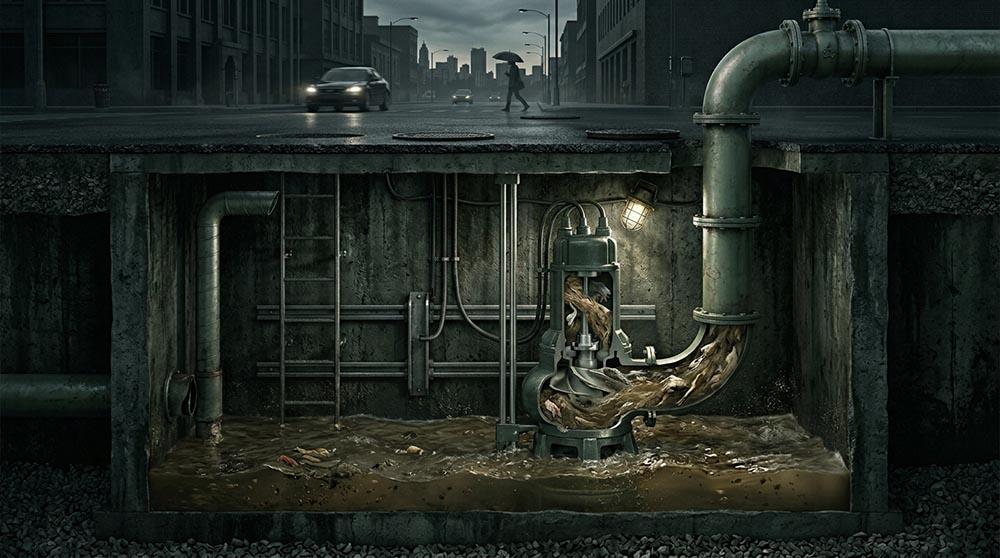
A city's sanitation infrastructure relies entirely on two fundamental forces: gravity and raw pumping power. When wastewater leaves a home or business, it flows downward through a vast network of underground pipes. Eventually, it reaches a low point where gravity can no longer do the work. This is where municipal wastewater treatment pumps take over. When a municipal lift station fails, the results are catastrophic, costly, and highly public. Raw sewage backing up into streets and waterways is a civic emergency that demands immediate, heavy-duty solutions.
The modern wastewater landscape presents a massive challenge for city planners and facility operators. Modern sewage is thicker, heavier, and more abrasive than it was even a decade ago. The widespread use of 【flushable】 wipes, fibrous sanitary materials, and harsh industrial runoff is choking standard pumps to death. These dense materials do not break down in the sewer system. Instead, they twist together, forming massive ropes of synthetic fibers that wrap around standard impellers, causing catastrophic motor failure and severe system backups.
Stream Pumps engineers heavy-duty submersible sewage pumps and mixers specifically designed to handle the most brutal municipal wastewater environments without clogging or breaking down. Our equipment is built for the realities of modern sanitation. We provide municipalities with the raw power, advanced engineering, and rugged reliability required to keep cities clean and communities safe.
The enemy of any lift station is debris. Rags, fibrous sanitary products, and plastic waste enter the municipal sewer system daily. When these materials reach the lift station, they are propelled into the pump volute at high speeds. Standard impellers catch these fibers, allowing them to accumulate and twist tightly around the rotating shaft. This binding action increases friction, overheats the motor, and eventually stops the pump entirely. Clearing these blockages requires dangerous manual labor and costly system downtime.
To combat the accumulation of fibrous waste, Stream Pumps utilizes highly advanced non-clog impeller designs. The physics behind a non-clog impeller focuses on maintaining a smooth, uninterrupted flow path for solids. By eliminating sharp angles and tight clearances within the volute, we prevent rags and plastics from snagging. This specific geometry ensures that fibrous waste passes directly through the discharge pipe without wrapping around the central drive shaft.
Different municipal environments require different approaches to solid waste management. A Vortex impeller operates by creating a powerful whirlpool effect within the pump casing. This fluid dynamic mechanism pulls water and solids through the volute without the debris ever actually touching the metal impeller blades. It is an exceptionally reliable design for moving large volumes of abrasive, rag-heavy wastewater.
Alternatively, a Cutter or Grinder pump takes an aggressive approach. These units are equipped with hardened steel cutting mechanisms that shred fibrous debris and plastics into a fine slurry before the material even enters the volute. This is particularly useful in high-pressure systems where smaller discharge pipes are utilized.
Regardless of the specific impeller style, a reliable solid passage water pump must feature substantial clearances. Stream Pumps equipment is engineered with massive free passage capabilities. Our heavy-duty units easily pass 3-inch or 4-inch spherical solids without hesitation. This ensures that even the most stubborn, compressed bundles of rags move through the system safely, eliminating the risk of internal blockages.
Municipal lift stations are punishing environments. A standard lift station wet well can be 30 feet deep, filled with toxic, highly corrosive wastewater, and saturated with deadly hydrogen sulfide gas. Equipment operating in this space must be entirely self-contained, heavily armored, and capable of running continuously under immense pressure. Lift station pumps are the uncelebrated workhorses of urban infrastructure, running silently beneath the streets to prevent localized flooding and sanitary hazards.
Routine maintenance in a wet well is inherently dangerous. Municipal workers face confined space entry hazards, toxic gas exposure, and the risk of falling. Stream Pumps prioritizes operator safety through the implementation of our Auto-Coupling Guide Rail System.
With this system, municipal maintenance crews never have to enter a hazardous wet pit. The submersible sewage pump is attached to heavy-duty stainless steel rails. When maintenance is required, a crane or hoist simply lifts the pump up the rails to the surface. When the unit is lowered back down, it slides securely along the guide rails and automatically seals itself against the discharge pipe connection using its own weight. This eliminates the need for manual bolting in toxic environments.
Operating continuously while submerged requires flawless internal protection. If wastewater breaches the motor housing, the pump will short-circuit and fail immediately. Stream Pumps integrates highly sensitive thermal and moisture protection sensors directly into the motor architecture.
If a mechanical seal begins to wear down, moisture sensors within the oil chamber detect the water intrusion instantly. Simultaneously, thermal sensors monitor the stator coil temperatures. If the motor begins to overheat due to a partial clog or electrical fluctuation, the system immediately shuts down the motor and triggers an alarm at the control panel. This preventative shutdown saves the pump from catastrophic internal damage, allowing operators to address the issue before a total rebuild is required.
Moving wastewater to the treatment plant is only the first phase of the sanitation cycle. Once the raw sewage arrives at the facility, the complex biological treatment process begins. Wastewater treatment isn't just about moving water from one tank to another; it's about keeping organic sludge consistently suspended so that natural bacteria can effectively break down the waste. Without proper agitation, heavy solids settle at the bottom of the treatment tanks, reducing the overall capacity of the facility and generating severe, foul odors.
Stream Pumps submersible mixers are specifically engineered to provide aggressive, continuous agitation within large-scale municipal treatment tanks. In anoxic zones, where oxygen is restricted to promote denitrification, our mixers generate powerful horizontal thrust. This keeps the biomass uniformly distributed without introducing unwanted oxygen into the water column.
In aeration tanks, these mixers work in tandem with diffused air systems. The mixers distribute the oxygen-rich bubbles evenly throughout the entire volume of the tank, maximizing the biological breakdown of organic matter. By preventing sludge accumulation and ensuring uniform bacterial contact, our mixers drastically improve the overall efficiency of the biological treatment phase.
Raw municipal sewage is a highly aggressive chemical soup. As organic matter decays within the sewer system, it generates high concentrations of hydrogen sulfide gas. When this gas mixes with moisture on the walls of the wet well and the pump casing, it converts into sulfuric acid. This acid is highly corrosive and will rapidly eat away at standard cast iron equipment, causing structural failure and dangerous leaks.
To survive this brutal chemical attack, Stream Pumps utilizes highly advanced materials and defensive coatings. Our pump casings are protected by heavy-duty, multi-layered epoxy coatings that establish an impenetrable barrier between the raw sewage and the cast iron structure.
Furthermore, the rotating components must withstand intense friction and abrasive grit. We utilize heavy-duty stainless steel drive shafts that resist bending and corrosion. To protect the vital motor compartment, we employ double mechanical seals manufactured from Silicon Carbide (SiC). Silicon Carbide is incredibly hard and highly resistant to both chemical degradation and the abrasive grinding action of sand and gravel present in the wastewater. This armor ensures our equipment survives years of continuous submersion in toxic environments.
Upgrading a municipal wastewater treatment plant requires serious foresight. City planners and engineers must select equipment that measures its operational lifespan in decades, not months. The demands on municipal infrastructure are growing rapidly, and unplanned downtime is simply not an option for modern cities. You need heavy-duty machinery built specifically for the harsh realities of raw sewage.
Planning a WWTP equipment upgrade or designing a new municipal lift station? Partner with the engineers who understand heavy-duty wastewater challenges. Contact Stream Pumps for a comprehensive municipal engineering consultation and dedicated tender support. We provide the rugged reliability your city needs to keep flowing forward.
Address
No.17 XeDa Jimei Ind. Park, Xiqing Economic Development Area, Tianjin, China
Telephone
+86 13816508465
QUICK LINKS