+86 13816508465
Pump Knowledge
May. 22, 2026
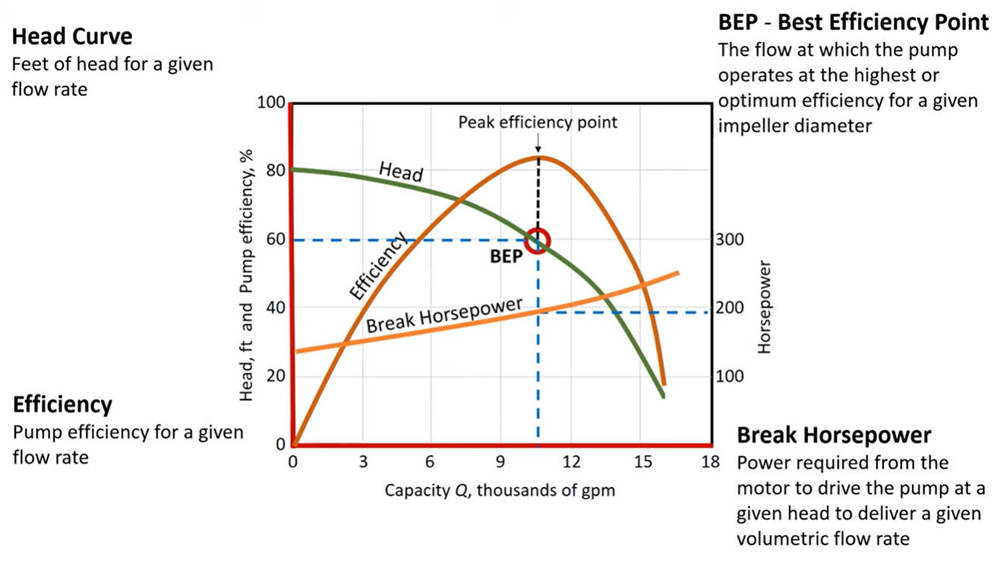
Fluid management systems require precise engineering and a deep understanding of fluid dynamics to operate effectively. At the heart of these systems is the centrifugal pump, a vital component whose performance dictates the success or failure of an entire industrial process. Selecting the right equipment requires more than simply knowing the desired flow rate. It demands a rigorous analysis of performance metrics provided by the manufacturer.
For mechanical engineers, fluid dynamics students, and system designers, interpreting performance data is a fundamental skill. The primary tool for this analysis is a graphical representation of the equipment's capabilities under various operating conditions. This graph contains multiple intersecting data points that illustrate how changes in pressure, flow, and power requirements impact the overall mechanical stability of the system.
Mastering this analytical tool ensures that the selected equipment operates reliably, efficiently, and within its intended mechanical limits. A thorough evaluation prevents catastrophic failures, excessive energy consumption, and premature wear on internal components.
A centrifugal pump is fundamentally a kinetic machine. It does not simply push water; it imparts velocity to the fluid through a rotating impeller, converting mechanical energy into hydrodynamic energy. This performance is governed entirely by the laws of fluid dynamics. To evaluate how a specific model will behave under real-world conditions, engineers rely on a specific graphical representation of its capabilities. Having the pump characteristic curve explained in detail is the first step toward mastering fluid system design.
The pump characteristic curve is the essential graph that maps Head (usually measured in feet or meters) and Pump Efficiency against the Volumetric Flow Rate (Capacity). Head represents the energy imparted to the fluid, translating directly to the pressure the fluid can overcome. As the flow rate increases, the ability of the impeller to maintain high head generally decreases, resulting in a downward-sloping curve.
Reading this curve correctly is fundamental to proper pump selection. The graph typically displays multiple curves representing different impeller diameters that can be fitted inside the same casing. By analyzing the intersection of the head-capacity curve with the system curve (which represents the friction and static elevation of the piping network), engineers can pinpoint the exact operating condition of the system. Without a proper understanding of this data, selecting equipment becomes a dangerous exercise in trial and error.
Efficiency is a critical metric in fluid dynamics, directly impacting operational costs and equipment longevity. To evaluate this, engineers must look closely at the pump efficiency curve, which typically resembles a bell shape superimposed over the head-capacity graph. To locate the optimal operating parameter, you must look at the peak of the pump efficiency curve. If you draw a vertical line straight down from that peak efficiency point to where it intersects the head curve and the capacity axis, you find the BEP.
The best efficiency point BEP is defined as the specific flow rate at which the pump operates at its absolute highest or optimum efficiency for a given impeller diameter. At this exact point, the fluid enters and exits the impeller casing with the least amount of turbulence, shock losses, and flow separation. The hydrodynamic forces acting on the internal components are perfectly balanced.
Operating at or very near the BEP minimizes radial thrust on the impeller and shaft. Radial thrust is a perpendicular force that causes shaft deflection, which can lead to premature bearing failure and mechanical seal degradation. By keeping the operating parameters aligned with the BEP, system designers maximize the mechanical lifespan of the equipment, reduce vibration, and minimize the total cost of ownership over the lifecycle of the facility.
Designing a fluid handling system requires precise electrical and mechanical synchronization. The pump brake horsepower BHP is a fundamental calculation in this process. Brake Horsepower represents the actual mechanical power required from the electric motor to drive the pump shaft at a given head to deliver a given volumetric flow rate. It is the raw power absorbed by the pump, accounting for all hydraulic, mechanical, and volumetric losses within the casing.
On the characteristic curve graph, the BHP is typically plotted as a line that rises from left to right, indicating that as the volumetric flow rate increases, the power demand on the motor also increases. By drawing a line from the specific operating flow rate straight down to the BHP curve, engineers can precisely determine the motor size needed for the application.
This calculation is vital to prevent overloading or burning out the motor. If a system is allowed to operate beyond its design flow rate—often referred to as [running out on the curve]—the BHP will spike. Engineers frequently size the electric motor to cover the end-of-curve horsepower, ensuring that even under absolute maximum flow conditions, the motor possesses sufficient capacity to drive the load without overheating or tripping thermal overload protections.
Large-scale industrial applications often require performance parameters that a single unit cannot achieve efficiently. In these scenarios, engineers design multi-pump systems to scale capacity or pressure. These configurations are primarily used with surface centrifugal pumps and multistage pumps, requiring a strict understanding of how the characteristic curves combine when multiple units interact within the same piping network. Using centrifugal pumps in series and parallel configurations allows for immense flexibility in system design.
Series operation occurs when one pump discharges its fluid directly into the suction port of another pump. In this configuration, the fluid passes through the first impeller, gains energy, and then immediately passes through the second impeller to gain even more energy.
The core rule of this configuration is that series operation increases the Head (pressure) but does not increase the volumetric flow rate. If two identical pumps are placed in series, the combined characteristic curve will show twice the head at any given flow rate compared to a single unit. The capacity remains entirely unchanged because the same volume of fluid is simply being handled sequentially by both units.
Understanding vertical multistage pump theory relies heavily on this concept. Multistage pumps (whether vertical or horizontal) use this exact principle internally. Instead of piping multiple separate casings together, a multistage unit places multiple impellers on a single continuous shaft within a single casing. The fluid moves from one stage to the next, building massive pressure while maintaining a compact footprint. This is highly effective for boiler feed applications, reverse osmosis systems, and high-rise building water supply networks.
Parallel operation occurs when two or more identical pumps run side-by-side, drawing from the same suction source and discharging into a common header pipe. This setup is frequently utilized in municipal water treatment plants, cooling tower networks, and variable-demand systems.
The core rule here is the exact opposite of series operation: parallel operation increases the volumetric flow rate but does not increase the Head. When mapping this on a characteristic curve, the combined performance graph is created by doubling the flow capacity at every given head value.
Engineers use parallel systems to handle large variations in system demand. For instance, a single unit might run during low-demand night hours, while the second unit activates during peak daytime operations to double the flow capacity. It is critical that pumps operating in parallel share identical or highly similar head curves; otherwise, the stronger unit can overpower the weaker one, effectively dead-heading it and causing severe mechanical damage.
NPSHr is another distinct curve plotted on the characteristic graph, typically sloping upward as flow increases. It represents the absolute minimum absolute pressure required at the suction nozzle to prevent the fluid from vaporizing and causing cavitation inside the impeller. Engineers must calculate the Net Positive Suction Head Available (NPSHa) in the piping system and ensure it always exceeds the NPSHr provided on the curve.
Affinity Laws are mathematical rules that allow engineers to predict how a pump will perform if the speed of the motor (RPM) or the diameter of the impeller is changed. If you reduce the speed of the motor using a Variable Frequency Drive (VFD), the entire head-capacity curve shifts downward and to the left. The flow changes proportionally to the speed, the head changes by the square of the speed, and the BHP changes by the cube of the speed.
A curve that droops near the zero-flow (shut-off) point before rising to a maximum head is called an unstable curve. Operating in this specific low-flow region can cause surging, where the pump oscillates wildly between different flow rates at the same head pressure. Engineers generally prefer [continuously rising] curves where the absolute maximum head occurs at zero flow, ensuring stable operation across the entire performance spectrum.
Designing a robust fluid handling system relies heavily on physics and data, never on guesswork. A centrifugal pump operates at the exact intersection of its own mechanical capabilities and the physical resistance of the piping network it is attached to. Understanding this relationship is what separates an optimized, reliable system from one plagued by constant maintenance failures and high energy costs.
Whether an engineer is trying to hit the exact BEP to maximize mechanical lifespan, sizing a heavy-duty electrical motor using the BHP curve, or deciding between a multistage pump (series) or a parallel pump station to handle massive industrial loads, the foundational data always remains the same. Mastering the interpretation of the characteristic curve is the most critical skill in fluid management. By applying these graphical insights directly to real-world physics, system designers can ensure their infrastructure operates with absolute precision, safety, and efficiency for decades to come.
Address
No.17 XeDa Jimei Ind. Park, Xiqing Economic Development Area, Tianjin, China
Telephone
+86 13816508465
QUICK LINKS