+86 13816508465
Pump Knowledge
May. 22, 2026
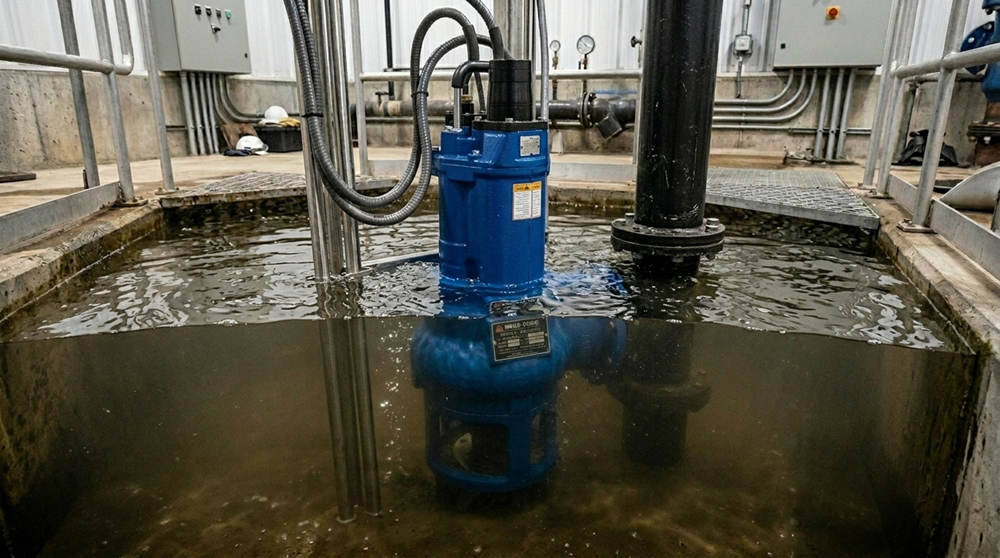
Submersible sewage pumps operate in some of the most unforgiving environments imaginable. Submerged deep within lift stations, wet wells, and wastewater tanks, these critical pieces of machinery perform heavy-duty work entirely out of sight. Because they function underwater, routine visual inspections of the motor itself are physically impossible. When considering your company’s approach to equipment management, the cost of maintenance must always be weighed against the catastrophic cost of pump failure and the impact on daily energy consumption. Pumps operating at their peak efficiency will be significantly more cost-effective to run than those struggling with heavily worn parts. This guide merges advanced electrical diagnostics with strict mechanical inspection schedules to help you maximize submersible pump life and prevent silent motor burnouts.
Why Submersible Motors Fail Silently
To understand why submersible motors fail without obvious warning signs, we must look at how they are designed. Unlike standard surface motors that are air-cooled, submersibles rely entirely on the surrounding fluid for cooling, with internal components sealed within a watertight shell. The most significant threat to a submersible pump is rarely the physical wear on the external casing. The true danger lies in the silent degradation of the electrical insulation. When the primary sealing mechanisms begin to wear, microscopic amounts of moisture enter the critical chambers of the pump. Over weeks or months, this moisture compromises the dielectric strength of the motor's winding insulation. The pump will continue drawing current and spinning the impeller right up until the moment the insulation fails completely, resulting in a catastrophic dead short. To prevent this, industrial sewage pumps utilize a dual mechanical seal configuration. This consists of an outer mechanical seal exposed directly to the pumped fluid, and an inner mechanical seal protecting the motor housing, separated by an oil-filled chamber. Protecting these seals is the frontline of pump maintenance.
The Preventative Maintenance Schedule
Whether you choose to run a reactive or fully preventative program, planning ahead is vital to prevent excessive downtime. The recommended maintenance tasks generally depend on working conditions, but facilities should adopt the following baseline schedule.
Weekly Inspections
Check for strange sounds or vibrations when the pump is in operation.
Check flow and pressure at the discharge end.
Check for any visible leaks from pipes and connected valves.
Monthly Diagnostics: Monitoring Amp Draw
You do not always have to pull a pump out of a wet well to gauge its mechanical health. One of the most practical diagnostic tools is checking the power drawn from each phase by clipping a CT ammeter around the cable. Monitoring the amperage provides a real-time window into how hard the motor is working to spin the shaft. A steady, gradual increase in amperage often indicates a developing mechanical issue. This usually points to failing bearings increasing friction, or fibrous debris clogging the impeller. If the reading has changed significantly since installation, or if one phase has a notably higher current, stop the pump immediately and investigate. Monthly checks should also verify that the float switch or alternative level sensor properly turns the motor off when the pump is raised out of the water.
Six-Monthly / Annual Overhaul: Visual and Electrical Defenses
At least once a year, or every six months for heavy-duty applications, your pump requires a physical extraction for deep inspection.
The Visual Defense: Analyzing for [Milky Oil]
Clean oil is essential for any pump, providing necessary lubrication for rapidly rotating parts. Technicians must extract a small amount of oil by tilting the pump until the oil plug faces downwards. This provides an immediate visual indicator of the outer mechanical seal's health. If the drained oil is clear and possesses its original viscosity, the outer seal is effectively holding back the wastewater. However, finding milky oil is a glaring red flag. When water mixes with the lubricating oil, it undergoes emulsification, turning the fluid a cloudy, milky white color. If the oil is discoloured or mixed with water, the outer seals will likely need replacing before the pump is run again. Catching this early means the inner seal is likely still protecting the motor, saving you from an expensive rewind.
The Electrical Defense: Step-by-Step Megger Testing
Assessing the health of the internal windings requires specialized electrical diagnostics. Using an insulation resistance tester (Megohmmeter or [Megger]), technicians apply a high-voltage direct current (DC) to the motor windings to measure the resistance of the insulation to ground.
1.Safety First: Disconnect all power at the main control panel and execute comprehensive Lockout/Tagout (LOTO) procedures.
2.Test Voltage: For standard industrial submersible motors, applying a 500V or 1000V DC test voltage is the industry standard per IEEE regulations.
3.Analysis: The industry rule of thumb requires a reading above 100 Megohms for a healthy, dry stator. If the reading drops significantly below this standard—especially below 5 Megohms—moisture is actively degrading the windings, and the pump must be serviced immediately.
Mechanical Wear Part Inspection
After isolating the pump from its power source, wear parts must be evaluated. Wear and damage can cause sharp edges to form across metal parts.
Impellers: Worn surfaces and edges degrade pump efficiency and performance. As the impeller wears down from contact with abrasive fluids, be prepared to replace it periodically to save energy costs.
Wear Plates & Rings: Wear plates are designed to deflect solids and protect the pump's body from expensive damage. Wear rings provide the interface between stationary and rotating parts and are designed as softer, sacrificial components.
Gaskets and O-Rings: O-rings are vital to keep the rotating parts and seals in place, while gaskets provide a stationary water-seal between the pump’s case sections. Because they are inexpensive to replace, they are usually changed at every service.
Conclusion: Proactive Maintenance Saves Thousands
Waiting for a pump to stop running is the most expensive maintenance strategy a facility can deploy. Catastrophic motor failures result in emergency overtime labor, environmental fines for overflowing lift stations, and massive repair bills. The alternative requires very little capital; draining a few ounces of oil to check for emulsification costs almost nothing. By combining visual oil checks, electrical Megger testing, and operational amp draw monitoring, you take complete control over your wastewater infrastructure. Contact the StreamPumps engineering team today to explore our heavy-duty line of submersible pumps, designed with robust mechanical seals and extreme reliability to keep your systems running seamlessly.
Address
No.17 XeDa Jimei Ind. Park, Xiqing Economic Development Area, Tianjin, China
Telephone
+86 13816508465
QUICK LINKS