+86 13816508465
Pump Knowledge
May. 26, 2026
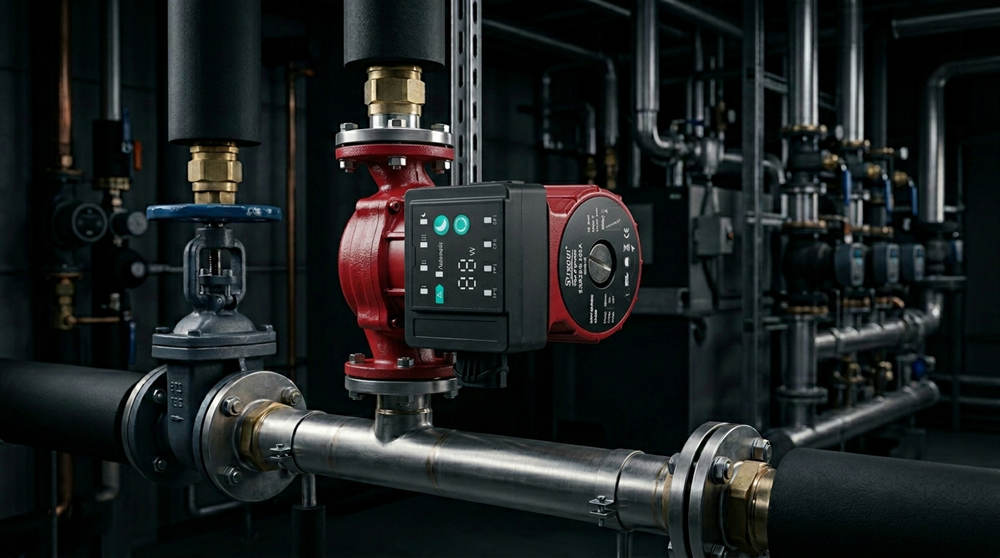
Quick answer: ErP-compliant variable speed circulation pumps use permanent magnet motors and inverter drives to match a building's heating demand automatically. By replacing traditional fixed-speed pumps, property managers can reduce circulation pump electricity usage by up to 80%, typically achieving a full return on investment within one to two heating seasons.
Property owners dedicate countless hours to cutting utility costs. Upgrading to LED lighting, sealing windows, and installing smart thermostats usually dominate the energy efficiency checklist for facility engineers and homeowners alike. Yet, a massive, invisible energy thief spins 24/7 in your utility room: the traditional circulation pump.
Standard heating pumps operate silently in the background, making them incredibly easy to ignore. Because they remain hidden away in boiler rooms and basements, facility managers rarely give them a second thought until a mechanical failure occurs. However, old, unregulated heating pumps can account for a massive percentage of a building's total electricity bill. Over the course of a long winter, that constant electrical draw chips away at your property's profitability.
Replacing an outdated circulator with a high-efficiency inverter pump represents one of the most profitable HVAC upgrades available for properties across Europe, Asia, and Africa. This guide breaks down the hidden costs of legacy pumps, the mechanics behind ErP-compliant variable speed circulation pumps, and the exact financial math that makes this upgrade a highly profitable choice for property managers.
Standard 3-speed induction motor circulators suffer from a fatal flaw: they are completely blind to the actual heating demand of the building. These legacy systems operate at a constant, maximum speed regardless of what the property actually requires at any given moment.
When you install a traditional fixed-speed pump, it aggressively pushes hot water through radiators or underfloor heating pipes continuously. Even when the rooms reach the desired temperature and the thermostatic radiator valves close, the standard pump keeps working at full capacity. It forces water against those closed valves, consuming maximum electricity while providing zero additional heating benefit to the occupants.
This continuous, blind operation creates massive energy waste and inflates utility bills unnecessarily. To put this in perspective, leaving a traditional pump running continuously is the equivalent of driving your car with your foot pressed firmly on the accelerator while simultaneously riding the brakes. The system burns through energy without achieving any productive output, making it a major financial liability for modern commercial and residential buildings.
The modern solution relies on intelligent, responsive technology. High-efficiency circulators, commonly referred to as inverter pumps or variable speed circulation pumps, utilize permanent magnet motors and built-in microprocessors to operate intelligently.
For property managers in the European market, these modern units meet strict ErP (Energy-related Products) directives, boasting an Energy Efficiency Index (EEI) of ≤ 0.23. The physics behind an ErP-compliant variable speed circulation pump are straightforward but highly effective. Instead of using brute force to move water, the integrated inverter drive senses microscopic pressure changes within the hydronic pipe network.
When thermostatic valves close as a room warms up, the pressure in the system naturally rises. The smart pump detects this pressure spike instantly and reduces its motor speed to match the exact heating demand of the building. By adapting continuously, the high-efficiency inverter pump uses only the precise amount of electricity required to maintain comfort. As valves open back up, the pump gently ramps its speed back up. This dynamic adaptation eliminates the wasteful "full throttle" operation that plagues older boiler rooms.
The financial case for upgrading your heating pump is highly compelling. Let's look at a concrete comparison between legacy systems and modern smart pumps to understand the true return on investment (ROI).
An older standard 3-speed pump typically draws 80 to 90 watts of electricity continuously during the heating season. Because it runs 24 hours a day, the cumulative power consumption over a six-month heating period is staggering. In contrast, an ErP-compliant variable speed circulation pump performing the exact same job can drop its power consumption to as little as 5 to 20 watts when heating demand is low.
This represents a 70% to 80% reduction in electricity usage for the circulation process alone. For a facility manager overseeing a multi-unit residential building or a commercial complex, replacing dozens of legacy pumps translates into thousands of dollars in saved electricity every single year. Due to this drastic reduction in energy consumption, the upfront cost of purchasing and installing a high-efficiency variable speed pump typically pays for itself within one to two heating seasons. After that initial payback period, the electricity savings translate directly into pure operational profit for the property.
While the financial return on investment dominates the conversation, high-efficiency inverter pumps offer substantial benefits beyond simply reducing electricity bills. Upgrading your boiler room creates a cascading effect of positive outcomes for the entire facility.
First, variable speed circulation pumps eliminate irritating system noise. When a traditional fixed-speed pump forces water against closed radiator valves, the excessive pressure creates annoying hissing, whistling, or rushing water noises in the pipes. Because an inverter pump automatically slows down using Proportional Pressure Control when valves close, it eliminates this noise entirely. This provides a quieter, more comfortable acoustic environment for building occupants.
Second, this intelligent operation extends the lifespan of your entire HVAC system. Forcing water continuously at high pressure causes significant wear and tear on pipes, valves, and mechanical fittings. Over time, this stress leads to leaks and component failures. By reducing the speed and pressure during low-demand periods, an ErP-compliant variable speed circulation pump reduces physical stress on the pipe network. This minimizes maintenance costs and prevents premature system failures, saving facility managers from expensive emergency plumbing calls.
Upgrading to an ErP-compliant variable speed circulation pump stands out as one of the easiest, fastest, and most financially rewarding HVAC upgrades available today. By replacing blind, energy-hogging legacy pumps with intelligent inverter technology, you can slash your utility bills, eliminate pipe noise, and extend the operational life of your hydronic heating system.
Stop throwing money away on wasted electricity. Property managers and installers must evaluate their current boiler rooms and eliminate these hidden energy thieves. Contact the StreamPumps team today to find the perfect drop-in replacement pump for your hydronic heating system and start seeing a return on your investment immediately.
The initial cost of an ErP-compliant variable speed circulation pump ranges from $150 to $400 depending on the size and specifications required for your building, plus local installation fees. However, the 70% to 80% reduction in electricity usage typically covers this entire capital cost within 12 to 24 months.
A professional plumbing installer can typically swap an old traditional fixed-speed pump for a modern drop-in replacement pump in one to two hours. This fast installation process minimizes downtime for your building's heating system and keeps labor costs remarkably low.
The primary risk involves selecting the incorrect pump size or pressure rating for your specific pipe network, which can lead to inadequate heating on upper floors. Consulting with a professional energy consultant or the StreamPumps team ensures you purchase the exact model needed for your specific hydronic system.
The best alternative is a permanent magnet inverter pump that complies with European ErP directives (EEI ≤ 0.23). Choose this smart pump if lowering operational costs, achieving a fast ROI, and eliminating pipe noise matter more to your facility than minimizing the initial purchase price.
Property managers, facility engineers, plumbing installers, and homeowners with hydronic radiator or underfloor heating systems should prioritize this upgrade.
Address
No.17 XeDa Jimei Ind. Park, Xiqing Economic Development Area, Tianjin, China
Telephone
+86 13816508465
QUICK LINKS