Stream Pumps | Distributor Maintenance & Sourcing Guide
How to Choose Spare Parts for Long-Term Pump Maintenance
A low-cost replacement seal is useful only if it fits the exact pump and can be supplied when the customer needs it. For distributors, spare-parts planning is a combination of engineering compatibility, service criticality, failure history and replenishment time—not simply keeping a bag of common parts on the shelf.
1. Which Water Pump Spare Parts Matter Most?
Different pump designs use different sealing systems, impeller materials, motors and controls. A surface centrifugal pump and a sealed submersible sewage pump should not share a generic repair kit without documented compatibility. An electronic booster system may need controller-related service planning that a basic fixed-speed pump does not.
| Part / assembly | Why it matters | Suggested inventory priority | Compatibility questions |
|---|---|---|---|
| Mechanical seal / seal kit | Leaks and dry-running damage can stop a pump; seal type varies by construction. | High for repairable models with established seal demand. | Seal code, shaft size, face and elastomer materials, liquid temperature; cartridge versus component seal. |
| O-rings, gaskets, sealing washers | May require replacement when opening and reassembling the wet end. | High when specified as service consumables. | Exact dimensions, cross-section, material, location and kit revision. |
| Bearings | Wear can produce vibration, heat or noise; some motor bearings are not field-serviceable. | Medium–high where replaceable and critical. | Bearing designation, clearance, shields/seals, grease and motor design. |
| Impeller / diffuser / wear components | Abrasives, blockage or corrosion can impair hydraulic performance. | Medium; increase for abrasive duty or long lead times. | Part drawing, diameter, rotation, stage count, material, pump revision. |
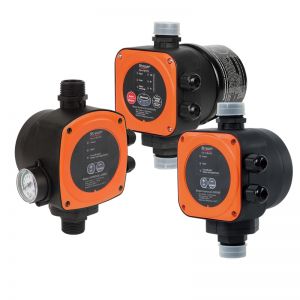
| Capacitor, pressure switch, float switch or controller | Electrical/control faults can prevent starting or correct automatic operation. | Application-dependent; stock only confirmed assemblies. | Voltage/frequency, control rating, wiring, model-specific configuration. |
| Motor, shaft or full hydraulic module | High impact if unavailable, but costly to keep and not always economical to repair. | Critical or special-order, based on downtime and replacement economics. | Exact assembly, serial/revision, repair authorization and freight time. |
Priorities above are an editorial decision aid, not a Stream-issued stock list or guaranteed spare-parts offering. Confirm every item against the selected product's service documentation.
2. Match Parts to the Exact Pump—Not Just the Series Name
Before ordering, record the full model designation, serial or production identifier if available, voltage/frequency, manufacturing revision, service conditions and a clear photograph of the nameplate. Ask the supplier for an exploded drawing or model-specific spare-parts list with part numbers. Two pumps sold under a similar series name may use different seals, electrical components or hydraulic stages.
Mechanical fit: shaft and seal dimensions, impeller geometry, fasteners and tolerances.
Material suitability: compatibility with clean water, wastewater, abrasives, temperature and cleaning chemicals.
Electrical match: correct voltage, frequency, phase, controller firmware/configuration and safety approvals where applicable.
Repair boundaries: whether the motor, wet end or controller is designed for safe field service, or must be repaired by qualified personnel.
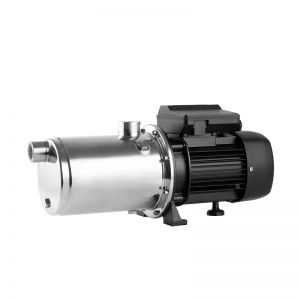
Stream's overview of a monoblock centrifugal pump's components identifies the impeller, casing, mechanical seal and other assemblies. This helps explain the parts involved, but it is not a model-specific interchangeability or availability list.
3. Preventive Maintenance: What Should Be Inspected Before Replacement?
A good preventive-maintenance program does not replace components on arbitrary calendar dates. Its intervals should reflect manufacturer instructions, operating hours, water quality, observed failures and service criticality. Monitor performance and inspect under safe, isolated conditions.
| Check | Warning signs | Possible parts / action |
|---|---|---|
| Leakage around pump or seal | New or increasing leakage, repeated priming problems | Investigate operating cause; confirm seal/gasket requirements before replacement. |
| Noise, vibration and temperature | Changes from established baseline | Inspect installation, alignment where applicable, bearings and hydraulic condition. |
| Flow, pressure, current | Lower delivery, higher current or unstable running | Check blockage, suction conditions, duty point and impeller condition before ordering parts. |
| Controls and protection | Failed starts, erratic switching, false trips | Verify supply, sensors and control settings; replace only confirmed failed components. |
| Water ingress / corrosion | Damaged connections, seal concerns, deterioration | Isolate and seek qualified inspection; confirm suitability of replacement materials. |
FAO's equipment maintenance guidance discusses seal replacement, cleaning and bearing monitoring, while emphasizing that the manufacturer's handbook governs the details. It is a general engineering reference, not a maintenance interval specific to Stream pumps.
4. How Many Spare Parts Should a Distributor Stock?
Use three signals: customer demand (historical repairs and installed base), downtime impact (could the customer stop working?) and replenishment time (including export shipping and customs). A high-cost part with uncertain compatibility may be better handled as a supplier-confirmed special order, while an inexpensive verified seal kit may justify local stock.
Illustrative Reorder-Point Example
Assume a distributor uses 4 identical seal kits per month, supplier replenishment takes 1.5 months, and the distributor chooses 2 kits as a buffer.
Reorder point = average demand during lead time + safety stock = (4 × 1.5) + 2 = 8 seal kits.
This is a simple arithmetic example, not observed Stream demand, actual lead time, or a statistically calculated service level. It assumes approximately constant demand and lead time. For intermittent demand, use installed-base history and a risk-based stocking policy.
Review the stock policy at least when a model is revised, a large customer is added, a pattern of repeated failure appears or a replenishment route changes. Track obsolete revisions separately to avoid shipping incompatible parts.
5. Distributor Spare-Parts Purchasing Checklist
Installed base: Which pump models and production revisions do customers own?
Duty: Clean water, sewage, high temperature, abrasive water or continuous duty?
Service boundary: Is the component replaceable in the field, and by whom?
Exact identity: Can the supplier provide parts diagram, part code and compatibility confirmation?
Materials: Are seal-face and elastomer grades suitable for the liquid?
Demand: How many replacements were actually required over the last 12 months?
Lead time: What is the quoted parts-production and delivery timeline for this order?
Packaging: Are parts labeled by pump model, part number and revision?
Commercial terms: Ask for current price, MOQ, order increments, warranty terms and claims process.
Documentation: Request handling, storage and installation guidance where needed.
6. What Can Buyers Verify with Stream Pumps?
Stream's customer support page describes pre-sales consultation, product advice and after-sales communication. Its quality inspection overview discusses parts and pump-body checks. A separate horizontal multistage pump guide mentions maintenance parts such as mechanical seals and impellers; however, this is not a published all-series spare-parts stock list.
For a serviceable industrial example, Stream's STD in-line pump introduction describes a top-removable arrangement and cartridge-type mechanical seal. These construction details should not be generalized to smaller sealed pumps or other families.
Buyers should request an actual quotation and model-specific confirmation covering availability, material, quantity, delivery and permitted repair method. Stream also lists accessories and external control products; these are not automatically interchangeable internal repair parts.
7. Five Common Spare-Parts Purchasing Mistakes
Ordering by appearance: similar-looking seals or impellers can have different dimensions.
Stocking only cheap items: a critical long-lead-time assembly may deserve a contingency plan.
Buying before diagnosing: dry running, blockage or voltage problems can cause repeat damage after a repair.
Ignoring revisions: a changed motor or controller can invalidate an old part number.
Confusing product accessories with service parts: a generic float switch or pressure controller may not suit every pump.
FAQ: Long-Term Pump Spare-Parts Planning
Which spare parts should a pump distributor keep first?
Start with verified, frequently used service consumables for the installed models. Mechanical seals and gaskets are common candidates on repairable centrifugal pumps, but the final list must follow the relevant parts manual and failure history.
Are pump impellers interchangeable across models?
Not safely by assumption. Verify diameter, hydraulic design, rotation, stage count, material and revision against the manufacturer's parts list.
Do all water pumps need replacement bearings in local inventory?
No. Some assemblies are sealed or uneconomical to repair. Stocking depends on serviceability, failure consequences, installed base and lead time.
Can a distributor order original Stream spare parts?
Stream publicly discusses after-sales support and mentions selected maintenance parts, but availability for a particular model, quantity or revision must be confirmed through a current inquiry.
What information should be included in a spare-parts RFQ?
Give the exact model and revision, part reference or photos, application conditions, required quantity, destination market and requested delivery date. Ask for compatibility and commercial terms in writing.
Send your Stream model details and expected service requirements to contact Stream Pumps for product-specific discussion and quotation.
Sources and Editorial Notes
Stream — Comprehensive Customer Support (scope of general after-sales support).
Stream — Components of Monoblock Centrifugal Pumps (parts anatomy).
Stream — STD Centrifugal In-Line Pump (model-family maintenance features).
FAO — Maintenance Systems for the Dairy Plant, Pumps and Piping (general maintenance principles).
Tanzania Ministry of Water — Pumping Machinery (maintenance planning principles).
Transparency: This is an editorial buying guide based on publicly available product descriptions and independent engineering references. The priority table and reorder-point figures are recommendations and hypothetical calculations, not Stream service commitments, verified parts inventory, fixed warranty terms or test results. Follow the manual supplied with the exact pump and applicable local safety requirements.