+86 13816508465
Pump Knowledge
Nov. 20, 2026
Choosing between OEM and ODM water pumps is not just a branding decision. It determines who provides the pump design, how specifications are approved, which development costs must be quoted, and what a distributor needs to protect before placing a repeat order.
OEM vs ODM comparison · Decision scenarios · Seven-stage sourcing workflow · Copy-ready distributor RFQ · What Stream publicly states
In international sourcing, terminology is not perfectly standardized. The United Nations Conference on Trade and Development (UNCTAD) describes OEM as production to the foreign buyer's specification and ODM as a model in which the supplier designs the product. For a water pump distributor, the practical distinction is who controls the product specification and design baseline, not whose logo appears on the carton.
| Decision factor | OEM-style project | ODM-style project | Private label / branding-only |
|---|---|---|---|
| Starting point | Buyer drawings, duty requirements or controlled specifications | Supplier-designed pump platform, possibly adapted | Existing product with proposed branding changes |
| Engineering input | Typically higher from buyer | Supplier leads baseline design; buyer confirms local needs | Usually lower technical change |
| Typical requested changes | Motor, hydraulics, interfaces or materials to approved requirements | Selected features, finish, controls or configuration | Logo, nameplate, packaging, manuals |
| Sample approval | Against agreed buyer specification and test criteria | Against supplier model plus approved modifications | Against approved standard unit and artwork |
| Tooling and IP | Never assume ownership from the label alone; write down design rights, tooling ownership, artwork rights and permitted reuse. | ||
| Cost and lead time | May involve more engineering and validation | Depends on modification depth | May be simpler, but availability depends on quotation |
| Best starting fit | Distributor with a defined market-specific technical requirement | Distributor seeking differentiation without designing a pump from scratch | Distributor launching a branded standard range |
Original comparison framework for procurement planning; actual scope, prices, schedules and ownership are established by project agreement—not by the terms OEM or ODM alone.
| Your situation | Where to start | Critical question before ordering |
|---|---|---|
| Launching a local pump brand with existing catalogue models | Private label or limited ODM | What changes to artwork, manuals and nameplates are feasible? |
| Need a particular voltage/frequency, materials or controller function | ODM adaptation or OEM, depending on design scope | Is the requested configuration technically validated at the required duty point? |
| You already own technical drawings or a proprietary design | OEM-style manufacture | How will confidential drawings and tooling be protected? |
| Need exclusive styling or unique functions | Deeper ODM or OEM development | Who pays for and owns new tooling and resulting design rights? |
| Your market favors local pump assembly | Assess CKD/SKD separately | Which components, assembly instructions and test obligations are included? |
Start with the actual application and operating duty. A pump described as “1 HP centrifugal” can represent very different performance and installation requirements. Your technical brief should identify flow at head on the same duty point, the liquid, inlet conditions, voltage and frequency, ambient conditions, pump body and impeller materials, required controls and local labelling language.
Hydraulic duty: target flow (m³/h or L/min), total dynamic head (m), expected operating range and preferred Q-H curve.
Power: supply voltage, phase, 50/60Hz requirement, plug/connection type and controller compatibility.
Application: clean or dirty water, liquid temperature, suspended solids, suction conditions and duty cycle.
Construction: casing, impeller, shaft, seals, port sizes and installation envelope where necessary.
Market requirements: applicable product standards, destination-country documentation and any required evidence of conformity—confirmed for the exact configuration.
Brand package: brand name, logo files, nameplate, carton, manual languages, barcode and spare-parts identification.
Important: Changing motor frequency, materials or hydraulic components can affect performance, safety and required documentation. Do not assume certification, performance data or sample approval for a standard pump automatically transfers to a modified model.
Define the destination market and use case. Identify customers, target price segment, application, regulatory destination and expected annual demand.
Submit the technical brief. Specify operating point, electrical supply, material requirements, intended brand changes and desired document package.
Compare proposal and exceptions. Ask the supplier to identify standard features, proposed modifications, engineering feasibility, non-recurring costs and items needing further validation.
Agree on commercial and IP terms. Request written details covering sample costs, tooling ownership, confidentiality, MOQ, lead-time assumptions, exclusivity (if relevant), warranty scope and change-control rules.
Approve representative samples. Confirm pump duty, noise where relevant, electrical configuration, nameplate accuracy, packaging artwork and the exact sample identification.
Freeze specifications and plan production acceptance. Agree on the approved bill of materials or product specification, inspection criteria, allowable substitutions, evidence to be delivered and procedure for deviations.
Prepare repeat orders and after-sales support. Establish serial/batch traceability where appropriate, spare-parts lists, service manuals, warranty claim steps and an engineering change notification route.
Stream's published OEM, ODM and OBM manufacturing overview explicitly describes all three cooperation models and refers to custom-designed and branded product solutions. Its customer-support page describes pre-sales consultations, tailored product recommendations, packaging design and after-sales support. These are Stream's own published service descriptions, not independently audited promises for a specific order.
For a model-specific example, Stream's SPRING self-priming multistage pump introduction mentions branding, customization and performance tuning for business buyers. The exact scope would need confirmation for the chosen SPRING model and purchase quantity.
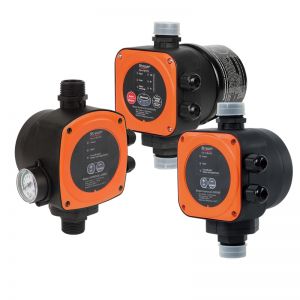
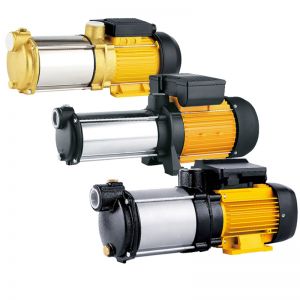
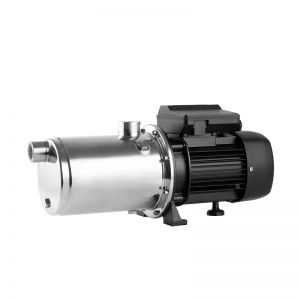
Stream also publishes a separate CKD/SKD assembly solutions guide covering submersible, centrifugal, multistage and deep-well pump categories, and pressure controllers. CKD/SKD describes shipment and local assembly arrangements; it is not another name for OEM or ODM. Local import-duty treatment and local-content qualification depend on the destination's rules and should not be presumed.
Explore the Stream pump product range to identify a suitable baseline before sending a customization inquiry.
Stream's public pages do not establish a universal minimum order quantity, guaranteed sample schedule, fixed tooling fee, distributor exclusivity, blanket certification for customized models or an automatic transfer of design rights. Request written confirmation for your specific pump model, market, specification revision and commercial terms.
| RFQ field | What the buyer should provide or request |
|---|---|
| Company and market | Distributor name; destination country; target sales channel |
| Cooperation model | Private label / OEM / ODM / CKD-SKD assessment; state if undecided |
| Baseline pump | Stream series or reference model; application; required quantity forecast |
| Hydraulic parameters | Design flow at total head; fluid; duty cycle; operating temperature |
| Electrical requirements | Voltage; phase; frequency; control and protection functions |
| Custom elements | Materials; fittings; color; logo; nameplate; multilingual manual; packaging |
| Engineering documents | Q-H curve, motor data, dimensional drawing, approved specification and applicable compliance evidence |
| Samples and verification | Sample quantity, revision ID, approval criteria, testing records, sample fees |
| Commercial proposal | MOQ, unit price basis, tooling/development charges, Incoterms, payment and lead time |
| Long-term cooperation | Tooling/IP terms; warranty process; spares; change notice; any exclusivity request |
Useful first-message format: “We distribute water pumps in [country]. We are interested in [series/model] for [application], at [flow] m³/h and [head] m, [voltage/phase/Hz]. Our initial quantity estimate is [units], with [branding or engineering changes]. Please advise which customization route is feasible and quote the sample process, MOQ, compliance documents and delivery terms.”
No. OEM and ODM labels can be used differently in sales discussions. Ownership of drawings, new tooling, designs and reusable technical information must be established expressly in the agreement.
That is generally a private-label or branding-only request. Ask which nameplate, carton and manual options are possible for the selected product, including any applicable labelling requirements.
Not necessarily. Adapting an existing platform may reduce development work, but changes to the hydraulic design, motor or controls can still need engineering, samples and revalidation. Compare itemized quotes, not labels.
No universal quantity or exclusivity term is published across Stream's product range. Ask for model- and territory-specific terms in writing before assuming either.
OEM/ODM mainly concerns design and manufacturing responsibilities. CKD/SKD concerns how a pump or its components are packaged for local assembly. A project can involve both, depending on the negotiated scope.
Send your target application, duty point, electrical specification, destination market, proposed customization and estimated volume. The team can review a model-based starting point and clarify feasible project terms.
Stream Pumps — Manufacturing Expertise: OEM, ODM and OBM (supplier-published service description).
Stream Pumps — Customer Support (supplier-published capabilities).
Stream Pumps — Customized CKD and SKD Solutions (supplier-published service explanation).
World Intellectual Property Organization — Trade Secrets (neutral background on confidential designs and disclosure).
World Intellectual Property Organization — IP Agreements with Suppliers (neutral contract guidance).
Address
No.17 XeDa Jimei Ind. Park, Xiqing Economic Development Area, Tianjin, China
Telephone
+86 13816508465
QUICK LINKS