+86 13816508465
Pump Knowledge
Oct. 23, 2025
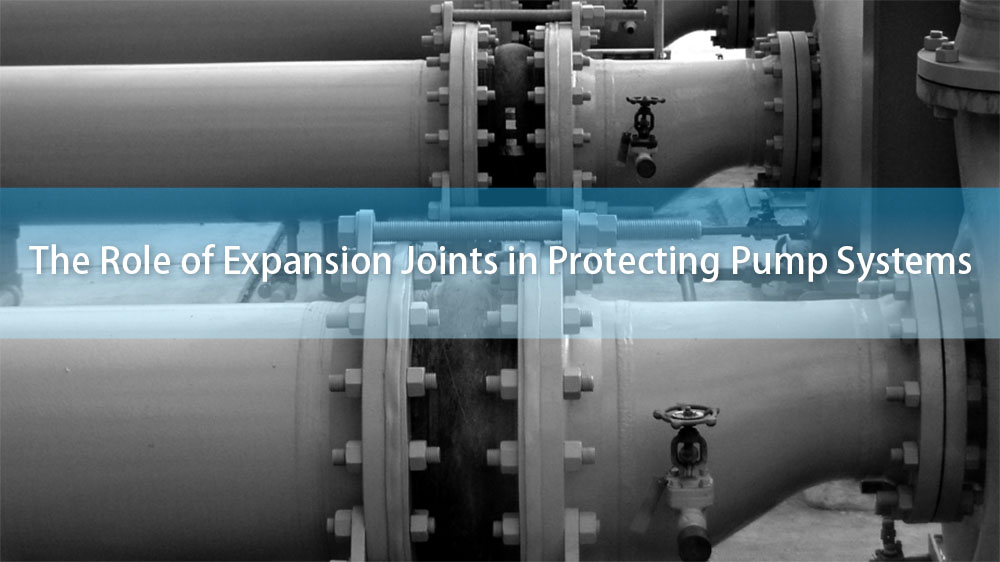
Piping systems are the arteries of industrial and commercial facilities, and pumps are their hearts. To keep these systems running smoothly, every component must work in harmony. However, forces like thermal expansion, vibration, and mechanical stress constantly threaten their integrity. This is where expansion joints play a critical role. They are engineered to protect pumps, piping, and connected equipment from these damaging forces.
This article will explore how expansion joints serve as the unsung heroes of pump systems. We will cover their function in absorbing movement, isolating vibration, and reducing system stress, ultimately extending the life and reliability of your entire operation.
An expansion joint is a specially designed component installed in a piping system to absorb movement and relieve stress. Its primary function is to provide flexibility, accommodating shifts caused by thermal changes, vibration, and minor misalignment. Without them, rigid pipes would transfer these forces directly to pump nozzles, valves, and other critical equipment, leading to premature failure.
Common Materials and Designs
Expansion joints come in various materials and designs to suit different applications:
Rubber: Highly flexible and excellent for vibration isolation and noise reduction. They are often used in water, wastewater, and HVAC systems.
Metal: Made from stainless steel or other alloys, these joints are ideal for high-pressure and high-temperature applications, such as steam or chemical processing lines.
Fabric: Used in low-pressure, high-temperature gas or air ducting systems, like those found in power plants and industrial furnaces.
Designs vary from single-arch types, which offer flexibility in one primary direction, to multi-arch types that can absorb more complex, multi-directional movements.
Where They Are Installed
Proper placement is key to their effectiveness. Expansion joints are typically installed on the suction and discharge sides of a pump. This positioning allows them to decouple the pump from the main piping network, isolating it from pipe-generated stresses and preventing pump vibration from traveling downstream.
Temperature fluctuations are a common reality in many piping systems. When a fluid's temperature changes, the pipe material expands or contracts. While this movement may seem small over a short distance, it accumulates over long pipe runs, creating immense force.
Without a way to absorb this movement, the resulting mechanical stress is transmitted directly to the weakest points in the system—often the pump casing and flanges. In a high-temperature process system, pipes can elongate and push into the pump, while in a chilled-water loop, they can contract and pull on it. This constant pushing and pulling leads to flange leaks, cracked pump casings, and bearing damage. Expansion joints absorb this linear growth or contraction, neutralizing the stress before it reaches the pump.
Pumps, by their very nature, generate mechanical vibration. The rotation of the impeller and motor creates vibrations that travel through the pump casing and into the connected piping. This energy can cause a chain reaction of problems throughout the system, leading to noise, loosened fittings, and fatigue in pipe supports.
An expansion joint acts as a shock absorber, effectively decoupling the pump from the rest of the piping. The flexible material, particularly in rubber expansion joints, dampens the vibrational energy. This offers several key benefits:
Extended Bearing and Seal Life: By isolating the pump from pipe strain and absorbing its own vibration, expansion joints reduce the load on the pump’s bearings and mechanical seals.
Quieter Operation: The joint absorbs audible noise created by the pump and fluid turbulence, resulting in a quieter mechanical room and improved work environment.
Reduced System-Wide Fatigue: Preventing vibration from traveling down the pipeline protects downstream components from fatigue and potential failure.
In a perfect world, every pipe would align perfectly with every pump nozzle. In reality, minor misalignments are common during installation. Trying to force a connection by pulling pipes into place creates built-in stress that can damage equipment from day one.
Expansion joints offer a practical solution by compensating for minor lateral, axial, or angular misalignments. This not only simplifies the installation process but also reduces strain on pump nozzles and pipe supports. In tight mechanical rooms where space is at a premium, this added flexibility can be invaluable for achieving a sound and stress-free system design.
By managing stress, vibration, and misalignment, expansion joints directly contribute to the longevity and reliability of pump systems. Their protective function prevents a host of common problems that lead to costly downtime and repairs.
The primary benefit is the prevention of damage to pump flanges. Constant stress can cause flange gaskets to fail, leading to leaks, or even crack the flange itself. By absorbing movement, expansion joints ensure the flange connection remains secure. Furthermore, they reduce shaft deflection, a primary cause of premature mechanical seal and bearing failure. When the pipe exerts force on the pump casing, it can misalign the shaft, leading to excessive wear on these critical internal components.
A real-world case study in a chemical processing plant showed that repeated mechanical seal failures on a hot-water pump were eliminated after properly installing expansion joints on its suction and discharge lines. The joints absorbed the thermal growth of the long pipe runs, which had been previously exerting significant force on the pump.
To get the most out of an expansion joint, proper installation is non-negotiable. Following manufacturer guidelines and industry best practices ensures the joint performs as intended and does not create new problems.
Key Installation Steps
1. Correct Placement: Install joints as close as possible to the pump's suction and discharge flanges for maximum vibration isolation.
2. Proper Anchoring: The piping must be securely anchored on the side of the joint opposite the pump. This forces movement into the joint rather than letting the pipe shift. Control units or tie rods should be used to limit movement and prevent the joint from overextending under pressure.
3. Avoid Initial Stress: Do not use the expansion joint to make up for significant misalignment. The joint should be installed in a neutral, relaxed position without being over-compressed or over-extended.
4. Regular Inspections: Periodically inspect joints for signs of wear, cracking, blistering, or leaks. A proactive inspection schedule helps identify failing joints before they cause a catastrophic failure.
Even with the best intentions, installation errors can compromise the effectiveness of an expansion joint. Watch out for these common mistakes:
Incorrect Material Selection: Using a joint material that is not compatible with the system’s temperature, pressure, or chemical media can lead to rapid degradation.
Ignoring Movement Ratings: Every joint has a maximum rated movement. Failing to account for the system's total thermal growth can cause the joint to over-extend or compress, leading to failure.
Poor Support and Guidance: Installing a joint without proper anchors and pipe guides can cause the pipe to buckle or the joint to fail under pressure.
Expansion joints are not just accessories; they are essential protective devices in any well-designed pump system. By absorbing thermal expansion, isolating vibration, and compensating for misalignment, they safeguard pumps and piping from the relentless forces that lead to wear, damage, and inefficiency.
Their role is fundamental to maintaining system reliability, extending equipment service life, and reducing long-term operational costs. Investing in the professional selection and installation of the correct expansion joints is a critical step toward ensuring the long-term health and performance of your entire fluid-handling system.
Address
No.17 XeDa Jimei Ind. Park, Xiqing Economic Development Area, Tianjin, China
Telephone
+86 13816508465
QUICK LINKS