+86 13816508465
Jan. 25, 2026
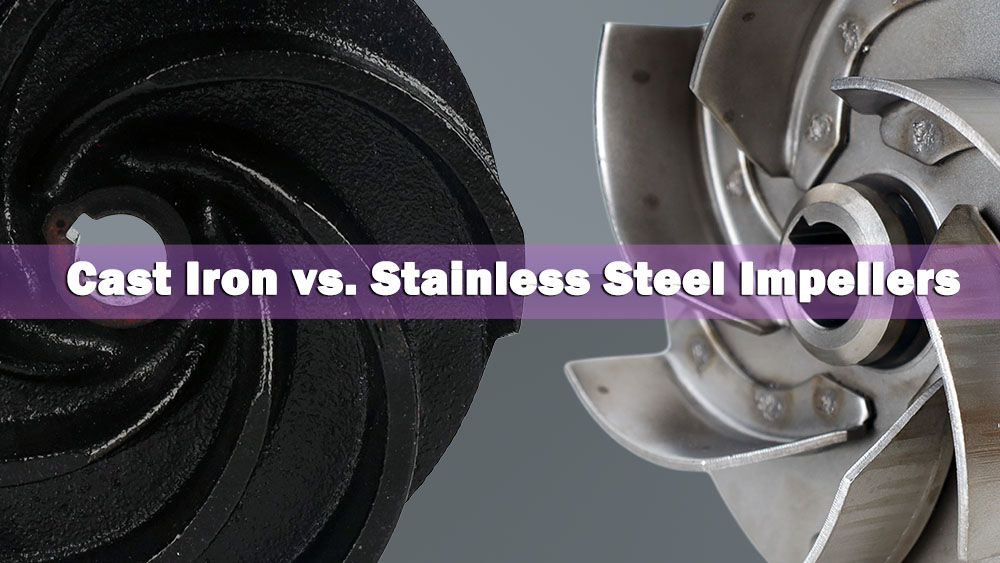
When selecting a water pump, most people obsess over flow rates and head pressure. While these metrics are crucial, there is a hidden component that dictates the longevity and efficiency of your system: the impeller material.Impeller failure is rarely a result of poor hydraulic design. Instead, it often stems from choosing the wrong material for the liquid being pumped. Cast iron and stainless steel are the two titans of the industry, but they are not interchangeable.This guide breaks down the key differences, strengths, and weaknesses of cast iron versus stainless steel impellers, helping you decide which material belongs in your water application.
Why Impeller Material Matters in Water Pumps
The impeller is the heart of your pump. It is the core hydraulic component responsible for moving energy from the motor to the fluid. Because it is in constant contact with the water—spinning at high speeds—the material choice directly impacts performance.Selecting the correct material influences:
· Corrosion resistance: How well the pump handles chemical attack or rust.
· Wear resistance: The ability to withstand abrasive particles like sand or grit.
· Hydraulic efficiency: Smooth surfaces reduce friction losses.
· Service life: Better materials mean fewer replacements and less downtime.If you choose the wrong material, you risk early failure, significant efficiency loss over time, and higher maintenance bills.
Cast Iron Impellers: The Traditional Workhorse
Cast iron has been the standard for decades in general-purpose pumping. It is robust, heavy, and reliable.
Why Cast Iron is Widely Used
Manufacturers frequently use cast iron grades like ASTM A48 Class 30 for pump components. Its popularity comes down to distinct characteristics:
· High Rigidity: It handles stress well without deforming.
· Vibration Damping: The material structure naturally absorbs mechanical noise and vibration.
· Cost-Effectiveness: It is generally cheaper to cast and machine in large volumes compared to steel.
Advantages of Cast Iron Impellers
For many standard applications, cast iron is an excellent choice. It offers structural strength that withstands mechanical shock better than some brittle materials. It provides stable performance in clean water and low-corrosive environments.Perhaps the biggest driver for cast iron is the lower manufacturing cost. This translates directly to a lower upfront pump price, making it attractive for budget-conscious projects where water quality is neutral.
Limitations of Cast Iron Impellers
Despite its strength, cast iron has a major enemy: rust. It is highly susceptible to corrosion when exposed to oxygenated water or aggressive fluids.In high-chloride environments or acidic water, cast iron degrades quickly. Even in standard water applications, rust buildup can roughen the surface of the impeller. This increases friction, which significantly reduces hydraulic efficiency. Severe rust can even lead to imbalance, causing vibration that damages bearings and seals. Because of this, cast iron is not suitable for potable (drinking) water or sanitary systems where contamination is a concern.
Stainless Steel Impellers: The Modern Standard
Stainless steel has grown in popularity as manufacturing techniques have improved. It is designed to handle demanding water conditions where longevity and hygiene are paramount.
Overview of Stainless Steel
Common grades include AISI 304 and 316. These materials are defined by their chromium content, which creates a passive layer protecting the metal. Typical characteristics include high corrosion resistance and a very smooth surface finish, which aids hydraulic flow.
Advantages of Stainless Steel Impellers
The primary benefit of stainless steel impellers is their exceptional resistance to corrosion, oxidation, and chemical attack. This makes them ideal for:
· Drinking water systems: They do not leach rust or contaminants.
· Food and beverage applications: They are hygienic and easy to clean.
· Coastal environments: Grade 316, in particular, resists salt corrosion better than iron.Furthermore, stainless steel maintains its smooth surface over years of operation. Unlike cast iron, which gets rougher with rust, stainless steel retains its efficiency curve for much longer.
Limitations of Stainless Steel Impellers
Quality comes at a price. Stainless steel has higher material and manufacturing costs. Welding and machining stainless steel require more specialized tooling than cast iron.Additionally, stainless steel has lower vibration damping properties compared to cast iron. In some specific scenarios involving large solids, thin-walled stainless steel impellers might have a lower tolerance to severe impact than heavy cast iron counterparts. Over-specifying stainless steel for a temporary, non-critical application may increase costs without delivering necessary benefits.
Performance Comparison: Cast Iron vs. Stainless Steel
Here is how the two stack up head-to-head:
· Corrosion Resistance: Stainless steel wins hands down. Cast iron will rust over time; stainless steel generally will not.
· Wear Resistance: Both are durable, but stainless steel is harder and often handles cavitation better than standard cast iron.
· Hydraulic Efficiency Stability: Stainless steel maintains efficiency longer because its surface remains smooth. Cast iron loses efficiency as rust builds up.
· Maintenance Frequency: Cast iron pumps may require more frequent inspection for corrosion damage.
· Cost vs. Lifetime Value: Cast iron is cheaper upfront. Stainless steel often has a lower Total Cost of Ownership (TCO) due to longevity.
Which Impeller Material Is Right for Your Application?
Your specific application should dictate your choice.
Choose Cast Iron For:
· Agricultural Irrigation: Where water is fresh, non-potable, and upfront cost is a primary constraint.
· Clean Freshwater Pumping: General transfer duties where slight efficiency loss over time is acceptable.
· Closed-Loop HVAC Systems: Where water is treated with inhibitors to prevent corrosion.
Choose Stainless Steel For:
· Potable Water Supply: Strictly required to prevent lead or rust contamination.
· Industrial Process Water: Especially if the water contains chemicals or varies in pH.
· Coastal or High-Salinity Environments: Salt air and brackish water destroy cast iron quickly.
· Food and Beverage: Where hygiene standards are legally mandated.
Common Selection Mistakes to Avoid
Even experienced engineers make mistakes during water pump material selection. Avoid these traps:
1.Choosing based on price only: Saving 15% upfront is useless if the pump fails in two years due to corrosion.
2.Ignoring water chemistry: Failing to check pH or chloride levels often leads to rapid impeller corrosion resistance failure.
3.Overlooking long-term maintenance: Factoring in the cost of downtime and replacement parts usually favors higher-grade materials.
4.Assuming stainless is always better: For some abrasive slurry applications, specialized hardened iron alloys (like high-chrome iron) are actually better than standard 304 stainless steel.
Key Selection Guidelines
To ensure reliability, match the material to the water quality, the operating environment, and the expected service life.Ask yourself:
· Is this for drinking water? (Go Stainless)
· Is the budget extremely tight for a temporary project? (Consider Cast Iron)
· Is the pump located near the ocean? (Go Stainless)Always consider the Total Cost of Ownership. A stainless steel pump might cost more initially, but if it runs efficiently for 15 years without corrosion issues, it is the cheaper option.
Conclusion
Both cast iron and stainless steel impellers have their place in the market. There is no [one-size-fits-all] solution. Cast iron offers strength and value for general applications, while stainless steel provides hygiene and longevity for demanding environments.Correct material selection improves pump reliability, ensures efficiency retention, and extends the overall lifespan of your system. Choose wisely, and your pump will serve you well for years to come.
Address
No.17 XeDa Jimei Ind. Park, Xiqing Economic Development Area, Tianjin, China
Telephone
+86 13816508465
QUICK LINKS