+86 13816508465
Pump Knowledge
Feb. 12, 2026
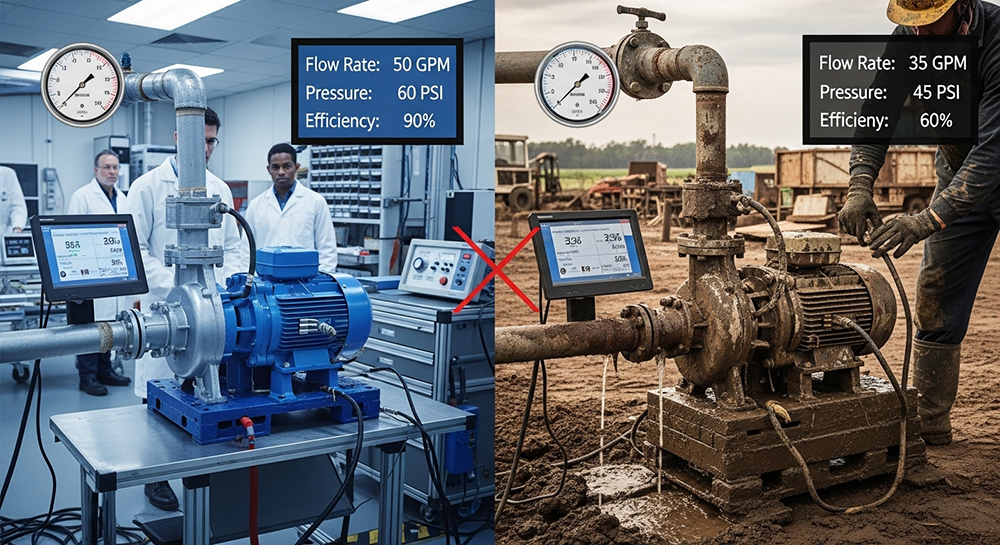
Engineers and facility managers often face a perplexing issue: a new pump, certified to meet specific performance standards in the factory, underperforms once installed. The flow rate is lower, the pressure doesn't quite hit the mark, and energy consumption is higher than expected. This gap between the pump's published test curve and its real-world operation can lead to process inefficiencies, increased operational costs, and even premature equipment failure. The pristine conditions of a factory test are a world away from the dynamic and often unpredictable environment of an actual industrial system.
This article will explain the key reasons why a pump's performance in the field can differ so drastically from its factory test results. We will explore the controlled nature of factory testing and contrast it with the complex variables of a real system. By understanding these factors, you can better design, install, and maintain your pumping systems to close the performance gap.
To understand the performance gap, we must first look at how pumps are tested by the manufacturer. Factory performance tests are conducted in a highly controlled environment designed to demonstrate the pump's maximum potential under ideal conditions.
During a factory test, every variable is managed. The pump is connected to a stable power supply, ensuring consistent voltage and frequency. The test medium is almost always clean, cool water, which has predictable properties. The suction and discharge piping are designed to be perfect, with short, straight runs that minimize friction and turbulence, allowing the pump to operate at its best.
The data from these tests are used to generate the standard performance curves you see in manufacturer catalogs. These typically include:
Head vs. Flow Curve: Shows the amount of pressure (head) the pump can generate at various flow rates.
Efficiency Curve: Illustrates the pump's efficiency across its operating range, highlighting the Best Efficiency Point (BEP).
Power Consumption Curve: Details the amount of power the pump will draw from the motor.
NPSHr Curve: Indicates the Net Positive Suction Head required by the pump to avoid cavitation.
These tests adhere to strict industry standards, such as those from the Hydraulic Institute (HI), ANSI, or ISO. These standards define the procedures and allowable tolerances for the tests. While this ensures consistency, it's important to remember that these tests measure the pump's potential, not its guaranteed performance in any given system.
The perfect world of the test lab is not the real world. Once a pump is installed in a facility, it's subject to numerous variables that were not present during its factory test. These are the primary factors affecting pump performance.
A pump operates at the intersection of its performance curve and the system's resistance curve. An inaccurate calculation of the system curve is a leading cause of performance issues. This includes underestimating static head (the vertical height the fluid must be lifted) or, more commonly, friction head (the pressure lost due to friction in pipes, valves, and fittings). Throttling valves to control flow also artificially increases system resistance, forcing the pump to work harder and less efficiently.
A flawless pump can be crippled by poor installation. Improper alignment between the pump and motor shafts introduces vibration and stress, robbing the pump of power and damaging bearings and seals. Poor piping design is another major culprit. Elbows placed too close to the pump suction, sharp bends, or incorrectly sized pipes can create turbulence and air pockets, starving the pump and hindering its performance.
A pump's ability to [breathe] is critical. The Net Positive Suction Head available (NPSHa) in your system must be greater than the NPSH required (NPSHr) by the pump. If the available suction pressure is insufficient (low NPSHa), the fluid can vaporize inside the pump, a damaging phenomenon known as cavitation. Long suction lines, clogged strainers, or air leaks can all reduce NPSHa and lead to noise, vibration, and a significant drop in performance.
Factory tests use clean water. Your system might not. Differences in fluid properties have a major impact:
Viscosity: Thicker, more viscous fluids require significantly more power to pump and will reduce the head and flow rate compared to water.
Density: Heavier fluids require more horsepower to lift and move.
Abrasives: Fluids containing solids or abrasive particles will wear down internal components like the impeller over time, steadily degrading performance.
Temperature: Higher fluid temperatures can affect viscosity and bring the fluid closer to its vapor point, increasing the risk of cavitation.
A new pump in a test lab has no wear. An in-service pump is constantly degrading. Impeller vanes erode, increasing the clearance between the impeller and the casing, which allows fluid to recirculate and reduces efficiency. Friction from seals and wear in bearings also consume energy that would otherwise go toward moving the fluid.
Unlike the stable power in a lab, real-world power supplies can be inconsistent. Voltage fluctuations or frequency deviations will directly affect the motor's speed, and since pump performance is directly tied to its rotational speed, any change will alter its output. Furthermore, the motor's actual field efficiency may differ from its nameplate rating.
While some difference is inevitable, you can take steps to ensure your pump performs as closely as possible to its published curve.
The most critical step is a thorough and accurate system design. This involves precisely calculating the system curve, accounting for all static head and friction losses. Use proper pipe sizing and design the layout to avoid turbulence, especially on the suction side. Minimize the use of unnecessary bends and fittings.
Selecting the right pump is about more than just meeting a single duty point. Choose a pump that will operate at or near its Best Efficiency Point (BEP) for most of its run time. Operating far from the BEP leads to inefficiency and mechanical stress. Always build in reasonable safety margins, but avoid oversizing the pump, which often leads to throttling and wasted energy.
Once installed, a proactive maintenance program is key. Use vibration monitoring to detect early signs of misalignment or bearing wear. Regularly inspect the impeller for erosion or damage, especially in abrasive services. Trend the pump's performance over time; a gradual decline in pressure or flow can indicate wear before it becomes a major problem.
The discrepancy between a pump's factory test and its real-world performance is not a sign of a faulty pump but a reflection of system effects. A pump curve shows its potential in a perfect environment, while a real system introduces a host of dynamic variables, from fluid properties and piping layout to wear and tear.
By adopting a system-based approach, engineers can bridge this gap. It starts with careful system design, moves to intelligent pump selection, and is sustained by diligent installation and proactive maintenance. Understanding why pumps perform differently is the first step toward building more reliable, efficient, and cost-effective pumping systems that deliver the performance you expect.
Address
No.17 XeDa Jimei Ind. Park, Xiqing Economic Development Area, Tianjin, China
Telephone
+86 13816508465
QUICK LINKS