+86 13816508465
Pump Knowledge
Feb. 10, 2026
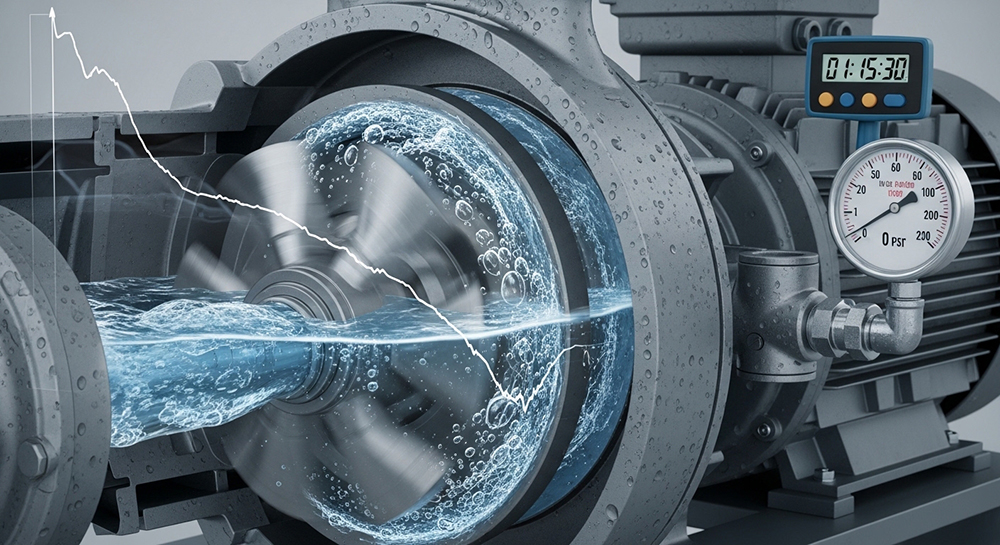
It is a classic scenario that leaves operators and maintenance technicians frustrated. You start the pump, the pressure gauge climbs instantly to the correct setpoint, and the system runs smoothly. You walk away confident the job is done. Yet, when you return an hour later—or sometimes just twenty minutes later—the pressure has dropped significantly, or the flow has trickled to a halt.
This time-dependent pressure loss is one of the most misunderstood issues in fluid handling. Because the pump passes the initial startup test, many assume the equipment itself is healthy. However, a drop in performance over time indicates that variables are changing while the machine operates. It isn't just about static failure; it is about dynamic conditions shifting against you.
Why does a seemingly healthy pump lose steam after running for a while? The answer rarely points to a single culprit. In this article, we will break down the primary categories responsible for this phenomenon: hydraulic instability that develops as temperatures rise, mechanical wear that increases internal leakage, and often-overlooked system factors that alter demand.
Before tearing the pump apart, you need to define the symptoms accurately. Pressure loss over time is distinct from a pump that never builds pressure at all.
This specific problem involves gradual pressure decay or a delayed drop. The pump proves it can do the work at startup (cold condition), but fails to maintain that work during steady-state operation (hot or continuous condition). This distinction is critical. It tells us the pump's geometry and speed are likely correct, but an external or internal factor is degrading its ability to hold that pressure as minutes or hours pass.
Hydraulic system issues are the most common reasons for pressure fading. These problems often take time to manifest because they rely on accumulation—of heat, air, or debris.
Cavitation isn't always immediate. Sometimes, a pump operates fine when the fluid is cold. As the pump runs, the fluid temperature may rise, especially in recirculation systems. Hotter fluid has a higher vapor pressure, which reduces the Net Positive Suction Head available (NPSHa). Once the NPSHa drops below what the pump requires, cavitation begins. This creates vapor bubbles that collapse and disrupt the flow, causing discharge pressure to become unstable and drop.
Air leaks are sneaky. A massive leak prevents priming entirely, but a micro-leak on the suction side acts differently. As the pump runs, it draws in tiny amounts of air through worn gaskets or loose fittings. This air doesn't stop the pump immediately. Instead, it accumulates at the top of the impeller eye or high points in the casing. Over time, this air pocket grows large enough to block fluid flow, reducing the effective pressure or causing the pump to lose its prime completely.
Debris accumulation is a progressive issue. When you first start the pump, the strainer or filter might be clean. As the pump cycles fluid from a dirty sump or tank, particles get trapped in the suction strainer. This gradual clogging increases resistance. The pump has to work harder to draw fluid in, leading to reduced discharge pressure as the suction line becomes choked.
Mechanical issues often mimic hydraulic problems. The key difference here is physical degradation that allows fluid to slip backward rather than move forward.
If you are pumping abrasive fluids, the leading edges of the impeller vanes wear down over time. While this usually causes a long-term drop in performance over months, rapid erosion can occur in severe applications. Eroded vanes cannot impart the same energy to the fluid, resulting in a lower developed head.
Wear rings exist to seal the high-pressure discharge side from the low-pressure suction side within the pump casing. When these rings wear out, the clearance gap widens. This allows pressurized fluid to leak back to the suction side instead of exiting the discharge pipe. This internal recirculation acts like a short circuit. The pump is doing the work, but the pressure never reaches the system—it stays trapped inside the casing.
Heat changes everything. As the pump runs continuously, both the fluid and the pump components heat up.
Viscosity Changes: For oils and viscous fluids, higher temperatures mean lower viscosity. Thin fluid slips through internal clearances more easily than thick fluid. A gear pump moving cold oil might hold 100 PSI easily, but as the oil thins out at operating temperature, slip increases, and pressure drops.
Thermal Expansion: Different metals expand at different rates. If the casing expands more than the internal rotating assembly, internal clearances can open up, leading to increased bypass and lower efficiency.
Sometimes the pump is fine, but the driver is fading.
Motor Overheating: If a motor is undersized or ventilation is blocked, it gets hot. As windings heat up, resistance increases, which can lead to a drop in RPM (speed) if the motor is struggling under load. Since pump pressure is directly related to the square of the speed, even a small drop in RPM causes a noticeable drop in pressure.
Voltage Drop: In facilities with heavy fluctuating loads, voltage sags can cause the motor to slow down, reducing hydraulic performance.
The pump lives within a system, and that system is dynamic.
Modern systems use automated valves. A pressure drop might actually be a control valve opening downstream. If a process valve opens further to satisfy a temperature requirement, the flow rate increases. According to the pump curve, as flow increases, pressure naturally decreases. The pump isn't failing; it's simply moving to a different point on its curve.
Similarly, if new users come online—someone opens a wash-down station or a new machine starts a cycle—the total system demand goes up. The pump provides more flow to meet this demand, sacrificing pressure in the process.
Check valves prevent reverse flow. If a check valve on the discharge side doesn't seat properly or is fouled by debris, it allows pressure to bleed back into the pump or sump when the system tries to hold pressure. While this is more of an issue during idle times, in multi-pump systems, a leaking check valve on a parallel pump can act as a bypass, siphoning off pressure that should be going to the process.
The frustration stems from the difference between startup conditions and steady-state conditions.
At startup, the fluid is cold, the motor is cool, filters are empty, and there is no air accumulation. This is the [best case] scenario. After running for a period, the [real world] takes over. Filters catch dirt, heat soaks into the metal, and micro-leaks gather enough air to cause trouble. Short test runs often fail to detect these problems because the system hasn't reached that critical failure threshold yet.
Diagnosing this requires patience. You cannot just look at the pump; you must monitor it over time.
Baseline Startup: Record pressure, flow, and amp draw immediately at startup.
Monitor the Drop: Watch the gauges. Does the pressure drop gradually or suddenly?
Gradual drop suggests filter clogging or viscosity changes.
Sudden drop suggests air pockets releasing or a valve opening.
Check Temperature: Is the pump casing or motor excessively hot?
Inspect Suction: Look for vortices in the sump or air bubbles in sight glasses.
Verify Demand: Walk the line. Did a valve open? Did a filter differential pressure gauge spike?
The pump is defective: Rarely true if it worked at startup. The pump is usually the victim of system changes.
Higher speed will fix the issue: Speeding up the pump often increases cavitation or motor overload, making the problem worse.
Pressure loss is always a leak: As discussed, internal recirculation or viscosity changes cause pressure loss without a single drop of fluid leaking externally.
Pump maintenance and system design are your best defenses.
Filtration Management: Install differential pressure gauges on strainers so you know when they are clogging before flow suffers.
NPSH Margin: Ensure your system has enough suction head to handle the vapor pressure of hot fluids.
Operating Point: Run the pump near its Best Efficiency Point (BEP). Running too far left or right on the curve causes vibration and heat that accelerate wear.
Routine Inspection: Check wear rings and impeller clearances during annual shutdowns to catch internal leakage early.
Pressure loss that occurs over time is usually a progressive failure, not a sudden break. Whether it is heat thinning out hydraulic oil, air accumulating in the casing, or a strainer slowly choking off the supply, the root cause is almost always traceable to how the system changes during operation. By understanding these dynamic factors, you can move past quick fixes and implement long-term solutions.
Can pressure loss indicate cavitation damage?
Yes. If cavitation is causing the pressure drop, it is also causing physical damage to the impeller. The pressure drop is a symptom; the damage is the result.
How long should a pump maintain stable pressure?
A healthy pump in a stable system should maintain constant pressure indefinitely, assuming the system demand (flow) remains constant.
Is pressure loss more common in multistage pumps?
It can be harder to diagnose in multistage pumps because wear in one stage might be masked by the others, leading to a slow, confusing decline in overall pressure.
Address
No.17 XeDa Jimei Ind. Park, Xiqing Economic Development Area, Tianjin, China
Telephone
+86 13816508465
QUICK LINKS